JI urges parliament to abolish petroleum levy
Updated 33 minutes ago

Aurangzeb, as incoming G-24 chair, pledges stronger voice for global south
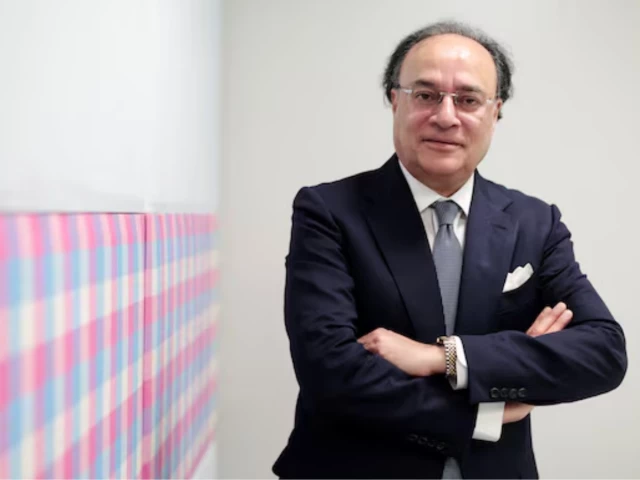
Pakistan has called for reform of the international financial architecture to keep pace with fragmentation disrupting trade and investment, climate shocks eroding development gains, restrictive financial conditions and widening financing gaps, as it prepares to take over as chair of the G-24 grouping of developing nations.
Speaking as First Vice-Chair of the G-24 at the Finance Ministers and Central Bank Governors' Meeting on the sidelines of the International Monetary Fund (IMF) and World Bank annual meetings in Bangkok, Finance Minister Muhammad Aurangzeb outlined three priorities for the grouping: restoring development as the central objective of the international financial system, making the Bretton Woods institutions more representative and responsive, and building a development-oriented architecture.
He stressed that reform must ensure timely support for countries undertaking difficult reforms while confronting external shocks beyond their control, and reaffirmed Pakistan's commitment as incoming chair to strengthening the G-24's collective influence so that the Global South's voice translates into concrete outcomes. Appreciating Nigeria's leadership, he underscored cooperation among members and institutional partners to advance a more representative, resilient and development-centred economic order.
At investor roundtables organised by Jefferies International and Barclays, the minister, accompanied by Finance Secretary Imdadullah Bosal and State Bank of Pakistan (SBP) Governor Jameel Ahmad, highlighted improving fiscal and external balances, consecutive primary surpluses, stronger reserves, rating upgrades and renewed access to capital markets. Discussions covered the IMF-supported programme, debt management and financing instruments including Sukuk, further Panda bond issuance and tokenisation, alongside privatisation, tax-base broadening, agricultural income tax, digital enforcement and federal-provincial fiscal coordination.
He pointed to a strong pipeline of initial public offerings (IPOs) and foreign investor interest in electricity distribution companies, as well as airport outsourcing. Responding to questions, the delegation addressed regional geopolitical risks, energy security and liquefied natural gas (LNG) obligations, alongside economic engagement with the United States and Saudi Arabia.
On funding diversification, the minister told Nikkei Asia that Pakistan will continue to "diversify its funding sources," hinting at more yuan-based bonds and possible yen-denominated samurai bonds. He said the recent Panda bond would not be a "one-time issuance" and that Pakistan intends to "keep going back and be a repeat issuer," given China is the "second largest and deepest capital market in the world." Samurai bonds "would make sense" and are "something which we should think through," he said, adding, "We need to do more homework." He said Pakistan does not want to increase the quantum of its external debt.
Pakistan issued its first Panda bond worth 1.75 billion yuan ($261 million) in mid-May as part of a 7.2 billion yuan programme, with the Asian Development Bank (ADB) and Asian Infrastructure Investment Bank (AIIB) providing partial guarantees. On a panel on mitigating sovereign risks in market-access countries, the minister outlined fiscal consolidation, lower inflation and rebuilt reserves, with debt management measures to lower financing costs, extend maturities and reduce rollover risks. He said renewed market access supports a strategy to improve the external debt profile without increasing its overall size, and stressed national ownership of taxation, energy, state-owned enterprise and pension reforms.
In a meeting with Saudi Fund for Development (SFD) Chief Executive Officer Sultan Abdulrahman Al-Marshad, discussions covered trade and investment, private-sector engagement, the bilateral investment protection agreement and refinery upgrades. He noted satisfactory progress on SFD-supported projects, discussed a fresh project pipeline and sought continued support within the fund's mandate.
Talks with International Finance Corporation (IFC) Regional Vice President for the Middle East and Central Asia Imad Fakhoury covered small-business financing, entrepreneurship, capital markets, and green and digital bonds. He reaffirmed commitment to Reko Diq and appreciated IFC's financing leadership. Mining infrastructure and value addition, affordable housing, agricultural storage and cold chains, and public-private partnerships in water services and advanced electricity metering were also discussed. On population, the minister stressed the urgency of addressing rapid growth and its implications for health, education and employment, citing Indonesia, Bangladesh and Iran. He outlined a National Population Council led by the prime minister, emphasising women's education, workforce participation and engagement with religious leaders on birth spacing, and pointed to freelancing, IT-enabled services and digital skills as ways to expand youth earnings and exports.
A meeting with Mashreq Bank's senior management covered digital banking, financial inclusion, offshore service operations, digital accounts for overseas Pakistanis and collaboration on tokenisation, blockchain and digital assets within Pakistan's evolving regulatory framework. The minister also said the National Tariff Policy would not be compromised, calling it "not only about the auto industry – it's about industries in general," and referred to a revamped auto policy targeting 30% electric vehicles among new sales by 2030. He noted that ASEAN reduced tariffs in the late 1990s to generate various upsides, adding, "This can very much be a Southeast Asia moment for Pakistan."
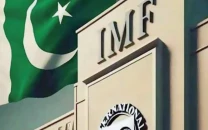
Pakistan, an IMF member since 1950, is in its 25th arrangement and owed the fund about $10.5 billion as of Monday. The minister said the programme's structural reform agenda would lead to sustainability, and that Pakistan would graduate once "the rest of the world becomes convinced that we don't need the lender of last resort."









This material may not be published, broadcast, rewritten, redistributed or derived from. Unless otherwise stated, all content is copyrighted © 2026 The Express Tribune.


COMMENTS
Comments are moderated and generally will be posted if they are on-topic and not abusive.
For more information, please see our Comments FAQ