LHC seeks reports on continued detention of Imran’s sisters, Noreen's health
Updated 3 hours ago

Railways minister orders investigation, says compensation will be paid to deceased and injured passengers
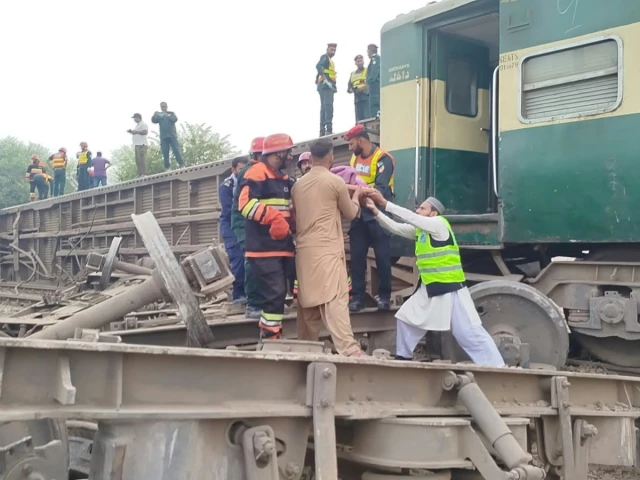
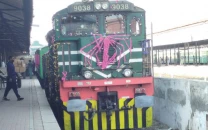
A passenger train derailed near Multan on Tuesday morning, resulting in the death of at least seven people including a minor child and injuring over 50 others.
According to officials, Peshawar-bound Rehman Baba Express met the tragedy at Sher Shah Bridge at around 5:15am when a number of its carriages went off the tracks, with some overturning
Soon after the incident, rescue workers and the Pakistan Army teams arrived at the accident site and started shifting the dead and the injured to the hospital.
Rescue sources claimed that at least seven people, including three women, two men and a one-and-a-half-year-old girl, died as a result of the derailment. They said over fifty people were transferred to hospital for treatment and a few of these injured were in critical condition.
A spokesperson for Multan’s Nishtar Hospital said 21 patients were still receiving treatment, while one injured person was in critical condition. The hospital had called in additional staff to ensure medical care for the victims.
The cause of the derailment remained unclear. Some sources claimed that the train was travelling at a high speed when the accident occurred, but this claim could not be independently verified.
A passenger also claimed that the nuts and bolts of coach No 9 of the Rehman Baba Express had been repaired near Rohri. However, the account could not be independently verified, and it was unclear whether the reported repair had any connection with the accident.
The accident disrupted train schedules, particularly services travelling from Karachi towards Rawalpindi. Railway officials said some trains were being diverted through an alternative route, while clearing the affected track and completing relief operations could take several more hours.
Railway authorities said train operations had been restored via the Lodhran-Jahanian route.
Rescue operations continued at the accident site as authorities worked to clear the derailed carriages and establish the cause of the tragedy.
According to the train's guard in charge, the driver felt a sudden jolt near Sher Shah, and several coaches derailed just seconds later. However, it is too early to determine whether the accident occurred due to a fault in the railway track or because a part of one of the coaches fell onto the track.
Meanwhile, some passengers alleged that the driver had been operating the train at excessive speed. According to them, they had asked the driver to reduce speed near Bahawalpur because passengers in the fourth and fifth coaches were experiencing severe jolts. They claimed that the train's speed was not reduced.
The Divisional Superintendent of Railways in Multan said it was too early to comment on the cause of the accident. An inquiry committee had been formed to investigate the incident.
Railway spokesperson for Multan Division Kaleem Akhtar said train services on railway lines passing through Multan were suspended following the accident. Railway cranes were being used to remove the derailed coaches, a process that took several hours.
Until the track was cleared, trains passing through Multan will be diverted via alternative routes through Lodhran and Khanewal, potentially causing delays for passengers.
The Nishtar Hospital administration in Multan declared an emergency following the incident, its spokesperson said.
Minister holds himself responsible
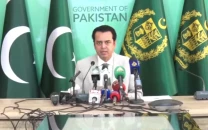
Minister for Railways Hanif Abbasi, speaking to the media at the site, said he considered himself responsible for the train accident, as he visited the site and vowed action against anyone found involved in the incident that killed five passengers.
Abbasi said Prime Minister Shehbaz Sharif had called him following the accident, adding that one of the injured passengers remained in critical condition. A young girl was also among those killed.
“Expressing grief alone will not solve the problem,” Abbasi said, acknowledging that Pakistan Railways faced numerous challenges that had not received adequate attention in the past. “This accident should not have happened,” he said, adding that he was surprised the train had derailed at the location despite having been attended to at Samasatta.
Abbasi said he was not holding any particular individual responsible at this stage but assured that action would be taken against all those found involved. “As the minister, I consider myself responsible,” he said.
He also praised the district administration for carrying out rescue operations promptly and said Pakistan Army personnel were also present at the site. The government would also provide financial assistance to the affected families, he added.
“Running away is not in our nature,” Abbasi said, adding that he had no personal relationships with anyone in the department beyond work. He said the incident had left him unable to smile, reflecting the gravity of the loss of life.
Acknowledging the need for improvements across the railway system, the minister stressed that mechanical issues had to be addressed and that long-distance trains would be a particular focus of upcoming efforts.
He said work on the Rohri-Karachi track would begin in January and announced plans to introduce coaches with stronger couplings designed to prevent them from breaking. Abbasi also pointed to problems in the railway procurement process, saying some projects had been put out to tender as many as eight times.
Leaders express grief
President Asif Ali Zardari expressed concern over the derailment of the Rehman Baba Express and offered condolences to the families of those killed, while wishing the injured passengers a speedy recovery. He directed the relevant authorities to ensure assistance and all possible facilities for affected passengers and called for a transparent investigation to determine the cause of the accident.
صدرِ مملکت آصف علی زرداری کا ملتان کے قریب رحمان بابا ایکسپریس کے پٹڑی سے اترنے کے واقعے پر اظہارِ تشویش۔
— The President of Pakistan (@PresOfPakistan) October 13, 2026
صدرِ مملکت کا حادثے میں جاں بحق ہونے والے مسافروں کے اہلِ خانہ سے دلی تعزیت و ہمدردی اورزخمی مسافروں کی جلد صحت یابی کے لیے نیک تمناؤں کا اظہار۔
صدرِ مملکت کی متعلقہ حکام…
Railways Minister Hanif Abbasi expressed deep grief over the incident, extended sympathies to the bereaved families and directed officials to ensure the best possible medical facilities for the injured.
He said compensation would be paid to deceased and injured passengers in accordance with the railway insurance policy and directed the Federal Government Inspector of Railways to investigate the accident.
Pakistan Peoples Party (PPP) Senator Sherry Rehman also expressed grief over the deaths of the five passengers, saying she was deeply saddened by the loss of precious human lives.
ملتان میں رحمان بابا ٹرین حادثے میں پانچ مسافروں کے جاں بحق ہونے پر افسوس کا اظہار کرتی ہوں، قیمتی انسانی جانوں کے ضیاع پر دلی رنج و غم ہے ،متاثرہ خاندانوں کے دکھ میں برابر کے شریک ہیں، زخمی ہونے والے 30 افراد کی جلد صحت یابی کے لیے دعا گو ہوں، پیپلز پارٹی کے جیالوں سے اپیل ہے کی… pic.twitter.com/qPzNIWCcRH
— SenatorSherryRehman (@sherryrehman) October 13, 2026
“We share the grief of the affected families and pray for the speedy recovery of the 30 injured,” she said in a post on X. Rehman appealed to PPP workers to donate blood to help the injured passengers and urged the provincial government to accelerate relief efforts, ensure immediate medical assistance and provide the best possible treatment to those wounded in the incident.
Pakistan Railways has faced repeated accidents involving passenger and freight trains, raising concerns over the safety and maintenance of its ageing infrastructure. In April 2026, it was reported that more than 20 railway accidents had occurred since the start of the year, including derailments, collisions and mechanical failures.
These included the Tezgam Express derailment near Lodhran, the Shalimar Express collision with a stationary freight train near Rohri, and the Karakoram Express separating into two sections near Khanewal after a coupling failure.
In a report released in December 2025, Pakistan Railways said it recorded 95 accidents between January 1 and December 20, 2025, including 46 passenger-train derailments and 43 freight-train derailments. The report cited limited modernisation of tracks, signalling systems and safety infrastructure as continuing challenges.
A May 2025 report also highlighted the condition of the railway network, saying more than 6,500 kilometres of track had exceeded its natural lifespan. Railway expert Muhammad Sabir Awan cited incorrect track alignment and non-compliance with safety procedures as causes of derailments, while former chief engineer Muhammad Afzal Bajwa stressed the need for funding to upgrade ageing tracks.






This material may not be published, broadcast, rewritten, redistributed or derived from. Unless otherwise stated, all content is copyrighted © 2026 The Express Tribune.




COMMENTS (2)
Comments are moderated and generally will be posted if they are on-topic and not abusive.
For more information, please see our Comments FAQ