Pakistan to chair IMF, World Bank boards in 2027 for first time since 1953
Updated 47 minutes ago

Country may find it difficult to attract investors in absence of balance between security, trade
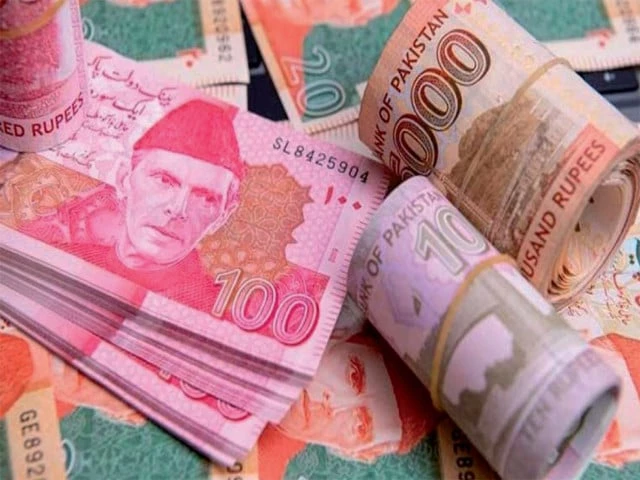
The rupee has just put together its calmest multi-year stretch since the mid-2010s. Experts who credit that stabilisation now want the state to shift from short-term, defence-centric management to long-term, economy-first policy, a milestone that has remained elusive for the Pakistani nation for decades.
Calendar 2024 delivered a rare full-year appreciation of 1.8 per cent. 2025 was almost flat, up 0.9 per cent. Through July 2026, the rate sat at Rs277.50 to the dollar, still inside a tight 277–284 band.
That band is the story. It is also the problem. The same rupee that now looks stable is nearly double its end-2017 print of about Rs109. The rupee can buy 84 times less dollar still than it did in 1947. What has changed is not the long decline. It is the pause.
Nasheed Malik, head of research at Growth Securities, dates the turn to the months when default talk was open and official reserves were not. “Pakistan was quite close to default, and foreign exchange reserves were quite low,” he said. “State Bank reserves even fell below $4 billion, and import cover dropped to one month, and below that at one point.”
In September 2023, the monthly average reached about Rs297, the high in the long official series. Intraday, Malik said, the currency touched 320. “Since late 2023 it has come down to 278.”
The market’s checklist is familiar. Total liquid reserves are back above $20 billion; SBP holdings were $17.10 billion in the week ended August 21, with the country’s stock at $22.59 billion. The IMF programme is current. Fiscal and external accounts have stayed contained.
The interbank-open market gap has been compressed. Informal exchange companies were squeezed, remittances pushed onto formal rails, and the central bank has been a persistent buyer of dollars.
“Stability should continue as long as global conditions and the macro picture do not worsen,” Malik said.
The other side of that calm is the real effective exchange rate. SBP data put the REER at 107.9 in July against 106.3 in June, an eight-year high and above the 10-year average of 102.44. The index uses 2010 as 100. The central bank says 100 is not equilibrium. Markets still read a rising REER as weaker export competitiveness and cheaper imports.
Adil Nakhoda, assistant professor at IBA, said the rupee is becoming more overvalued against several trading partners on that basis. Inflows make it easier to defend the spot rate inside a Fund programme than outside it. “The nominal rate is being protected even though fundamentals suggest depreciation,” he said. “An appreciated currency can be a problem when the programme ends. This time FX is managed well because we are in the IMF. The issue starts when we are out of it.”
Ahsan Mehanti, CEO at Arif Habib Commodities, put the overvaluation at about 7.9 per cent. Prolonged strength, he said, costs exporters even as it supports confidence and remittances.
Mohammed Awais Ashraf of AKD Securities argued the higher REER reflects inflation running hotter than in trading partners, not an imminent break in the peg-like band. The external account has been contained, reserves closed last fiscal year at a record after heavy debt service, and short-term external liabilities have fallen to under $1 billion from $5.8 billion in 2022.
Stabilisation is still not investment
Net foreign direct investment (FDI) fell 34% in FY26 to about $1.64 billion. FDI is a litmus test. Portfolio money can leave. Remittances can rise when the rupee looks quiet. Official inflows arrive because a review was passed. A factory does not. A factory needs a policy that will still be there when the next secretary, the next minister, the next strong man of the country and the next programme review have moved on.
An industry official put it without decoration. The export base can grow, he said, but not without a long-term industrial policy. “They have never seen one in this country. Every new bureaucrat who comes to the helm prepares a new policy as if it adds to their CV for the next job.”
Three things are a must to achieve growth.
First, space. People who know business, tax administration and industrial organisation have to be allowed to run those files. Security and programme compliance are not a substitute for a factory plan. They are the floor. They become the ceiling when every commercial decision waits for a clearance that never quite comes.
Second, a balance between security and trade. Industrialists say the country cannot attract capital if investors read a permanent defence situation. Recent defence achievements are real. But the pictures of the strong man every here and there send a signal of a constant defence situation to the international investors. Global capital is used to security that does not have to be displayed at every gate. Pakistan still sells the display. That impresses a domestic audience. It does not unlock a multi-year investment plan.
Third, homemade rules. Several economists argue that one reason the tax-to-GDP ratio will not rise is that the statutes were drafted to look like a Western advanced system. India and Pakistan inherited the same Income Tax Act, 1922. The closer laboratory was next door. Islamabad kept reaching for models built for a different firm structure, a different enforcement capacity and a different political bargain with traders and growers. The result is a code that looks modern and still misses the base.






This material may not be published, broadcast, rewritten, redistributed or derived from. Unless otherwise stated, all content is copyrighted © 2026 The Express Tribune.







COMMENTS
Comments are moderated and generally will be posted if they are on-topic and not abusive.
For more information, please see our Comments FAQ