After the K-P emergency: rethinking confrontation
Updated 3 hours ago

Fourteen infants dead - and we are left asking what, exactly, was protecting them
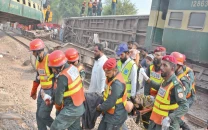
Language feels almost laughable. Fourteen infants died in a fire at PIMS in our mighty capital. Fourteen infants dead - and we are left asking what, exactly, was protecting them. There are condolences, grief, demands for an inquiry, promises of action and, inevitably, a wave of anger. Can somebody hear me without rushing to speculation about facts that an investigation must establish? Can we instead ask what this catastrophe reveals about the systems in which we place our most vulnerable lives? An anxious autopsy, if you will not of the infants, but of the institutional body around them. Is there anyone in government, in the bureaucracies, willing to step outside their comfort zone and move past the signature shamelessness - besharmi - of institutional denial, and examine causes? The questions may even qualify as forbidden text.
Who designed and maintained the infrastructure? Who allocated the money? Who could raise an alarm without fear of consequence? Whose safety was imagined when the system was designed? And who is held accountable when the system fails?
These are not merely questions about one hospital. They are questions about inequality and power.
In Pakistan, healthcare is often discussed as though hospitals are collections of buildings, machines, doctors and beds. But a health system is also a hierarchy of people. There are those who command, those who implement and those who quietly carry the consequences of decisions made above them.
An ordinary doctor in a public hospital may have professional responsibility without corresponding institutional power. Nurses, technicians, attendants and other frontline workers may see problems long before they become crises, yet have little authority to correct them. Pay scales, status, working conditions and bureaucratic structures are not peripheral matters; they are part of patient safety.
And somewhere above this everyday reality sits the sir ka vision - the senior official whose position may carry considerably more hegemony than liability.
Who is left to hold up the mirror? We should be asking not simply who occupies senior positions in our health departments and hospitals, but what kind of people our systems reward with authority, and what they are permitted to diagnose, discern and detect.
This hierarchy is also where gender must enter the conversation - not as another checkbox, but as a way of appreciating who designs, who is designed for, and who is disqualified.
Gender expertise is usually welcomed only when the discussion concerns counting women and men or addressing harassment, and becomes peripheral when infrastructure, budgets or institutional design are being discussed. Yet gender cannot be reduced to statistics. It shapes who uses infrastructure, who delivers care, who is safe within institutions, who has mobility and authority, whose needs are anticipated and whose vulnerabilities are overlooked. It demands that we see beyond the obvious and respond to the realities of people's lives.
And here arrives social media - a solution to all our struggles?
Beyond the incisive poetry - Faiz, Jalib, Faraz or Kishwar Naheed recited or sung at elite conferences - there is another reality, much less lyrical, inside our health system.
Many competent doctors are lost to the civil service, or more often to the private sector, not because they have stopped caring about medicine, but because they can no longer sustain the conditions under which they are expected to practise it. Poor and sometimes humiliating pay, delayed or uncertain salaries in some settings, and working hours that can become inhumane all take their toll. And then there is hierarchy. An AC, a DC - or almost any official with sufficient administrative authority - can walk into a hospital, summon a doctor and humiliate them, regardless of professional standing or years of training. The doctor may carry responsibility for a patient's life while having remarkably little power over their own working conditions. Nurses and other health workers face their own versions of low status, weak bargaining power and exhausting work.
There are other things I would rather not say here. My own mental peace, and perhaps the limited freedom available to those who write and speak publicly, may not survive a detailed discussion of how professional incompetence enters, survives and is recurrently rewarded within institutional systems. Some doctors are lost because the system drives them away; others remain despite questions that deserve to be asked about how they were admitted, retained and promoted in the first place. We have doctors who are now social-media influencers. Their public presence may be useful, but influence is not institutional power. Inequality is reproduced within the system itself - between professions, grades, genders, cities, and those who command and those who carry responsibility without power. Those with means can buy private healthcare, education, security and escape from public failure. If enough people can exit a failing system, where does the collective urgency to repair it go? The answer cannot be another cycle of outrage. Nor is a romantic call for revolution enough.
Reform is possible, and social media has shown that sustained public pressure can compel institutions to act. But public concern must translate into institutional activeness, and anger must find an organised civic form.
Pakistan needs urgent investment in human development not only in buildings and equipment, but in the people who make health systems work. We need professionals with authority proportionate to their responsibility, budgets that reflect human priorities, infrastructure designed with gender responsiveness and social inclusion, and accountability that survives after public attention has moved on.
The PIMS fire is, above everything else, a devastating human tragedy. Nothing I write can explain away the loss of those infants, nor should analysis diminish grief.
The question is not only what happened that day. It is what was already wrong before that day and what we are willing to change before another tragedy forces us to look again.
That is the autopsy we should be anxious to undertake.






This material may not be published, broadcast, rewritten, redistributed or derived from. Unless otherwise stated, all content is copyrighted © 2026 The Express Tribune.
COMMENTS (1)
Comments are moderated and generally will be posted if they are on-topic and not abusive.
For more information, please see our Comments FAQ