No urgent case for rupee depreciation
Updated 55 minutes ago

Current-account gap, remittances and reserves are the numbers to watch

A shopkeeper in Larkana may have little reason to follow Pakistan's debt-to-GDP ratio or the State Bank of Pakistan's (SBP) weekly reserves statement. Ask him what the dollar is trading at, however, and he may be able to tell you before he checks his phone. A weaker rupee raises the cost of replacing the imported goods on his shelves. For the family next door receiving money from Dubai, the same dollar buys more rupees. Few economic indicators travel as far, or mean such different things to the people watching them.
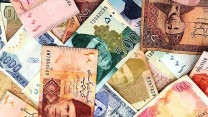
Nor do many indicators attract as many forecasts. The rupee's last sharp fall is still fresh in public memory. From around Rs160, the dollar climbed to Rs307.10 in the interbank market on September 5, 2023. The distinction matters. The dollar became about 92% more expensive, while the rupee lost roughly 48% of its dollar value. Some 38 months later, in the third week of November 2026, the dollar was trading near Rs276.5. Does the passage of three years make another sharp adjustment overdue?
The textbook economist's argument starts with inflation. If prices rise by 10% in Pakistan and 2% in the United States, the dollar would have to cost about 7.8% more rupees to preserve the same relative purchasing power, all else equal. Pakistan, of course, trades with many countries. Its real effective exchange rate (REER), which adjusts for exchange rates and inflation across trading partners, reached 110.62 in October. Exporters have reason to pay attention. But 100 is a base-year benchmark. A reading of 110.62 cannot, by itself, tell us that the rupee is 10.62% overvalued or what it should fetch on Monday morning.
The stronger case for the rupee comes from the flow of dollars. Pakistan recorded a $39 million current-account surplus in October, following a $371 million deficit in September. Across July-October, the deficit was $850 million, down from $1.06 billion a year earlier. The SBP held $21.59 billion in foreign exchange reserves on November 13, up from about $18.4 billion at end-June, and is expected to touch $25 billion in June 2027. How those reserves accumulate matters. Dollars the central bank buys from the market and dollars the government borrow both strengthen the headline number, but only the latter come with a repayment date.
Remittances explain much of that resilience. Pakistanis abroad sent home $14.8 billion through official channels in the first four months of the fiscal year, up 14%. The increase alone, roughly $1.8 billion, was more than twice the period's current-account deficit. Some of the gains may reflect transfers shifting from hundi and hawala into banks. Ramadan and Eid may bring a seasonal lift. It would take more evidence, however, to conclude that Gulf expatriates are moving their savings home because they now regard Pakistan as a safe haven, surprisingly.
Debt also deserves a closer reading. Gross public debt eased from 70.5% of GDP in June 2025 to 68.6% in June 2026. The measure more relevant to the currency debate is total external debt and liabilities, which fell from 33.7% to 30.6% of GDP. Both trends are encouraging. For the foreign exchange market, though, the more immediate question is how many dollars fall due over the next 12 months and how much lenders are prepared to roll over. Bilateral rollovers from Saudi and China keep that concern allayed for now.
Exporters have a legitimate grievance. A textile mill quoting the same dollar price as last year has little room to absorb higher rupee wages and power bills when the exchange rate barely moves. Yet a 30% depreciation offers no reliable basis for pencilling in even a 10 or 15% rise in export volumes. A garment maker earning dollars and paying most of its costs locally stands to gain more than a manufacturer importing components on dollar credit. Both still need buyers. Financing costs, duties on inputs, unreliable deliveries and unpredictable tax policy can decide who wins the next order.
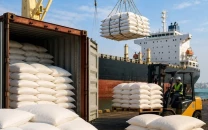
Oil offers a sense of the sums involved. During the spring shock, Singapore gasoil, a regional diesel benchmark, peaked near $230 a barrel in early April. The International Monetary Fund's (IMF) regional price chart puts gasoline around $150 at its spring high. Pakistan imported $16.86 billion of petroleum-group products in FY26. If the average price of that entire basket fell by 20% and volumes held steady, the gross saving would be about $280 million a month. A fall in crude alone would deliver a different result, and a recovering economy could readily spend part of the saving on machinery, raw materials and fuel.
The political preference is easy to understand. With inflation at 9.6% in October, policymakers have little appetite for a currency slide that makes transport and imported inputs dearer. The IMF programme nevertheless calls for exchange-rate flexibility, and defending a particular number can become expensive. For anyone planning around Rs300, I would watch three developments more closely than the calendar: whether the current-account deficit widens for several months beyond the $1 billion a month run-rate, whether remittance growth holds as imports recover or slows to low single digits, and whether the SBP can keep buying dollars once external repayments fall due or starts depleting foreign exchange reserves for consecutive months. For now, the evidence for an urgent depreciation is thin. Those are the numbers that could change that judgement.
THE WRITER IS AN INDEPENDENT ECONOMIC ANALYST






This material may not be published, broadcast, rewritten, redistributed or derived from. Unless otherwise stated, all content is copyrighted © 2026 The Express Tribune.











COMMENTS
Comments are moderated and generally will be posted if they are on-topic and not abusive.
For more information, please see our Comments FAQ