MDCAT 2026 held across Pakistan as thousands of candidates sit exam
Updated 17 hours ago

Abadgar Board warns of worsening shortages and inequitable distribution
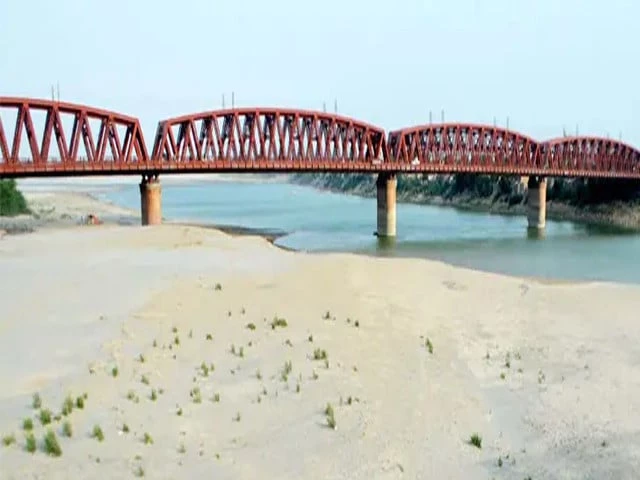
The Sindh Abadgar Board (SAB) on Monday rejected the construction of the Jalalpur canal in Punjab, urging the government to divert billions of rupees earmarked for the project towards water efficiency initiatives aimed at reducing irrigation consumption and boosting crop yields.
The demand came during a meeting of the board held in Hyderabad and presided over by SAB President Mehmood Nawaz Shah, which also criticised the Indus River System Authority's (IRSA) decision to issue a water availability certificate for the canal.
"IRSA is arbitrarily providing water availability certificates when the water in the system is deficient," the board said in a statement issued after the meeting.
Farmers questioned how water would be supplied to irrigate 172,000 acres of land spread over 112 kilometres in the Jalalpur command area, especially when existing canals were already receiving less water than their allocated share.
They rejected claims by IRSA and the Punjab government that the canal would be fed solely through the Rasul Barrage on the River Jhelum, warning that the project would ultimately result in the diversion of water from the Indus River, worsening shortages downstream.
The board further alleged that IRSA was failing to uphold the principle of equitable water distribution and ignoring the impacts of climate change and environmental degradation caused by reduced downstream flows.
Highlighting water usage statistics, the SAB noted that around 95 per cent of Pakistan's water is consumed by agriculture, leaving only 5 per cent for domestic, industrial and other uses. It also pointed out that the country's agricultural water productivity remains among the lowest globally, at 0.133 kilograms per cubic metre.
The board argued that if the estimated Rs85 billion allocated for the canal project were instead invested in water efficiency schemes, nearly 500,000 acres could be brought under improved irrigation systems, reducing water consumption by up to 30 per cent while enabling cultivation of an additional 150,000 acres.
Such initiatives, it said, would also enhance crop yields and improve quality.
Emphasising the growing challenges of climate change and environmental degradation, the SAB called for a conservation-led approach to water management.















This material may not be published, broadcast, rewritten, redistributed or derived from. Unless otherwise stated, all content is copyrighted © 2026 The Express Tribune.




1727268465-0/Untitled-design-(42)1727268465-0-208x130.webp "the jirga industry s hidden tragedies")

COMMENTS
Comments are moderated and generally will be posted if they are on-topic and not abusive.
For more information, please see our Comments FAQ