Anti-Muslim hate targeting Michigan Senate nominee El-Sayed surged after primary win: study
Updated 6 hours ago

US, Saudi Arabia sign civil nuclear cooperation agreement
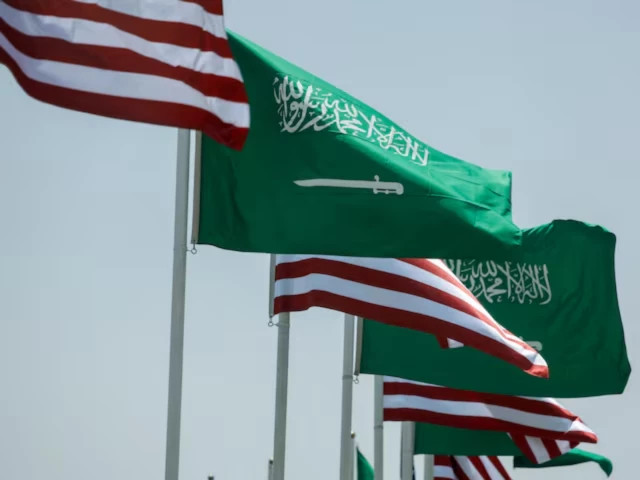
A deal between the United States and Saudi Arabia allowing the kingdom to build nuclear reactors using American technology and to enrich uranium has fuelled fears in Israel of the start of an arms race in the Middle East.
The agreement, which still needs Congressional approval, that was announced on Wednesday and is meant to allow the Saudis to develop a civilian nuclear programme.
Prime Minister Benjamin Netanyahu and his defence and foreign ministers have so far not commented on the deal, which critics say compromises Israel's long-term security interests.
"The nuclear agreement that is coming together with Saudi Arabia, over Israel’s head, is a serious strategic failure that endangers our security," said former Prime Minister Naftali Bennett, who is seeking to unseat Netanyahu in an October 27 election.
"Nuclear enrichment on Saudi soil could lead to a regional nuclear race and a dangerous loss of control."
Former defence minister Avigdor Lieberman said that "the civilian nuclear program in Saudi Arabia will end in nuclear weapons and will lead to a crazy arms race throughout the entire Middle East."
Israel, which is widely believed to have the region's only nuclear arsenal, must oppose the deal and lobby Congress to stop the deal, he said.
A civil nuclear deal with Saudi Arabia has been in the works for years during both President Donald Trump's first administration and that of former President Joe Biden.
No deal has come together before now, however, in part because of warnings from nonproliferation groups who say that it could offer Saudi Arabia a path to develop a nuclear weapon.
Read: Israelis fear Saudi nuclear deal could ignite Mideast arms race
Israelis also had hoped any deal would come as part of a long-sought normalisation agreement between Israel and the Saudis, as envisioned in the Biden plan.
"There is no security official who would say that introducing civilian nuclear capability into Saudi Arabia without integrating the move as part of building a moderate regional alliance is a step that is good for Israel's security," said Benny Gantz, a former defence chief.
US, Saudi Arabia sign civil nuclear cooperation agreement
The US and Saudi Arabia have signed a nuclear cooperation agreement, the US Energy Department said on Wednesday.
US Energy Secretary Chris Wright and Saudi Energy Minister Prince Abdulaziz bin Salman signed the peaceful nuclear cooperation agreement, commonly known as a 123 Agreement, along with a bilateral safeguards agreement, the agency said in a statement.
The agreements establish the legal basis for a "decades-long, multi-billion-dollar partnership" that advances commercial ties, energy cooperation and nuclear nonproliferation objectives.
They provide "great access" for American companies in the Saudi nuclear energy program, benefiting American industry, workers, and supply chains while helping to meet Saudi energy needs, the statement said.
The two agreements also advance US and regional security by upholding high standards of nuclear safety, security, and nonproliferation and strengthening the US' "competitive edge" in civil nuclear technology, according to the readout.
Read more: Trump approves landmark nuclear deal with Saudi Arabia
"These agreements reflect our two nations' shared commitment to strengthening US-Saudi commercial relations, delivering prosperity at home and security to our allies abroad," Wright said.
"Rest assured, these agreements uphold the highest standards of nuclear safety and nonproliferation, while relying on the world's best nuclear technology and scientists, designed right here in the United States," he added.
According to the department, the partnership is expected to expand US nuclear technology exports, create high-paying American jobs, strengthen US energy and national security, reinforce global nonproliferation standards and deepen the strategic relationship between Washington and Riyadh.
"The agreement will now be transmitted to Congress for review," it said.













This material may not be published, broadcast, rewritten, redistributed or derived from. Unless otherwise stated, all content is copyrighted © 2026 The Express Tribune.






COMMENTS
Comments are moderated and generally will be posted if they are on-topic and not abusive.
For more information, please see our Comments FAQ