Trial opens in Tupac Shakur's 1996 murder case
Updated 9 hours ago

Singer says she stays mentally strong despite online backlash, hate campaigns
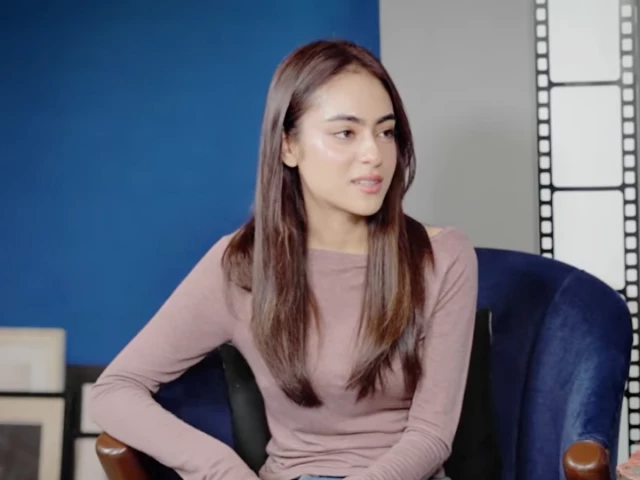
Singer Zoha Waseem claimed in an interview that the realities for male and female celebrities were very different and that people often failed to differentiate between genders and extend equal respect. She shared, however, that she doesn't let online backlash affect her mental health.
The singer of the viral hit Majboor, Zoha reflected on the success of the breakout track which catapulted her to fame. She also discussed the loss of privacy that came with public recognition.
"You can't imagine how popularity feels until you experience it," she said. The singer added that although she didn't consider herself "that popular," Majboor had "changed so much in such a short time."
"You have to maintain that momentum, and life in the spotlight is very different. Sometimes you become extremely cautious about everything," she said.
Discussing the challenges that women in the industry face, Zoha expressed her belief that male celebrities didn't face the same pressures. "The realities are very different for male and female celebrities. People fail to differentiate between genders and show respect," she said.
The singer also noted that women in the industry had to be especially mindful of how they presented themselves, as any moment could be recorded and circulated online without their permission. "Being on screen, you have to be very careful on wardrobe, the way you speak and talk on screen when you are on a show, and people are literally there to make videos and bloopers and capture content for views and likes," she noted.
Criticising the culture of filming people without consent, Zoha noted, "There's no point in recording someone." She added, "If I am at an event performing, that is fine, but backstage and at soundchecks and shooting these videos, you want to get comfortable with the idea but you cannot."
Further, Zoha shared that the reality of fame for women was also far less glamorous than many may imagine. "Being a female artist and getting fame is not as glamorous as it is in our heads," the singer said. She added that the fear of being misrepresented often made female artists more guarded, noting, "You don't want to get friendly with anyone. That gets you into a lot of trouble. You need to be aware of things that men don't think about."
Addressing the criticism she faced after Majboor went viral, Zoha revealed that she learnt not to let online negativity define her. "It's something you can't control. You get upset, but you have to remember who you really are. The people who've supported you from the beginning know you better than what others portray online," she said.
The singer added that while negative campaigns emerged, she refused to let them affect her. "There may be campaigns against you and haters will always appear. There are people trying to do that to me right now, but I don't care or panic. I'm mentally very strong," she shared.
Zoha also admitted she never anticipated the overwhelming popularity of Majboor. "It's been amazing. We've had incredible collaborations, and there's much more coming over the next three to four months. Suddenly, you're being approached by people you never imagined would reach out," she said.
Further, the singer shared that confidence had always been one of her strengths. "The director assumed it was my first music video and that I'd be shy, but I've never had stage fright or camera shyness. He even asked why I could do everything in a single take," she shared.
However, the singer admitted that performing Majboor live for the first time came with unexpected pressure, saying, "I grew up posting covers on social media, but performing an original song was completely different. I felt people expected much more from me. That was my transition from being a cover artist to an original artist."
Regarding her love for music, Zoha shared that she used to sing ghazals. "That was my genre," she said. The singer revealed, "My music teacher discovered that I sang ghazals and took me to Alhamra. At the time, it was very exclusive, and I didn't realise how special that opportunity was. I used to perform tributes to Madam Noor Jehan, and very few people were allowed to do that."
Reflecting on personal growth, Zoha noted that she had become more balanced over the years. "Two or three years ago, I had a lot of masculine energy. I drove everywhere on my own and wanted to handle everything myself," she said. "Now I've realised I don't have to carry that energy all the time," the singer stated.
Beyond music, she revealed that she studied jewellery and gem-making in college and also established her own salon as a makeup artist. Her latest solo track Duur Ve was released earlier this month as she continues to build on the success of Majboor and expand her career.











This material may not be published, broadcast, rewritten, redistributed or derived from. Unless otherwise stated, all content is copyrighted © 2026 The Express Tribune.






COMMENTS
Comments are moderated and generally will be posted if they are on-topic and not abusive.
For more information, please see our Comments FAQ