'Love turns into suspicion' in 'Shabnam'
Updated 3 hours ago

Actor argues weak enforcement leaves vulnerable people and animals exposed to abuse
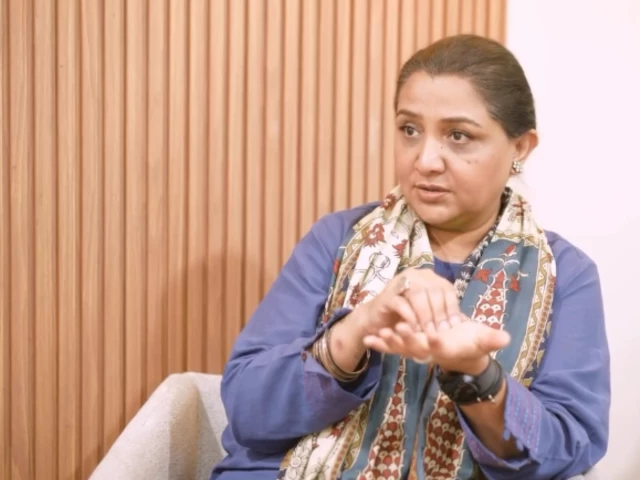
Actor Nadia Afgan argued that Pakistan's tendency to respond to vulnerability with violence — whether the victim is a stray dog, a woman or a child — stems from the same underlying problem: a lack of accountability.
Discussing Punjab's ongoing dog-culling drive during an interview, Nadia described the practice as a symptom rather than a solution to the issue of stray animals. She also questioned its legality, saying the Lahore High Court had previously ruled against methods such as poisoning or shooting stray dogs.
“In 2021, I found out there was a law; the Lahore High Court stated there's a law that you cannot cull dogs like this, you cannot poison them or shoot them, you cannot treat animals like this. But it is still happening. If the government itself is not abiding by the law, then what will the people do?” she said.
For Nadia, the issue is not simply the absence of legislation but the failure to enforce existing laws.
“Pakistan doesn't lack legislation,” she said. “I think there is a complete breakdown of everything here. It is a matter of accountability. It's not that we don't have laws; laws exist for everything, some built in 1902, some in 2021.”
She was careful not to present animal cruelty as an isolated issue. Instead, she described it as part of a wider pattern in which people and communities with less power are vulnerable to abuse.
“If we talk about abuse, whether it's inside homes, outside homes, whether it's animal abuse, abuse against children, women, workers, or any group or religious sect, everything is happening in our country, and it's happening openly,” she said.
She argued that cruelty towards animals, women and children can be traced to the same culture of normalising violence against those least able to resist it.
The conversation also touched on the emotional toll of repeatedly witnessing such incidents, from acid attacks to the mistreatment of rescue animals.
Nadia spoke about the particular helplessness of trying to raise awareness on social media, where serious issues can struggle to compete with celebrity gossip and online drama.
“You think about what you can do, you post something, and then you start hating yourself thinking, ‘What else am I doing besides this?’ You want to say something for the better, but you are so helpless. It destroys your mental health,” she said.
Nadia said the emotional strain had, at times, led her to step away from social media altogether.
Another source of frustration for her is the public scepticism faced by volunteers and animal shelters.
She rejected accusations that non-governmental organisations involved in animal rescue misuse donations, arguing that many initiatives operate with limited resources and rely heavily on volunteers.
“People say that NGO workers gather money and spend it on themselves, which is complete nonsense; NGOs have no money; young people are selling things from their own homes to do this work. It's insane,” she said.
According to Nadia, animal rescue in Pakistan is largely driven by volunteers and individuals who fund the work themselves, with little institutional support.
She said their efforts often remain invisible until a video depicting animal cruelty goes viral, after which public attention quickly shifts elsewhere.
She also linked the treatment of animals to how children learn to understand violence and vulnerability. She argued that normalising cruelty towards animals can teach children that violence is an acceptable response to perceived threats.
Nadia said the solution should begin with positive exposure to animals and empathy rather than fear-based conditioning. “One myth about street dogs is that you have to fear them,” she added.
She described how she approaches the subject with children by introducing them to animals rather than teaching them to be afraid of them, arguing that empathy is best learned through example rather than instruction.
Ultimately, Nadia framed the dog-culling debate as part of a much broader conversation about civic responsibility and the protection of vulnerable groups.












This material may not be published, broadcast, rewritten, redistributed or derived from. Unless otherwise stated, all content is copyrighted © 2026 The Express Tribune.




COMMENTS
Comments are moderated and generally will be posted if they are on-topic and not abusive.
For more information, please see our Comments FAQ