Former Rockstar director calls GTA 6 leaks 'nothing burger'
Updated 39 minutes ago

Filmed over 91 days, the $250 million epic was captured almost entirely on location using IMAX film cameras
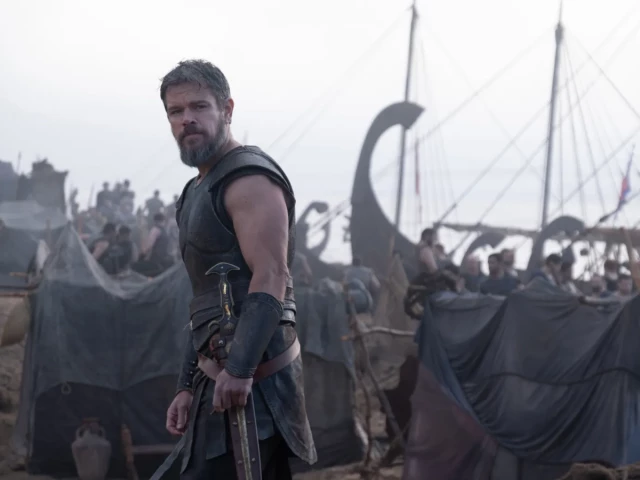
Christopher Nolan's The Odyssey may transport audiences to the world of ancient Greek mythology, but the filmmaker achieved its sweeping scale by shooting across six real countries rather than relying heavily on digital environments.
Filmed over 91 days, the $250 million epic was captured almost entirely on location using IMAX film cameras, with Nolan choosing dramatic coastlines, historic fortresses and rugged natural landscapes to recreate Odysseus' legendary journey home.
Greece served as the heart of the production, reflecting the story's origins in Homer's epic poem. Filming took place throughout the Peloponnese, including Voidokilia Beach, Nestor's Cave, Methoni Castle, Acrocorinth and Almyrolaka Beach. Nestor's Cave doubled as the setting for Odysseus' encounter with the Cyclops Polyphemus, while Pylos and nearby coastal locations recreated several key stops on the hero's voyage.
To bring the ancient city of Troy to life, the production travelled to Morocco, filming in Marrakech, Essaouira, Ouarzazate and the UNESCO World Heritage site Aït Benhaddou. The spectacular mud-brick settlement hosted the film's Trojan Horse sequence, where full-scale wooden horses were constructed for the production.
The journey continued through Italy, where Nolan filmed in Sicily, the Aeolian Islands and Favignana, also known as Goat Island. Long associated with Homer's writings, Favignana provided a fitting backdrop for Odysseus' Mediterranean adventures, while extensive maritime sequences were captured around Lipari, Basiluzzo and Vulcano.
For the story's supernatural elements, the filmmakers headed to Iceland. Locations including Landeyjahöfn, Hjörleifshöfði and the Snæfellsnes Peninsula supplied the stark volcanic terrain used to represent the Underworld and other mythical realms encountered during Odysseus' voyage.
The rugged coastline of Scotland also plays a prominent role, with filming taking place around Moray Firth, Findlater Castle, Buckie Harbour and Sunnyside Beach. The production even employed replica Viking-style longships to create authentic seafaring sequences against the country's dramatic cliffs and beaches.
Although the film emphasises real-world locations, some controlled water sequences were completed in the United States, where the production utilised Universal Studios' Falls Lake water tank in Los Angeles for scenes requiring greater technical precision.
Nolan has long favoured practical filmmaking, and The Odyssey is no exception. Rather than building the mythical world through visual effects, the director embraced real landscapes, historic sites and practical sets to give the adaptation a tangible sense of scale and authenticity. The result is a globe-spanning production that doubles as a cinematic travel guide through some of the world's most striking natural and historic locations.












This material may not be published, broadcast, rewritten, redistributed or derived from. Unless otherwise stated, all content is copyrighted © 2026 The Express Tribune.






COMMENTS
Comments are moderated and generally will be posted if they are on-topic and not abusive.
For more information, please see our Comments FAQ