Two police personnel martyred in firing in Lahore’s Badami Bagh
Updated 44 minutes ago

Rising rents push middle-class families to cheaper suburbs as Gulberg rents exceed Rs600,000 monthly
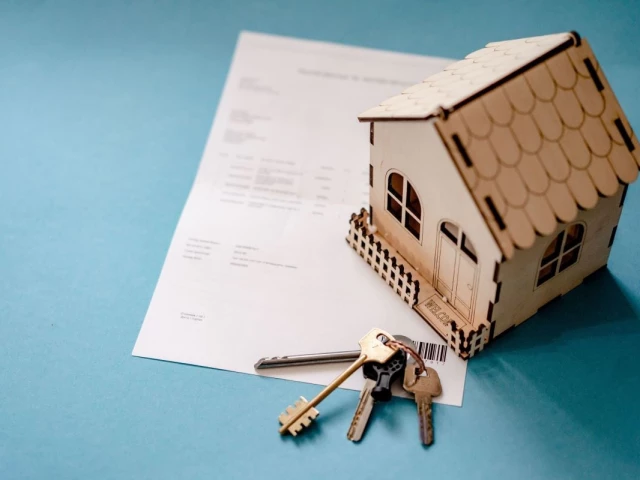
Rising rents in Lahore’s upscale neighbourhoods and major housing societies have created a housing crisis for the middle class, salaried individuals, and tenants arriving from other cities. In areas such as Defence Housing Authority (DHA), Johar Town, Bahria Town, Gulberg, and Askari, rents for houses, portions, and apartments have increased significantly over the past year. As a result, many families are now shifting to suburban and relatively less developed areas of the city.
According to data from property trading websites, by March 2026 the average rent for houses in DHA Lahore had reached around Rs281,000, while in Gulberg it exceeded Rs600,000. In Johar Town, the average rent was reported at Rs224,000, while in Bahria Town it was around Rs165,000. In some phases of DHA, rents for one-kanal houses have risen to between Rs300,000 and Rs400,000 per month, while rents for five-marla houses have also crossed Rs100,000.
Tanveer Khan, associated with the real estate marketing sector, explained that inflation, rising construction costs, increasing property prices, overseas Pakistanis’ investment, and limited quality housing are the main reasons behind the surge in rents. According to Khan, residential demand in Lahore continues to grow, while affordable rental housing for the middle class is steadily shrinking.
Ayesha, who works for a private company in Gulberg, shared that a flat that cost Rs45,000 two years ago now rents for more than Rs80,000, forcing her to move to a relatively cheaper area. Muhammad Usman, a resident of DHA, noted that his house rent was increased by Rs40,000 within a year. Meanwhile, government employee Nauman Ashraf, who moved to Raiwind Road, highlighted that rents in suburban areas are almost half compared to upscale neighborhoods.
According to real estate agents, the number of tenants is increasing in suburban housing societies including LDA Avenue, Raiwind Road, Jubilee Town, and Bahria Orchard because comparatively lower rents and the availability of smaller houses make these areas attractive for the middle class.
Rana Ahsan Elahi, a representative of a private housing society and property consultant, claimed that rents are determined on the basis of market demand, facilities, security, and infrastructure. On the other hand, officials of the Lahore Development Authority (LDA) stated that Pakistan lacks a comprehensive government system for regulating rents in private housing societies, and most matters are settled through mutual agreements between landlords and tenants.
Legal expert Ishtiaq Chaudhry opined that while certain rules exist under the Punjab Rented Premises Act, the government does not fix rents in the private market, which is why rental rates vary according to supply and demand in different areas. Urban planning expert Dr Ubaidullah added that many countries around the world have rent-control or affordable-housing policies, and similar models could also be considered in Lahore for low-income groups.
According to Provincial Minister for Social Welfare and Bait-ul-Maal Sohail Shaukat Butt, the “Apni Chhat Apna Ghar” programme aims to provide 100,000 affordable houses and apartments, while an interest-free loan scheme of up to Rs1.5 million for deserving individuals is also underway. “Plans are in place to provide easy-instalment loans to around 70,000 families and distribute 1,892 free plots across 19 districts,” said Butt.










This material may not be published, broadcast, rewritten, redistributed or derived from. Unless otherwise stated, all content is copyrighted © 2026 The Express Tribune.






COMMENTS
Comments are moderated and generally will be posted if they are on-topic and not abusive.
For more information, please see our Comments FAQ