Ride-hailing driver recounts Mir Raza's journey from home to Gulistan-e-Johar before murder
Updated 7 hours ago

Opposition targets governance, Karachi's woes, unfulfilled promises
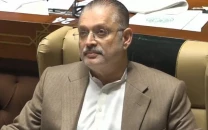
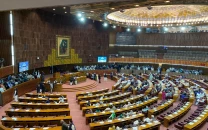
A heated exchange between treasury and opposition lawmakers dominated the fifth day of the Sindh Assembly's debate on the provincial budget on Tuesday, with ministers defending the government's fiscal priorities and development agenda while opposition members questioned its performance on public services, local government and Karachi's longstanding problems.
The session, chaired by Speaker Owais Qadir Shah, featured speeches from senior ministers and opposition legislators amid continuing debate on the budget for the upcoming fiscal year.
Planning and Development Minister Jam Khan Shoro said Sindh was being forced to support the federation because of declining tax collection by the Federal Board of Revenue (FBR). He claimed Sindh would contribute Rs260 billion to the federal government in grants and questioned why the FBR was struggling to increase revenue while the Sindh Revenue Board had raised collections to Rs350 billion.
Shoro said foreign-funded projects worth Rs1.9 trillion were under way for Karachi and criticised MQM-P's federal ministers for remaining silent on federal revenue issues. He also warned of a 48 per cent water shortage in the province and said the chief minister had written to the federal government over the matter.
Education Minister Syed Sardar Shah said the government had recruited nearly 97,000 teachers and established 32 universities since 2008. He announced the launch of a Student Attendance Monitoring System with World Bank support and said the government was working with NADRA to integrate children's B-Form data into the education system.
He said education should not be viewed merely as a source of government jobs and stressed the need for responsible use of Artificial Intelligence. Defending the province's unity, he remarked that Karachi was an inseparable part of Sindh and called for a more constructive and less divisive political discourse.
Health Minister Dr Azra Pechuho said reforms introduced in the health sector would begin producing visible results over the next two years. She highlighted the launch of vascular surgery services at Karachi's Trauma Centre, expansion of hospitals in Ancholi, Gulberg and Gulshan-e-Hadeed, and efforts to establish chest pain units across Sindh.
Agriculture Minister Sardar Muhammad Bakhsh Mahar reported record wheat production of 4.9 million metric tonnes and announced plans for an agricultural university in Ghotki and the introduction of a Sindh Youth Card. He also said anti-corruption institutions were being strengthened, with promotions awarded to 130 officers and action promised against corrupt officials.
Opposition lawmakers, however, challenged the government's claims and accused it of failing to address basic civic and governance issues.
MQM-P's Rashid Khan said several development promises made in previous budgets remained unfulfilled and blamed administrative inefficiency for persistent problems, including water shortages and staff shortages at Hyderabad Civil Hospital.
Jamaat-e-Islami's Muhammad Farooq argued that Karachi contributed the largest share of taxes but continued to suffer from water shortages, poor sanitation and delayed infrastructure projects. He alleged that delays in the K-IV water project benefited the tanker mafia and questioned how budgetary allocations were being utilized.
MQM-P's Najam Mirza criticised the government for failing to announce a Provincial Finance Commission Award and claimed local governments were receiving a smaller share of provincial resources. Fellow MQM-P lawmaker Rehan Akram questioned progress on the Safe City project and criticised water infrastructure planning in North Karachi.
MQM-P's Abdul Waseem said the PPP had been in power for 18 years and should be held accountable for the province's performance. He called for a 15 per cent increase in government employees' salaries and greater powers for local government representatives.
PTI's Rehan Rajput acknowledged improvements in the health sector but warned that the province's growing pension bill could become unsustainable. He proposed increasing the retirement age from 60 to 65 years. During the proceedings, Speaker Owais Qadir Shah announced that future sessions of the Sindh Assembly would be paperless. The House was later adjourned until Saturday afternoon.









This material may not be published, broadcast, rewritten, redistributed or derived from. Unless otherwise stated, all content is copyrighted © 2026 The Express Tribune.



COMMENTS
Comments are moderated and generally will be posted if they are on-topic and not abusive.
For more information, please see our Comments FAQ