Lifestyle changes driving diabetes spike
Updated 1 hour ago

.
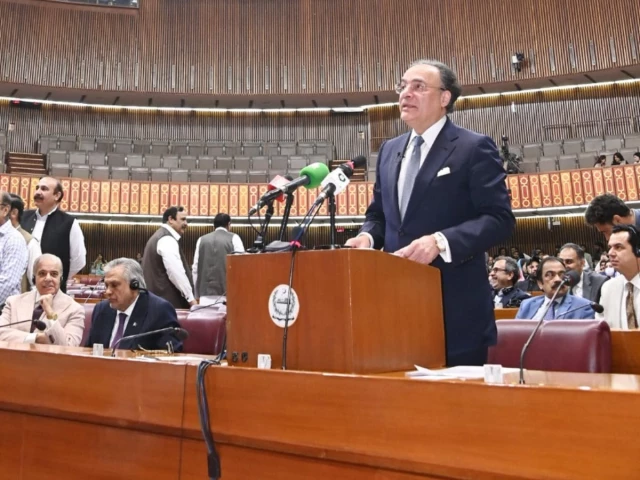
Finance Minister Muhammad Aurangzeb on Friday said that Pakistan had achieved significant milestones in the energy sector over the past year and initiated far-reaching structural reforms aimed at ensuring energy security, affordability and long-term sustainability.
Presenting the Federal Budget 2026-27 in the National Assembly, the minister described energy as the lifeline of the economy and said that despite regional challenges, the government had introduced comprehensive reforms in the power, oil and gas sectors to prepare the country for future energy demands.
He said the government's objective was to achieve energy self-sufficiency, provide affordable electricity to consumers and establish a system with minimal reliance on sovereign guarantees.
Aurangzeb informed the House that the power sector was undergoing the most extensive reform process in its history. He said improved financial discipline and operational efficiency had enabled the government to save more than Rs143 billion in subsidies during the outgoing fiscal year compared to the budgeted allocation.
"The most important aspect is that these savings were achieved through reforms rather than by shifting the burden onto deserving consumers," he added.
The finance minister said negotiations with Independent Power Producers (IPPs) had also resulted in measures expected to generate savings of approximately Rs3.7 trillion.
Highlighting progress on market reforms, he said the government had formally launched the Competitive Trading Bilateral Contract Market (CTBCM) in January this year, marking a major shift in Pakistan's electricity sector.
Under the new framework, the first competitive auction for around 800 megawatts of electricity would be held in September 2026, allowing power transactions to take place through a market-based mechanism.
He said that unlike the previous system, where electricity procurement was carried out through a single government buyer backed by sovereign guarantees, Pakistan was now transitioning towards a competitive electricity market.
"This is a fundamental restructuring of Pakistan's power economy," the minister remarked.
Aurangzeb further announced that a nationwide exercise would be undertaken during the current fiscal year to identify, register and verify all subsidized electricity consumers to facilitate the introduction of a Direct Subsidy Mechanism from January 2027.










This material may not be published, broadcast, rewritten, redistributed or derived from. Unless otherwise stated, all content is copyrighted © 2026 The Express Tribune.

1727268465-0/Untitled-design-(42)1727268465-0-208x130.webp "independence 2 0")



COMMENTS
Comments are moderated and generally will be posted if they are on-topic and not abusive.
For more information, please see our Comments FAQ