Lifestyle changes driving diabetes spike
Updated 2 hours ago

Consumers to get relief for three months
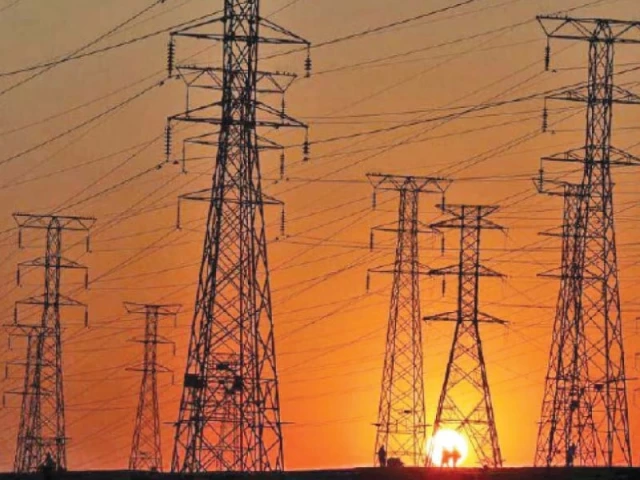
The National Electric Power Regulatory Authority (Nepra) has reduced electricity tariffs by up to Rs1.9857 per unit under the quarterly tariff adjustment mechanism, providing relief worth over Rs67 billion to consumers across the country.
The regulator approved an overall negative adjustment of Rs67.173 billion and decided that the relief would also be extended to K-Electric consumers during the same applicability period. The reduction will be passed on to eligible consumers over three months - June, July and August 2026.
"Based on the discussion made in the above paragraphs, the Authority has decided to approve an overall negative adjustment of Rs67,173 million," the power regulator said in its decision, adding that it had also approved the application of the quarterly adjustment for K-Electric consumers with the same applicability period.
"Accordingly, the relief of instant negative quarterly adjustment of Rs 1.9857/kWh shall also be provided to the consumers of K-Electric except lifeline, Incremental consumption package billed units and prepaid consumers, to be passed in a period of 03 months i.e. June, July and August 2026," the regulator said.
Nepra further stated that the negative adjustment would be provided uniformly at the rate of Rs1.9857 per unit during June, July and August 2026. The relief will apply to all consumer categories except lifeline consumers, units billed under the incremental consumption package, and prepaid consumers.
The power regulator conducted a public hearing on the matter on May 19, 2026.
During the hearing, commentator Amir Sheikh requested that the proposed negative quarterly adjustment be implemented during the billing months of May, June and July in order to offset the impact of upcoming positive Fuel Charges Adjustments (FCAs).
He also sought clarification regarding the positive capacity charges adjustment claimed by Lahore Electric Supply Company (Lesco) and Hazara Electric Supply Company (Hazeco), despite higher sales figures.
In response, company officials explained that the higher allocation of capacity charges resulted from increased demand, coupled with proportionately lower energy purchases than the reference levels, which contributed to the positive capacity charges adjustment for the two distribution companies.
Officials further noted that, from the consumers' perspective, the overall capacity charges adjustment remained negative and would ultimately benefit electricity users.
Another commentator, Rehan Javed, commended the operation of certain efficient power plants on natural gas instead of re-gasified liquefied natural gas (RLNG), saying the move would likely provide relief in the upcoming FCA. He urged authorities to continue the practice in the future.












This material may not be published, broadcast, rewritten, redistributed or derived from. Unless otherwise stated, all content is copyrighted © 2026 The Express Tribune.



1727268465-0/Untitled-design-(42)1727268465-0-208x130.webp "independence 2 0")



COMMENTS
Comments are moderated and generally will be posted if they are on-topic and not abusive.
For more information, please see our Comments FAQ