Lifestyle changes driving diabetes spike
Updated 2 hours ago

FCC asked to constitute a commission to examine constitutional, fiscal, economic impact of the petroleum levy.
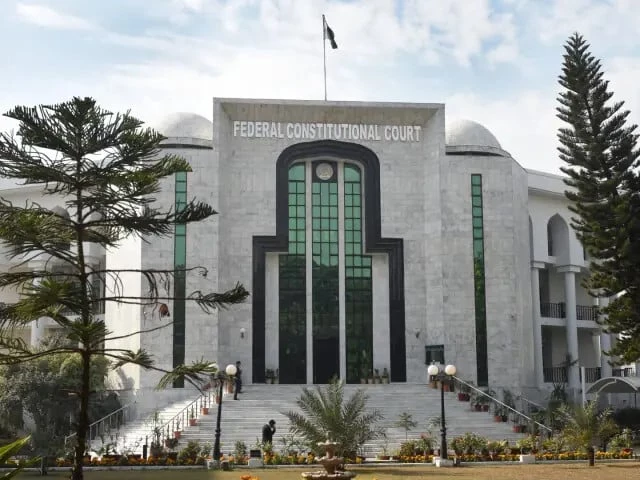
The Federal Constitutional Court (FCC) has entertained two constitutional petitions against the imposition of a huge petroleum levy and the hike in petroleum product prices. The FCC registrar has allotted numbers to the petitions.
In the petition, filed by JI chief Hafiz Naeemur Rehman, the FCC has been requested to issue directions for constituting an independent, expert-assisted mechanism or commission to examine the constitutional, fiscal, economic, and federal implications of the present petroleum levy structure.
The government announced a petroleum and carbon levy under an iron-clad commitment with the International Monetary Fund (IMF). The petroleum levy on petrol currently stands at Rs117.41 per litre, while the levy on HSD is Rs42.60 per litre.
Likewise, the FCC has also entertained a petition filed by advocate Zulfikar Ahmed Bhutta on May 1. The petitioner requested the FCC to direct the government to withdraw the recent price hike in petroleum products.
Both petitions were filed directly in the FCC under Article 175E of the Constitution. Interestingly, the FCC registrar's office did not raise any objections to either petition.
The court entertained the petitions weeks after they were filed. The FCC was established by the present regime through the 27th Constitutional Amendment.
In the context of Pakistan, a petroleum levy is a federal tax imposed on petroleum products such as petrol (motor spirit), high-speed diesel (HSD), kerosene, and light diesel oil. It is one of the government's most important non-tax revenue sources.
The petroleum levy is a fixed charge per litre that the government collects on fuel sales. Unlike sales tax which is percentage-based, the petroleum levy is a specific amount per unit.
It is imposed under federal laws such as the Petroleum Products (Petroleum Levy) Ordinance, 1961, and subsequent finance laws. The federal government has the authority to adjust it through finance bills and statutory regulatory orders (SROs).















This material may not be published, broadcast, rewritten, redistributed or derived from. Unless otherwise stated, all content is copyrighted © 2026 The Express Tribune.




1727268465-0/Untitled-design-(42)1727268465-0-208x130.webp "independence 2 0")



COMMENTS
Comments are moderated and generally will be posted if they are on-topic and not abusive.
For more information, please see our Comments FAQ