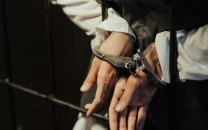
Nawaz to rivals: let political battles stay political
Updated 32 minutes ago

Historic handloom tradition now survives through a few remaining artisan families
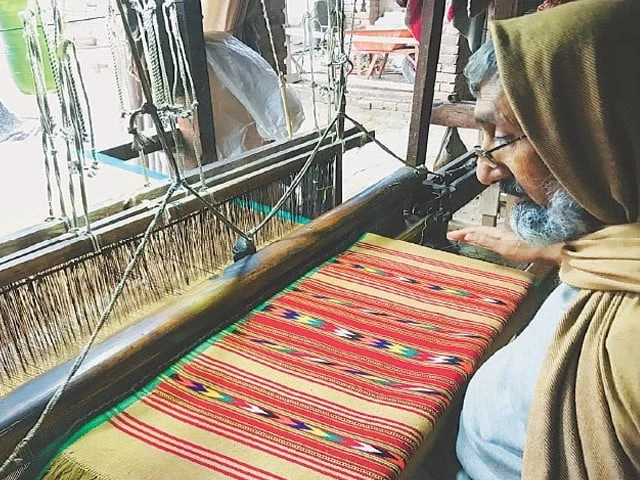
Nestled in the heart of Punjab, Makhdoom Pur Pahoran is an ancient trading and cultural town in Khanewal district whose identity extends far beyond its religious and historical significance.
For generations, the town has been renowned for its traditional handlooms, khaddar, shawls, and handwoven textiles, earning a distinguished place in the textile heritage of South Punjab.
Historical accounts and local narratives describe Makhdoom Pur as an important center of khaddar production.
The tradition is deeply rooted in the region's long association with cotton cultivation. With cotton readily available, local communities developed the craft of spinning yarn and weaving cloth on handlooms, creating a thriving cottage industry that became an integral part of the area's economy.
Khaddar, a hand-spun and handwoven fabric known for its durability and warmth, has long been a hallmark of Punjab's rural culture. Owing to its strategic location between Multan, Tulamba, and Kabirwala, Makhdoom Pur remained connected to historic trade routes, enabling locally produced textiles to reach markets across the region.
Before the Partition of the subcontinent in 1947, Muslim, Sikh, and Hindu traders jointly conducted business in the town's bustling markets.
The khaddar and handloom industry formed a vital component of local commerce. Traditional wooden handlooms installed in homes and workshops operated as family enterprises, with each family member playing a role.
Women spun cotton into yarn, men worked the looms, young people delivered finished cloth to markets, and local dyers added colors and finishing touches.
For generations, this system sustained the town's economy. Handwoven khaddar and the traditional "khes" remained essential household items throughout rural Punjab.
The industry witnessed significant growth during the British colonial period.
The expansion of railway networks and the establishment of market centers in the late nineteenth and early twentieth centuries broadened trade opportunities. Local artisans produced shawls, khaddar, blankets, and other household textiles that were sold in Multan, Khanewal, and surrounding towns.
Although the migration of Hindu and Sikh traders after Partition dealt a temporary blow to the industry, several local families, including members of the Jopo and Ansari communities, preserved the centuries-old craft and continued the tradition.
Local khaddar trader Muhammad Akbar Jopo said the industry was once a way of life in the region.
"In earlier times, village women spun yarn while men wove fabric on handlooms. This tradition eventually became the identity of 'Makhdoom Pur Khaddar'," he said.
The town became particularly known throughout Punjab for its handwoven khaddar, shawls, traditional clothing, and embroidery work.
Zafar Jopo, who has been using khaddar since the early years after Pakistan's independence, recalled that the fabric was widely preferred during winter because of its warmth, strength, and durability.
"Even during the British era, handloom weaving played a major role in the local economy. Later, power looms and factory-made fabrics reduced the demand for traditional weaving, but many families remain connected to this craft," he said.
Veteran trader and longtime khaddar merchant Abdul Rehman, popularly known as Mana Ansari, described the distinctive qualities of Makhdoom Pur's khaddar.
"The fabric was simple yet durable, usually produced in white, off-white, and other natural shades. Farmers, landowners, and working-class people relied on it for everyday use," he said.








This material may not be published, broadcast, rewritten, redistributed or derived from. Unless otherwise stated, all content is copyrighted © 2026 The Express Tribune.

1727268465-0/Untitled-design-(42)1727268465-0-208x130.webp "independence 2 0")


COMMENTS
Comments are moderated and generally will be posted if they are on-topic and not abusive.
For more information, please see our Comments FAQ