Ride-hailing driver recounts Mir Raza's journey from home to Gulistan-e-Johar before murder
Updated 14 hours ago

As decades-old dams fall into disrepair, worsening water shortages are drying up farmlands, depleting groundwater and
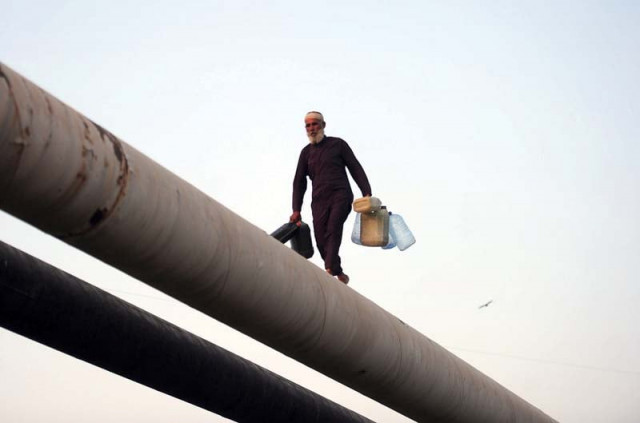
Agricultural areas on Karachi's outskirtsespecially Malir, Gadap, and Bin Qasim Townare facing a worsening water crisis as ageing rainwater dams deteriorate. With reduced storage capacity, groundwater levels are rapidly declining, damaging farms and orchards and forcing farmers to sell their land at low prices, often leading to conversion into housing schemes and informal settlements.
Research by late historian Gul Hassan Kalmati shows Karachi, and its surrounding areas contain 78 seasonal streams and rivers that flow into five major rivers before reaching the sea. Rehabilitating more than 50 dams and building new ones could conserve rainwater, recharge groundwater, protect agriculture, reduce temperatures, and help prevent flooding in areas such as Saadi Town and Scheme 33.
According to officials, dams in Karachi's outskirts were built by the Public Health Engineering Department (PHED), Gadap Town administration, the Irrigation Department, and private developers including Bahria Town and DHA City. Their purpose is to store rainwater and recharge groundwater for agriculture and local communities.
A Meteorological Department official informed that Karachi has experienced above-normal rainfall in recent years. The city's average annual rainfall is 186.3 mm. The highest annual rainfall, 481.4 mm, was recorded in 1994, while the highest monthly rainfall of 366.8 mm occurred in August 2020. Karachi's monsoon season lasts from July to September, while winter rains usually occur between December and February.
A Sindh government official, speaking anonymously, noted that climate change is increasing temperatures and disrupting rainfall patterns. While many countries tackled water shortages decades ago through rainwater harvesting infrastructure such as dams and reservoirs, Pakistan's provinces implemented such measures slowly and neglected maintenance of existing dams.
The official cited Hub Dam, built by WAPDA in 1984, as a successful example, supplying 100 million gallons of water daily to Karachi and 37 million gallons to Balochistan. "The British established Karachi's first rainwater reservoir system around 150 years ago through Dumlottee wells and conduits, but almost all the wells have now dried up," claimed the official.
According to environmental activist Akhtar Rasool, many dams have accumulated silt and urgently require cleaning to restore storage capacity. "Illegal sand and gravel extraction and tree cutting have slowed groundwater recharge. Areas within 23 kilometers of dams still have water available at depths of 6070 feet, while distant areas require drilling 400600 feet deep," explained Rasool.
Another Sindh government official asserted that the Irrigation Department built 19 dams within Karachi and 11 nearby, while PHED constructed 12. The remaining dams were built by Gadap Town and other agencies. "Irrigation Department dams remain in satisfactory condition because they are properly designed and maintained annually, unlike many PHED and Gadap Town dams," said the official.
In this regard, a PHED official confirmed that all 12 dams under the department's supervision are damaged and deteriorating due to lack of repair funds. "Eight dams were built in Gadap to improve groundwater recharge, while four near the coast in Keamari Town were intended to supply drinking water. Funding requests have been submitted to the Sindh government," noted the official. An engineer from the Irrigation Department's Small Dams division rejected claims that Thaddo Dam or Lath Dam had breached, calling such reports disinformation since dams are intentionally designed to overflow after reaching capacity hence downstream groundwater recharge continues. Regarding the 2022 flooding in Saadi Town, he blamed blocked natural drainage routes rather than the dams.
Landowner Lal Bakhsh conceded that farmers face severe water shortages and electricity load shedding, while groundwater in remote areas lies as deep as 400 feet. "Karachi's agricultural lands and trees act as the city's "lungs" therefore expired agricultural leases are forcing farmers to sell land to the "builder mafia." Nearly 90 per cent of agricultural land has already been converted into housing schemes and settlements," shared Bakhsh.
Former NED University Vice Chancellor Dr Sarosh Lodhi opined that rainwater conservation has become a global priority due to climate change. "The Pakistan Engineering Council has issued guidelines on rainwater harvesting. Karachi urgently needs more dams to preserve runoff from surrounding mountains and recharge groundwater," said Dr Lodhi.
Attempts to obtain comments from Gadap Town administration remained unsuccessful.

















This material may not be published, broadcast, rewritten, redistributed or derived from. Unless otherwise stated, all content is copyrighted © 2026 The Express Tribune.






COMMENTS
Comments are moderated and generally will be posted if they are on-topic and not abusive.
For more information, please see our Comments FAQ