Four invisible barriers to foreign investment
Updated 52 minutes ago

Pakistan's economic trajectory being shaped by complex interplay of external shocks, internal policy responses
Pakistan's economic narrative is being shaped less by domestic policy missteps and more by forces far beyond its borders. At the centre of this evolving story is what analysts call the "Middle East Premium" – a term increasingly used to describe the added economic cost imposed on import-dependent economies by geopolitical instability in the Gulf region. For Pakistan, this premium is not an abstract concept; it is a measurable burden complicating an already fragile recovery path.
The most immediate transmission channel of this premium is energy and logistics. The ongoing regional conflict has severely disrupted maritime trade, with traffic through the Strait of Hormuz – one of the world's most critical oil chokepoints – reportedly down as much as 95%. For Pakistan, which relies heavily on imported fuel and intermediate goods, this disruption has translated into sharply higher shipping costs, insurance premiums, and delivery delays. Industrial sectors, particularly textiles, chemicals, and manufacturing, are now grappling with rising input costs that are eroding margins and dampening output.
This external shock comes at a particularly inopportune moment. Pakistan had begun FY26 with cautious optimism, posting a GDP growth of 3.7% in the first quarter. This modest recovery was driven by improved agricultural output, a rebound in large-scale manufacturing, and relative macroeconomic stability following earlier stabilisation efforts. However, the resurgence of global volatility threatens to derail this momentum. According to the World Bank's April 2026 Economic Update, the increased cost of imports and reduced export competitiveness are expected to widen the current account deficit over the remainder of the fiscal year.
A widening current account deficit is more than just a statistical concern; it directly impacts Pakistan's foreign exchange reserves and currency stability. As import bills rise, particularly for oil and gas, the pressure on the Pakistani rupee intensifies. A weaker currency, in turn, feeds into imported inflation, creating a vicious cycle that policymakers are struggling to contain.
This brings into focus the State Bank of Pakistan's increasingly delicate balancing act. On the one hand, the central bank aims to support economic growth by maintaining favourable credit conditions for businesses. On the other, it must prevent inflation, especially imported inflation, from spiraling out of control. The SBP's recent monetary policy decision reflects this tension.
In its Monetary Policy Statement dated April 27, 2026, the SBP raised the policy rate by 100 basis points to 11.5%, signaling a clear hawkish pivot. This move was not taken lightly. The Monetary Policy Committee acknowledged that the first half of FY26 had seen a healthy 3.8% growth in real GDP, indicating that the economy was on a recovery trajectory. However, the committee warned that supply-side shocks emanating from the Middle East posed a significant upside risk to inflation.
By tightening monetary policy, the SBP aims to anchor inflation expectations and prevent a return to double-digit inflation levels that have historically destabilised the economy. Yet, this approach is not without trade-offs. Higher interest rates increase the cost of borrowing for businesses, potentially slowing investment and industrial expansion. For small and medium enterprises already squeezed by rising input costs, this could mean scaling back operations or delaying growth plans.
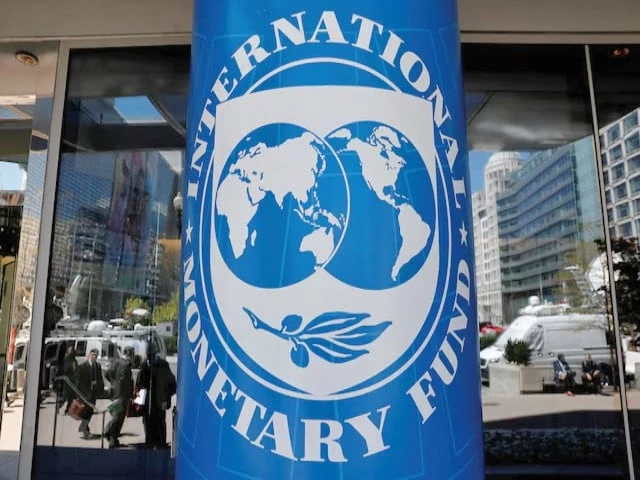
Pakistan has secured a crucial financial lifeline from the International Monetary Fund, easing immediate concerns over external financing pressures. The IMF Executive Board, in its meeting held on May 8, 2026, completed the third review under Pakistan's Extended Fund Facility and approved the disbursement of SDR 760 million. In addition, the board approved the second tranche of SDR 154 million under the Resilience and Sustainability Facility.
The successful completion of the IMF review carries significance beyond the immediate inflow of funds. It reinforces international confidence in Pakistan's reform trajectory and signals continued multilateral support at a time of heightened external vulnerability. For investors and financial markets, the approval reduces near-term default concerns and provides temporary breathing room for policymakers managing the country's balance-of-payments pressure.
The IMF support also comes with continued expectations of fiscal discipline and structural reform. The government remains under pressure to maintain a primary fiscal surplus of 1.6% of GDP while continuing efforts to privatise loss-making state-owned enterprises. These reforms are considered essential to reducing the circular debt burden and improving long-term fiscal sustainability.
Despite the relief provided by the IMF inflows, policymakers understand that external financing alone cannot shield Pakistan from global economic turbulence. The country remains highly exposed to commodity price shocks, energy import volatility, and geopolitical disruptions in the Middle East. As a result, economic diversification has become increasingly urgent. There is a silver lining emerging from an unexpected quarter – the services sector, particularly information and communication technologies. While traditional export sectors such as food and agriculture have faced a 35% decline due to intense global competition and shifting demand patterns, services' exports have shown remarkable resilience.
Data from the Asian Development Bank and the World Bank indicate that ICT-led services' exports have grown by 16.5% in early FY26, maintaining a strong double-digit trajectory. This growth is not merely a statistical achievement; it reflects a structural shift in Pakistan's export composition. The government's Digital Pakistan initiative has played a pivotal role in this transformation. By promoting digital infrastructure, supporting startups, and encouraging IT exports, policymakers have laid the groundwork for a more diversified and resilient economic base. Unlike traditional exports, which are heavily dependent on global commodity cycles and physical logistics, ICT services are less vulnerable to disruptions such as those currently affecting maritime trade.
Pakistan's economic trajectory in 2026 is being shaped by a complex interplay of external shocks and internal policy responses. The Middle East premium has added a new layer of uncertainty, driving up costs and testing the resilience of key sectors. The SBP's monetary tightening reflects a cautious approach to managing inflation risks, even at the expense of short-term growth. Meanwhile, the successful IMF review and the arrival of fresh inflows have provided short-term financial stability and renewed confidence in the country's reform programme.
THE WRITER IS A MEMBER OF PEC AND HOLDS A MASTER'S DEGREE IN ENGINEERING






This material may not be published, broadcast, rewritten, redistributed or derived from. Unless otherwise stated, all content is copyrighted © 2026 The Express Tribune.





COMMENTS
Comments are moderated and generally will be posted if they are on-topic and not abusive.
For more information, please see our Comments FAQ