SC defines 'doctrine of complete justice'
Updated 2 hours ago

Ceasefire talks stalled as Trump pushes for a deal with Tehran, Vance says ‘making progress’
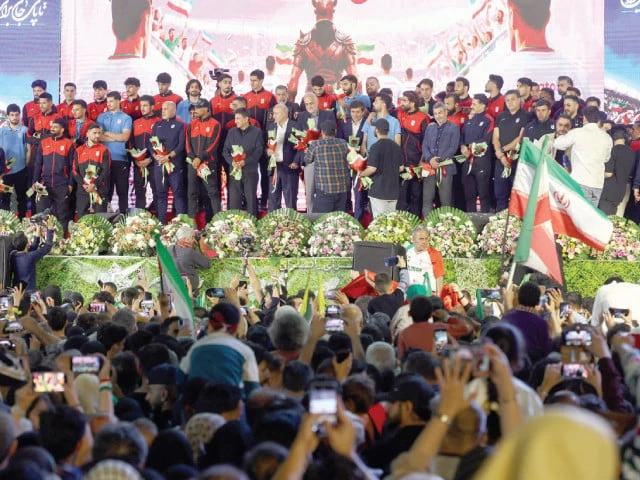
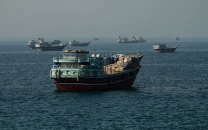
Iran has tightened its grip on the Strait of Hormuz, which before the war handled one-fifth of the world's oil supply, saying it will no longer allow US weaponry to transit the Strait of Hormuz to regional bases.
Iranian officials have signalled they see that control as a long-term strategic goal. An army spokesperson said supervision of the waterway could generate revenue amounting to twice Iran's oil income, while strengthening its foreign policy leverage.
"After this war ends, there will be no place for retreat," the spokesperson said, according to comments carried by ISNA news agency.
Iran said it will no longer allow US weaponry to transit the Strait of Hormuz to regional bases, with the army declaring that the strategic waterway is now under the coordinated strategic control of the Iranian armed forces, state broadcaster Press TV reports.
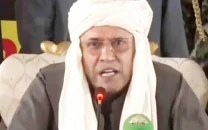
"From now on, we will not allow American weapons to transit the Strait of Hormuz and enter regional bases," Army spokesman Brigadier General Mohammad Akraminia says, addressing a ceremony. "Any country wishing to transit the waterway must do so under the supervision of Iran's armed forces, ensuring a 'passage without harm'."
According to Akraminia, the western part of the strait is under the command of the Islamic Revolution Guards Corps (IRGC) Navy. At the same time, its eastern section is controlled by the Iranian Navy.
Iranian First Vice President Mohammad Reza Aref says the country's "right to the Strait of Hormuz is established, and the matter is closed", Al Jazeera reports.
Iran's ISNA news agency quotes him as saying that Iran's plans "were tailored to the sanctions and pressures of our enemies, but now we must plan for the security and well-being of our country and the region".
Iranian Foreign Minister Abbas Araghchi is demanding the release of four Iranians detained by Kuwait, which suspects them of trying to infiltrate the Persian Gulf nation.
"In clear attempt to sow discord, Kuwait has unlawfully attacked an Iranian boat and detained 4 of our citizens in the Persian Gulf," Araghchi posted Wednesday on X. "This illegal act took place near island used by the US to attack Iran."
"We demand immediate release of our nationals and reserve right to respond," the minister added, without addressing the allegations of an attempt to infiltrate.
On Tuesday, Kuwaiti state media reported that authorities arrested four individuals described as members of Iran's Islamic Revolutionary Guard Corps (IRGC) who were trying to infiltrate the country to "carry out hostile acts."
The Iranians tried to enter Kuwait on May 1 aboard a fishing boat and clashed with Kuwaiti soliders, Kuwaiti state media said. Iran denied the reports in a statement published by the semi-official Tasnim News Agency, saying the four were "carrying out routine maritime patrol duties" for the Iranian coast guard and entered Kuwaiti waters only because of a "disruption in the navigation system."
The incident, if confirmed, would be the first known attempted military infiltration by Iran into a neighboring Arab country during the war.
US Vice President
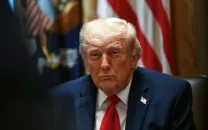
Vice President JD Vance said Wednesday that lead US negotiators are still "making progress" in peace talks with Iran, despite a series of unsatisfying responses from Tehran in recent weeks.
"I spent a good amount of time on the phone with both Jared Kushner and Steve Witkoff this morning, and a number of our friends in the Arab world this morning," Vance told reporters, referring to the administration's two top envoys to Iran. "Look, I think that we are making progress. The fundamental question is do we make enough progress that we satisfy the president's red line."
Vance said the administration remains laser-focused on ensuring Iran can never obtain a nuclear weapon and framed that as the central benchmark for any agreement.
"The red line is very simple," he said, adding that the president "needs to feel confident that we've put a number of protections in place such that Iran will never have a nuclear weapon."
The US-Israeli war in Iran loomed over US President Donald Trump's visit to China on Wednesday, as signs emerged that the conflict is shifting alliances across the Middle East.
Trump arrived in Beijing on Wednesday ahead of talks with President Xi Jinping set to begin on Thursday. He is expected to ask for China's help to resolve the costly and unpopular conflict, which he launched in late February, but analysts say he is unlikely to get the support he wants.
New reports on Wednesday highlighted how the Iran war is accelerating geopolitical realignment across the region.
More than one month after a tenuous ceasefire took effect, US and Iranian demands to end the war remain far apart.
Washington has called for Tehran to scrap its nuclear programme and lift its hold on the strait, while Iran has demanded compensation for war damage, an end to the US blockade and a halt to fighting on all fronts, including in Lebanon, where Israel is battling Iran-backed Hezbollah. Trump has dismissed those positions as "garbage."
Vice President JD Vance said on Wednesday he believes progress is being made in negotiations. "The fundamental question is, do we make enough progress that we satisfy the President's red line?" Vance told reporters at the White House. "And the red line is very simple. He needs to feel confident that we put a number of protections in place such that Iran will never have a nuclear weapon."
The conflict is weighing heavily on global energy markets. Global oil supply will fall by around 3.9 million barrels per day in 2026 and undershoot demand due to disruptions caused by the Iran war, the International Energy Agency said on Wednesday, with more than 1 billion barrels of Middle East supply already lost.
The Trump administration said on Tuesday that senior US and Chinese officials had agreed last month that no country should be able to charge tolls on traffic through the region, in an effort to project consensus on the issue ahead of the summit. China, a major buyer of Iranian oil that maintains close ties with Tehran, did not dispute that account.
On Wednesday, a Chinese supertanker carrying 2 million barrels of Iraqi crude sailed through the Strait of Hormuz, ship-tracking data showed, marking the third known passage by a Chinese oil tanker through the channel since the US and Israel launched strikes on Iran on February 28.
(With input from News Desk)








This material may not be published, broadcast, rewritten, redistributed or derived from. Unless otherwise stated, all content is copyrighted © 2026 The Express Tribune.






COMMENTS
Comments are moderated and generally will be posted if they are on-topic and not abusive.
For more information, please see our Comments FAQ