State Bank receives $1.3b IMF disbursement
Updated 1 hour ago

Business leaders urge honest budgeting as industrial slowdown, external pressures intensify
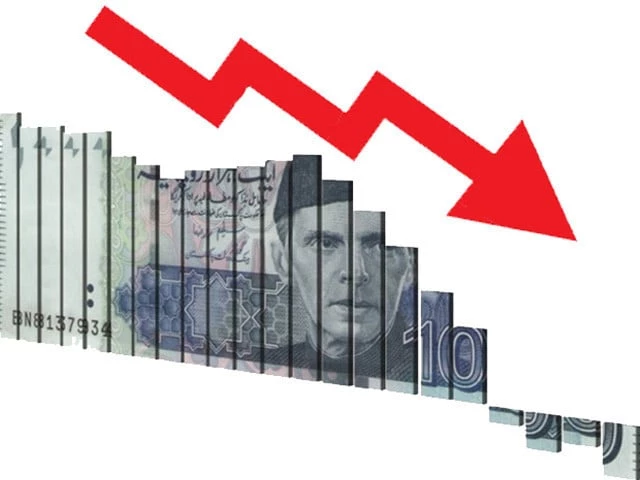
As Pakistan heads towards the federal budget 2026-27 amid growing regional uncertainty and persistent economic fragility, nearly the entire business community, economists and business analysts are warning that the country's external account pressures are once again beginning to intensify. There are fears that the trade and current account deficits may widen beyond official projections.
The warning signs have been building for months, but now they are too loud to ignore. The country's trade and industrial landscape is under mounting pressure, and voices are growing increasingly urgent in their calls for a reality check.
Speaking on the emerging economic challenges, Raja Waseem Hassan, Vice Chairman of the Pakistan Industry and Traders Association Front (PIAF), painted a sobering picture of where the economy stands today. According to him, rising international prices have started taking a visible toll on Pakistan's trade balance, with the annual trade deficit now projected to swell to nearly $7 billion by the close of the current fiscal year. For a country already walking a financial tightrope, this is a number that demands serious attention.
What makes the situation more alarming is its effect on domestic industry. Hassan pointed out that a shortage of imported inputs is quietly strangling Pakistan's industrial base. Fertiliser production dropped by 8% in March alone, while cement output fell by 7%. The textile sector, long considered the backbone of Pakistan's export economy, continues to underperform with no clear signs of recovery. The numbers, as Hassan said, tell a story of an economy that is struggling to grow its exports at a time when it desperately needs to do so.
Hassan is not alone in raising these concerns; every business leader has similar concerns. "We have been relying on short?term fixes for far too long. Every budget cycle, we are presented with projections that look good on paper but fail to hold up against ground realities," said Mian Bilal Hanif, a mid?level businessman. "The industrial slowdown we are seeing today is not accidental. It is the result of years of policy inconsistency and an over?dependence on imports that we simply cannot afford anymore." He stressed that unless structural reforms are introduced alongside the upcoming budget, the economy risks entering a more prolonged period of stagnation.
The shadow of the ongoing Middle East conflict is also looming large over Pakistan's economic outlook. Hassan noted that the war has already begun to produce measurable negative effects on the country's finances. With global supply chains disrupted and energy prices remaining volatile, the current account deficit for 2025-26 is expected to overshoot original forecasts by a considerable margin. This, in turn, is expected to place fresh strain on Pakistan's foreign exchange reserves, a concern that has historically triggered a chain reaction of currency pressure and inflationary spikes.
According to market leaders, the ongoing International Monetary Fund programme is adding another layer of complexity. Hassan acknowledged that the original targets set under the programme for this year have become increasingly difficult to meet given the rapidly shifting economic environment. The goalposts, so to speak, have moved, and Pakistan now finds itself in a position where both its fiscal commitments and its development ambitions must be reassessed with fresh eyes.
Yet amid all the gloom, there is cautious hope. Hassan expressed confidence that the upcoming budget, combined with thoughtful policy decisions by the State Bank of Pakistan, could help set the economy on a more stable path heading into 2026-27. The key, he insisted, lies in honest policymaking. He made a direct appeal to those preparing the budget to resist the temptation of presenting overly optimistic figures, urging instead for a document grounded in reality, one that acknowledges the challenges rather than glossing over them with inflated projections.




This material may not be published, broadcast, rewritten, redistributed or derived from. Unless otherwise stated, all content is copyrighted © 2026 The Express Tribune.





COMMENTS
Comments are moderated and generally will be posted if they are on-topic and not abusive.
For more information, please see our Comments FAQ