Suicide bomber killed on Punjab border
Updated 50 minutes ago

Grave-digging charity traditions vanish; abandoned graves being reused for burials
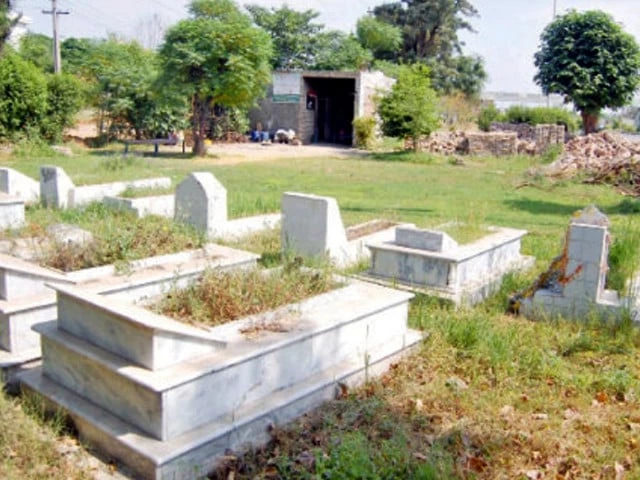
Crushing inflation has made funeral and burial arrangements prohibitively expensive across Rawalpindi, leaving the poor struggling even to lay their loved ones - parents, siblings, and children - to rest.
The long-standing tradition in neighbourhoods and local communities, where residents voluntarily dug graves free of charge as an act of charity, has virtually disappeared. To make matters worse, graveyards across the city, both large and small, are rapidly running out of burial space.
Signboards declaring "No Grave Space Available" have now appeared at many of the city's oldest and largest cemeteries. Meanwhile, the price of burial shrouds has soared in the open market, while the customary post-funeral meals have imposed an additional and often unbearable burden on impoverished families.
A large number of low-income and middle-class households are reportedly falling into debt merely to complete funeral rites for deceased relatives.
The Citizens Action Committee has appealed to the public to redirect money traditionally spent on lavish weddings and receptions towards assisting bereaved families instead. According to the committee, funeral and burial costs have increased dramatically over the past four years, pushing many families beyond financial endurance.
Even burial shrouds are now being sold in substandard quality for the poor, with inferior cloth marketed as a cheaper alternative. In the open market, a burial shroud now costs between Rs3,000 and Rs4,000. Essential funeral items - including rose water, flower petals, camphor and incense - range from Rs2,000 to Rs2,500.
Securing a burial plot has become extremely difficult. The total expense for obtaining grave space, excavation of a simple grave and preparing it with bricks now ranges between Rs40,000 and Rs45,000. Those who perform the ritual washing of the deceased must also be paid labour charges, typically between Rs1,000 and Rs1,500.
Constructing permanent graves has become another major expense. A brick-and-cement grave costs approximately Rs15,000, while a grave finished with low-quality marble costs around Rs25,000. Customised marble and grave designs can exceed Rs30,000.
Previously, for over a century, graves in the city's cemeteries were traditionally prepared voluntarily by groups of young men from the local community as an act of religious merit and charity. That system has now collapsed. Today, every cemetery requires formal identification of the deceased and official orders for grave preparation.
Comprehensive registration records are now mandatory at major cemeteries. Separate charges are imposed for gravediggers, as well as for construction materials such as bricks, sand and cement.
Most cemeteries in the city are now full. According to reports, gravediggers sometimes remove old graves for additional payments. Graves of unidentified or abandoned deceased persons are allegedly being erased and reused for new burials.












This material may not be published, broadcast, rewritten, redistributed or derived from. Unless otherwise stated, all content is copyrighted © 2026 The Express Tribune.






COMMENTS
Comments are moderated and generally will be posted if they are on-topic and not abusive.
For more information, please see our Comments FAQ