First step towards school autonomy in Sindh
Updated May 26, 2026

Pakistan's publishing world is dying with copyright theft, loadshedding, 100 books sold a year

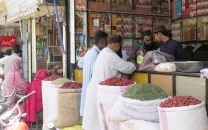
I spent part of last week in Lahore and Karachi speaking to booksellers and publishers. I had limited time, so I decided not to go to booksellers in posh neighbourhoods who take great pride in not having any Urdu titles. Instead, I went to see my colleagues and friends in old Urdu bazars in the two cities and in the neighborhoods around them. As always, my colleagues were kind, generous, patient and extremely hospitable. The places were varied. In one location, there was a group of people who came in, took a bunch of selfies in front of bookstacks in different poses and left. At another bookstore, the street in front had big puddles of water which was being sprayed sideways by moving motorcycles. When I inquired whether it had rained recently, the shopkeeper looked at me with a puzzled look and told me that no, it had not rained. This was an overflowing sewage drain. It had been like that for several months – clearly it had been over a year since I had last come.
I was there because I love books, and I really enjoy the company of booksellers and publishers. I also wanted to know about recent trends in sales, what kind of books people were reading and who was coming to them. Though I did have a hypothesis on how things were going, I wanted to get first-hand information. While the consensus was that people do not like to read anymore and that social media is destroying our ability to engage with longer texts, there were things that surprised me a bit. For example, I learned that most publishers print about a thousand copies of a book in the first run, and it takes 8-10 years for that stock to be sold in the whole country (this includes selling at book fairs, to bookshops and to school and public libraries). And that is for a book that does well. There are of course some exceptions, but those are very, very rare. This means that for a good selling book, a publisher sells about 100 books a year, or 8-9 copies per month. In a country of nearly 250 million, this figure alone is deeply disturbing. The situation is not new and has been like this for some time. And because so few books are sold, authors do not get much royalty.
And then there is rampant violation of copyright and public acceptance of this violation. I heard so many stories about original works being copied and put online for anyone to print them at home or reprint and sell it or read on their devices – all without the consent of the author or the publisher. With better and cheaper scanning tools available, and easy sharing of material through apps and social media, someone's creative work may be copied, altered and republished under another name and there is no one to stop. This alone is a strong disincentive for someone to publish locally.
Individual booksellers in the two cities had different takes on what kind of books people are reading, but all of them agreed that the current loadshedding crisis was causing deep pain and some publishers were seriously thinking of ceasing their operations. Printing is a continuous business, and disruption due to loadshedding means that the process stops abruptly, meaning in some cases the machine stops in the middle of printing a page. All that stock is lost, and so is the ink. This happens frequently. The cost of reprinting adds up very quickly.
I spent a long time, over tea and cookies that only Pakistani bakeries can make, with my friends. I asked if things could change. Surprisingly, they were more upbeat about the future generations than they were about people of my generation. They felt that there is a real appetite. In an environment that often seems stifling, young people longed for an opportunity to imagine. They want to read quality literature. But books of high quality exist in an ecosystem – an ecosystem that cherishes creativity and protects intellectual property. That ecosystem is cultivated as much by government policies as it is by our own values.










This material may not be published, broadcast, rewritten, redistributed or derived from. Unless otherwise stated, all content is copyrighted © 2026 The Express Tribune.


COMMENTS
Comments are moderated and generally will be posted if they are on-topic and not abusive.
For more information, please see our Comments FAQ