Palestine welcomes Israel's inclusion on UN sexual violence blacklist as 'realistic, objective'
Updated 1 hour ago

Two sides review efforts aimed at achieving peace, enhancing security and stability in the region
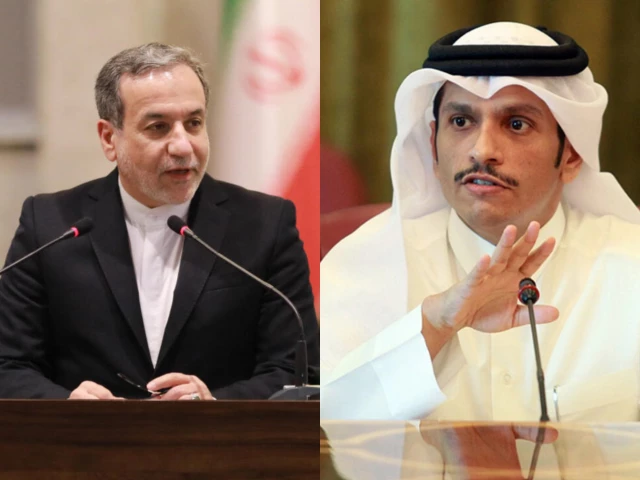
Qatar's prime minister told Iran's foreign minister that using the Strait of Hormuz as "a pressure tool" would only deepen the crisis in the Gulf, the Qatari foreign ministry said on Sunday.
Prime Minister Mohammed bin Abdulrahman al‑Thani also told Iran's Abbas Araqchi in a phone call that all parties in the conflict should respond to mediation efforts to end the war.
According to Anadolu, the two sides reviewed efforts aimed at achieving peace and enhancing security and stability in the region during their phone call, the ministry said on X.
Prime Minister and Minister of Foreign Affairs @MBA_AlThani_ Holds Phone Call With Iranian Foreign Minister
— Ministry of Foreign Affairs - Qatar (@MofaQatar_EN) May 10, 2026
Doha | May 10, 2026
HE Prime Minister and Minister of Foreign Affairs Sheikh Mohammed bin Abdulrahman bin Jassim Al-Thani held a phone call on Sunday with HE Minister of… pic.twitter.com/8mIb0qRYYN
Sheikh Mohammed, who is also the foreign minister, expressed Doha’s "full support for mediation efforts aimed at resolving the crisis” between Iran and the US through peaceful means, stressing the need for all parties “to respond positively to these efforts in order to create suitable conditions for progress in negotiations and reduce the chances of renewed escalation."
Read More: PM Shehbaz, Qatari counterpart discuss regional situation, reaffirm support for peace efforts
Freedom of navigation is a "fundamental principle that is not open to compromise, and that closing the Strait of Hormuz or using it as a pressure tool would only deepen the crisis and expose the vital interests of regional countries to danger," he told Araghchi.
The Qatari premier called for "adhering to international law and the United Nations Charter," while putting the interests of the region and its people first in order to strengthen regional and global security, support de-escalation, and ease tensions, the ministry said.
Regional tensions have escalated since the US and Israel launched strikes against Iran on February 28, triggering retaliation from Tehran against Israel as well as US allies in the Gulf, along with the closure of the Strait of Hormuz.
A ceasefire took effect April 8 through Pakistani mediation, but talks in Islamabad failed to produce a lasting agreement. The truce was later extended by US President Donald Trump without a set deadline, giving way to diplomacy for a permanent solution to the war.








This material may not be published, broadcast, rewritten, redistributed or derived from. Unless otherwise stated, all content is copyrighted © 2026 The Express Tribune.






COMMENTS
Comments are moderated and generally will be posted if they are on-topic and not abusive.
For more information, please see our Comments FAQ