DPM Dar lands in New York ahead of UNSC debate
Updated 1 hour ago

CCC highlights need for collective responsibility Commanders review security, border situation Readiness, counter-t
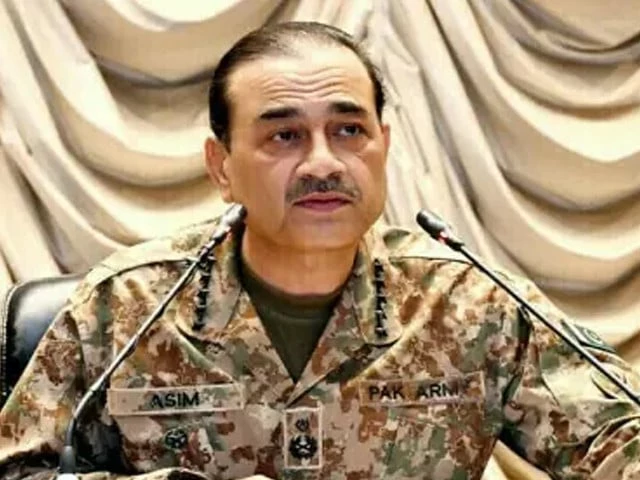
As the ceasefire between Iran and the United States is hanging by a thread amid escalatory moves from both sides, Pakistan's top military leadership on Tuesday called for restraint and avoidance of escalation, warning that fast-evolving geopolitical developments could have far-reaching consequences for regional stability.
The message came during the 275th Corps Commanders' Conference (CCC), chaired by Chief of Army Staff and Chief of Defence Forces Field Marshal Syed Asim Munir at the General Headquarters in Rawalpindi, where the country's overall security environment, both internal and external, was reviewed in detail.
Without explicitly mentioning the Iran-US tensions, the top military brass, while deliberating on the broader regional situation, noted that emerging geopolitical developments carry significant implications and stressed that peace and stability are intrinsically linked to "collective restraint, responsibility and respect for sovereignty."
The emphasis on restraint comes as the ceasefire brokered by Pakistan between Iran and the United States remains delicately poised, raising fears of a renewed conflict in the Gulf region. A series of developments, including the fresh standoff over the Strait of Hormuz and reported strikes on the UAE, has threatened the peace efforts.
Pakistan, which is a key mediator, is in contact with principal players and other stakeholders to ensure that the truce holds and the diplomatic process is not scuttled.
But the carefully-worded statement issued by the Inter-Services Public Relations (ISPR), after the corps commanders conference suggested that Islamabad was concerned over the rapidly evolving situation.
According to the ISPR, the forum acknowledged Pakistan's continued responsible role in advocating stability and supporting efforts aimed at preventing further deterioration of the situation. It reiterated that peace and stability in the region were intrinsically linked to collective restraint, responsibility and respect for sovereignty.
The conference began with a tribute to the martyrs of the armed forces, law-enforcement agencies and civilians, acknowledging their sacrifices as the bedrock of Pakistan's national security, unity and resilience.
The military leadership expressed satisfaction over the operational preparedness and combat readiness of the armed forces, praising commanders for their vigilance and success in ongoing intelligence-based counter-terrorism operations across the country. The forum resolved to maintain the current operational tempo to dismantle terrorist networks, disrupt their support infrastructure and deny them any operational space.
A key focus of the meeting was the security situation along the western border. The forum noted the continued degradation of terrorist networks under Operation Ghazab Lil Haq but voiced concern over the Afghan Taliban regime's policy of providing safe havens to "Khawarij and other terrorist organisations". It said such policies were "increasingly backfiring" and stood exposed.
The participants also took note of the "propaganda campaign" by the Afghan Taliban to falsely accuse Pakistan of targeting civilians inside Afghanistan.The forum rejected these allegations as "frivolous" and part of a coordinated disinformation strategy aimed at deflecting attention from internal failures.
It reiterated that Pakistan's actions remain "focused, precise, and directed solely against infiltrators, terrorist hideouts and support infrastructure".
The forum also marked the first anniversary of Marka-e-Haq, describing it as a defining moment that reflected national unity and an unyielding commitment to defend sovereignty.
On the eastern front, the conference condemned ongoing human rights violations in Indian Illegally Occupied Jammu and Kashmir, reaffirming Pakistan's diplomatic, political and moral support for the Kashmiri people.
It said the commemoration sends a clear message that Pakistan remains "united, resilient, and fully prepared," highlighting the cohesion between the state, its people and the armed forces as "Bunyanum Marsoos" against all threats.
In his concluding remarks, Field Marshal Munir directed commanders to maintain the highest levels of vigilance and adaptability in the face of evolving threats, emphasising professional excellence, integrated response mechanisms and proactive measures to counter both conventional and non-conventional challenges.
The conference took place at a critical juncture, with Islamabad seeking to balance its internal security priorities while advocating de-escalation at the regional level amid intensifying Iran-US tensions.







This material may not be published, broadcast, rewritten, redistributed or derived from. Unless otherwise stated, all content is copyrighted © 2026 The Express Tribune.














COMMENTS (1)
Comments are moderated and generally will be posted if they are on-topic and not abusive.
For more information, please see our Comments FAQ