Oil rises, stocks waver as new US strikes dampen peace deal hopes
Updated 11 hours ago

Diesel production jumps 15.1% as retail demand drops on higher fuel prices
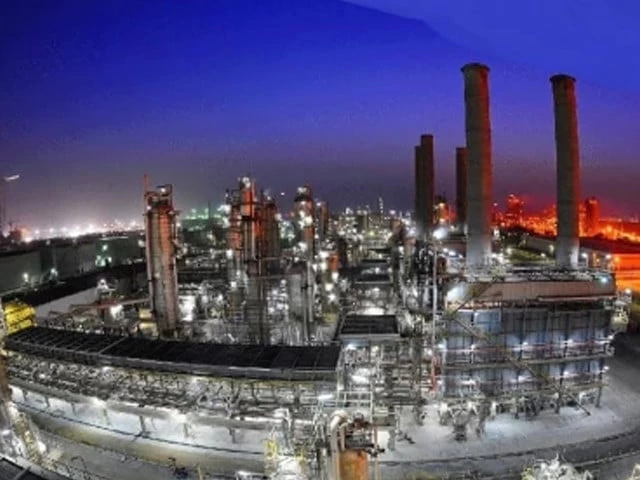
Pakistan's oil supply chain delivered a mixed but telling performance in April 2026, reflecting contrasting trends across upstream and downstream segments. While refinery operations strengthened on the back of improved product output and higher utilisation, retail fuel demand came under pressure due to elevated prices and shifting consumption patterns amid geopolitical uncertainty. This divergence highlights an increasingly uneven recovery across the energy value chain, where production gains are not fully translating into end?market demand.
According to a report by Arif Habib Limited (AHL), Pakistan's refinery sector posted a strong recovery in April 2026, with overall refinery production rising 10.7% year-on-year (YoY) to 993,000 tonnes. The growth was mainly driven by higher output of high?speed diesel (HSD), which increased 15.1% YoY to 502,000 tonnes, and motor spirit (MS), which rose 5.8% YoY to 235,000 tonnes. The improvement reflects stronger demand from oil marketing companies (OMCs), partly supported by expectations of higher imports and price adjustments amid changing global oil dynamics.
The report highlighted that industry capacity utilisation remained broadly stable at 58.1% in April 2026, compared with 58.0% in March, although slightly higher than 52.5% in April 2025. Among key refiners, utilisation trends were mixed, with Attock Refinery operating at 59.4%, while Pakistan Refinery posted a higher utilisation rate of 76.1%. National Refinery operated at 62.4%, and Cnergyico PK Limited remained the lowest at 24.1%, reflecting structural inefficiencies and weaker throughput levels.
Product?wise, HSD remained the dominant driver of refinery output, accounting for 50.5% of throughput, while MS and furnace oil (FO) stood at 23.6% and 19.7%, respectively. FO trends showed mixed movement across refiners, with some companies reporting higher FO output due to shifting demand patterns.
OMC sales fall
On the OMC side, a separate report by Topline Securities by Myesha Sohail noted that oil marketing companies recorded a 7% YoY and 6% month?on?month decline in sales during April 2026 to 1.36 million tonnes, largely due to higher fuel prices caused by the US?Israeli war against Iran affecting the Middle East. Excluding Furnace Oil (FO), sales dropped more sharply by 11% YoY and 10% month?on?month (MoM) to 1.22 million tonnes. MS and HSD volumes declined 7% and 12% YoY, respectively, reflecting demand destruction following significant price hikes during the month. However, FO sales surged 63% YoY and 56% MoM to 137,000 tonnes, indicating substitution demand amid expensive transport fuels.
As highlighted in the report, company?wise, Pakistan State Oil saw a decline in volumes but retained a 43.48% market share, while Attock Petroleum posted marginal MoM growth of 5%, making it the only listed OMC to show improvement. Hascol Petroleum continued to underperform with a sharp decline in sales, whereas Wafi Energy remained relatively stable on a YoY basis.
The report also noted that the government collected Rs1.21 trillion under the petroleum development levy (PDL) during 10MFY26, achieving 82% of its annual target of Rs1.47 trillion, indicating strong fiscal flow despite weaker fuel consumption trends.
Overall, the brokerage views suggest a mixed downstream outlook: refineries are benefiting from improved diesel?led throughput, while OMCs face near?term pressure from higher prices and demand slowdown, keeping the sector balance uneven in the short term.








This material may not be published, broadcast, rewritten, redistributed or derived from. Unless otherwise stated, all content is copyrighted © 2026 The Express Tribune.














COMMENTS
Comments are moderated and generally will be posted if they are on-topic and not abusive.
For more information, please see our Comments FAQ