PSX gains 465 points as buying returns across key sectors
Updated 45 minutes ago

Digital inclusion outpaces financial literacy; AI can strengthen fraud detection
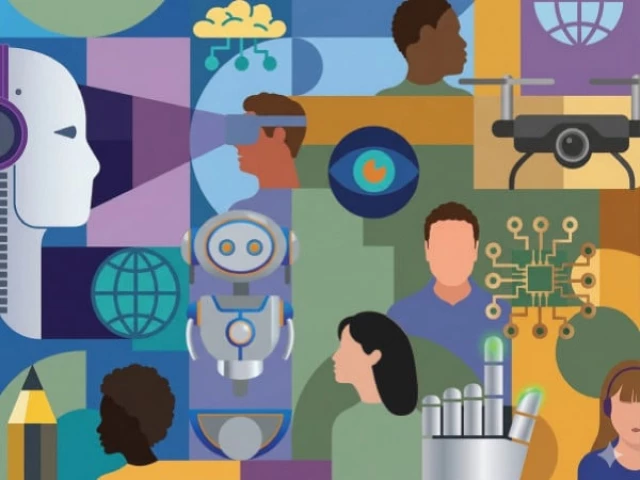
Pakistani banks should follow the global trend of adopting artificial intelligence (AI) solutions to accelerate customer onboarding and strengthen Know Your Customer (KYC) compliance, with the aim of significantly expanding their customer base.
AI?based systems enable banking institutions to attract new customers more efficiently, help prevent account misuse in both bank and wallet systems, and strengthen fraud detection mechanisms. In addition, these technologies significantly reduce operational costs for banks and financial institutions.
According to State Bank of Pakistan (SBP) data, more than 91 million individuals collectively hold over 200 million bank and wallet accounts in the country.
The State of Pakistan's Economy Annual Report 2024-25 states that Pakistan has made remarkable progress in financial inclusion over the past decade. Access to financial institutions rose from about 14% in 2014 to approximately 45% in 2024, reflecting the success of digital banking platforms and branchless banking initiatives. However, financial literacy remains alarmingly low. The percentage of respondents demonstrating basic financial literacy improved only marginally from 16% in 2016 to about 22% in 2024. This growing gap between access and knowledge poses serious challenges. Greater availability of financial services without adequate understanding may lead to poor decision?making, over?indebtedness and underutilisation of services. Bridging this divide through targeted financial education programmes is essential to ensure sustainable and inclusive economic growth.
Recently, the banking regulator allowed commercial banks and fintech operators to open independent accounts and wallets for teenagers, targeting nearly 26 million individuals aged between 13 and 18. The initiative aims to promote financial literacy, digital inclusion and future economic participation among youth.
"Artificial intelligence is rapidly transforming the global financial sector, with banks worldwide deploying AI for customer onboarding, regulatory compliance, fraud detection and KYC processes. Countries such as Singapore, the United Arab Emirates, the United Kingdom and the United States have successfully implemented AI?driven banking systems to improve efficiency, reduce fraud and enhance customer experience," said Noman Ahmed Said, CEO of SI Global Solutions.
He added that Pakistan's banking sector, along with institutions like the Pakistan Stock Exchange, can greatly benefit from this transformation. AI can reduce onboarding time from days to minutes, strengthen anti?money laundering (AML) monitoring, and improve market surveillance and investor analytics – ultimately helping attract foreign investment.
"Pakistan must also invest in developing local expertise in AI and fintech. This would not only support domestic banks and financial markets but also create opportunities for Pakistani professionals to work with international banks and global financial institutions," he noted.
Noman further stated that AI adoption in financial markets is now essential for growth, transparency and competitiveness. Alongside technological advancement, Pakistan must invest in training local talent to compete in the global digital financial economy.
In Pakistan, commercial banks and fintech operators have already begun digital onboarding processes and have seen strong customer adoption compared with traditional methods. However, this expansion has also increased exposure to fraud risks.
The integration of AI systems can help accelerate onboarding while ensuring compliance with regulatory requirements such as KYC, risk profiling and fraud detection. It can also help identify suspicious activity, including dormant or multiple account misuse, by improving customer profiling and monitoring.
Several banks have already introduced AI?based applications for customer service and verification; however, major initiatives such as AI?driven onboarding, compliance automation and fraud detection have not yet become visible practice.
Recently, Dun & Bradstreet, a global company operating in Pakistan, entered into a collaboration with Anthropic to integrate D&B risk data directly into Claude. This move is expected to reshape enterprise onboarding and compliance processes. The partnership will embed Dun & Bradstreet's global database of business identities and risk indicators into Claude, enabling organisations to automate due diligence workflows using advanced AI capabilities.
"Embedding verified data directly into workflows can help organisations strengthen governance and make decisions with greater clarity," said Nauman Lakhani, Group Director Products at Dun & Bradstreet South Asia, Middle East and Africa.
He added that corporate onboarding has traditionally relied on manual verification and lengthy processing cycles. With this integration, financial institutions and other regulated entities will be able to automate Know Your Customer (KYC) and Know Your Business (KYB) processes within a single interface.















This material may not be published, broadcast, rewritten, redistributed or derived from. Unless otherwise stated, all content is copyrighted © 2026 The Express Tribune.









COMMENTS (1)
Comments are moderated and generally will be posted if they are on-topic and not abusive.
For more information, please see our Comments FAQ