Tola budget proposes rupee at 250 per dollar
Updated May 24, 2026

UAE move seen as weakening OPEC's clout over oil markets, could initiate output boom, fall in crude prices
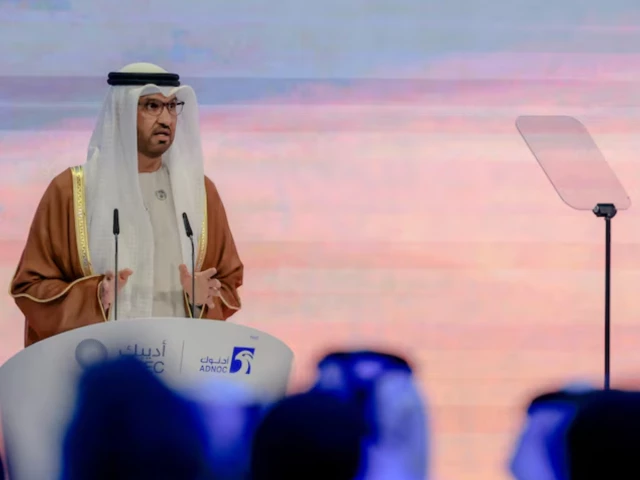
The United Arab Emirates owed it to its investment partners to produce what global oil markets require without restrictions, while cooperating with other crude producers, its energy minister said on Monday after the Gulf state left OPEC.
The UAE, one of OPEC's biggest producers, exited the group on May 1, widening a rift with its neighbour Saudi Arabia, effectively the leader of the Organisation of the Petroleum Exporting Countries and the wider OPEC+ group.
Read: Oil prices trim gains after UAE exits OPEC, OPEC+
"We owe it to partners investing in UAE to produce what the world requires without restrictions, with collaboration with all other producers," Energy Minister Suhail Al Mazrouei said at an annual UAE industrial conference in Dubai.
Once firm allies, the UAE and Saudi Arabia have developed a simmering rivalry, clashing on issues from oil policy and regional geopolitics to the race for foreign talent and capital.
Mazrouei and the state energy group ADNOC's CEO said the UAE left OPEC and OPEC+ on good terms, and the decision was not directed against anyone.
"I am confident we will be working with so many nations, including members of OPEC and OPEC+... We left on good terms," Mazrouei said at the "Make It In The Emirates" conference.
Asked about OPEC and Saudi Arabia's lack of public response to the decision, Mazrouei said: "The group has been relatively calm about the decision. Everyone realises it is a sovereign decision, and everyone realises that the UAE will be a responsible producer."
Long-term strategic objectives
The UAE move was widely seen by energy analysts as weakening OPEC's clout over oil markets, which could initiate a race to boost output, leading to a sharp fall in crude prices.
Read more: Oil up as US-Iran deal remains elusive
"We will gauge our engagements based on requirements of the market as well as what we need to produce for our local industries," Mazrouei said.
ADNOC CEO Sultan Al Jaber said the move to leave OPEC served the UAE's long-term strategic objectives, giving it greater ability to accelerate investment, expand and create value, while remaining a trusted and responsible partner in global energy markets.
"The United Arab Emirates' sovereign decision to reposition itself within the global energy landscape, and to exit OPEC and OPEC+, is not a decision directed against anyone," he told the conference.





This material may not be published, broadcast, rewritten, redistributed or derived from. Unless otherwise stated, all content is copyrighted © 2026 The Express Tribune.









COMMENTS
Comments are moderated and generally will be posted if they are on-topic and not abusive.
For more information, please see our Comments FAQ