Oil rises, stocks waver as new US strikes dampen peace deal hopes
Updated 4 hours ago

Gap between what is said, meant and heard can carry profound consequences
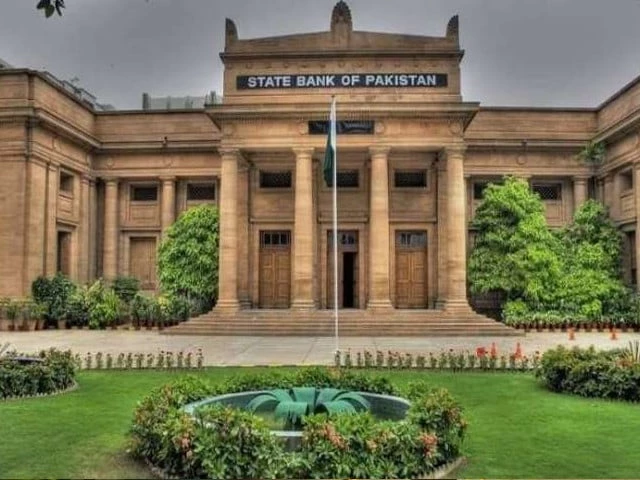
Few remarks capture the ambiguity of central banking as sharply as former Fed Chair Alan Greenspan's oft?quoted line: "I know you think you understand what you thought I said, but I'm not sure you realise that what you heard is not what I meant." It is a fitting lens through which to view the State Bank of Pakistan (SBP)'s recent 100 basis points increase in the policy rate – an action that, beyond its stated intent, has left markets and industry grappling with what exactly the central bank is trying to signal.
On one level, the decision is grounded in conventional monetary logic. Inflation has edged higher, core measures remain sticky, and global uncertainties – particularly stemming from geopolitical tensions and elevated energy prices – pose clear upside risks. The central bank's own assessment suggests that inflation may remain above target in the coming quarters, warranting a tighter stance to anchor expectations and prevent second?round effects. Yet, in Pakistan's context, the significance of monetary policy lies not merely in its intent but in its interpretation. A large and unexpected rate hike is seldom viewed as a technical adjustment. It is read as a signal – often a warning – that policymakers see risks beyond what is immediately visible in the data.
If the macroeconomic narrative is one of cautious stabilisation – with a manageable current account position, improving reserves and moderate growth recovery – then the scale of the hike appears disproportionate. On the other hand, if risks are indeed intensifying to justify such urgency, then the absence of explicit communication about those risks creates uncertainty rather than reassurance. In such an environment, markets tend to assume the worst.
The policy debate is further complicated by underlying structural realities highlighted in recent commentary. Monetary tightening in Pakistan carries a disproportionate fiscal cost. With government borrowing dominating the credit landscape, higher interest rates translate directly into a surge in debt servicing obligations, which already constitute the single largest component of public expenditure.
This dynamic raises a critical question: to what extent is monetary policy targeting inflation, and to what extent is it reshaping fiscal pressures? When the cost of servicing debt rises sharply, it crowds out development spending and constrains growth – potentially undermining the very stability that policy seeks to achieve. Moreover, the transmission of monetary policy to the real economy remains uneven. Private sector credit constitutes a relatively small share of total lending, while key industries have already been operating under tight financial conditions. Evidence suggests that high borrowing costs, combined with elevated input prices, have contributed to widespread industrial stress, including factory closures in major sectors.
This concern is echoed by industry stakeholders, who argue that the rate hike risks stifling a nascent recovery. For businesses, particularly small and medium enterprises, access to affordable financing is critical. Higher interest rates not only increase the cost of working capital but also deter new investment, limit expansion and erode competitiveness. More fundamentally, there is scepticism about the effectiveness of monetary tightening in addressing Pakistan's inflation. A significant portion of price pressures is supply?driven – stemming from energy costs, exchange rate pass?through and structural inefficiencies. In such a context, higher interest rates may suppress demand without meaningfully resolving the root causes of inflation.
In the treasury auction immediately after the monetary policy announcement, the Ministry of Finance rejected all bids for Pakistan Investment Bonds and Ijarah Sukuk. This was a rare move, effectively refusing to accept the higher yields demanded by investors in response to the tightening stance. The implication was clear: while the central bank raised rates, the government signalled that it was unwilling to lock in borrowing at those elevated levels.
On one hand, monetary policy is attempting to enforce tighter financial conditions. On the other, fiscal authorities appear to be betting that such conditions are temporary and that rates may have peaked. For investors, this creates confusion about the future trajectory of interest rates. Should they align expectations with the central bank's current stance, or with the government's apparent resistance to higher yields?
Such mixed signals complicate market behaviour. In the fixed?income space, they disrupt price discovery and may lead to higher risk premiums. In the real economy, they reinforce caution. Businesses interpret the rate hike as a warning, while the auction outcome suggests that prevailing rates may not be sustainable. The result is a hesitancy that affects investment, production and hiring decisions. The equity market reflects a similar tension. Higher interest rates exert downward pressure on valuations by increasing discount rates and shifting investor preference towards fixed?income instruments. At the same time, uncertainty about policy direction weighs on sentiment. The combination of a surprise rate hike and an unexpected auction outcome creates ambiguity, particularly for leveraged sectors sensitive to borrowing costs.
Even the banking sector, often considered a beneficiary of higher rates, faces a nuanced outlook. While margins may improve, the broader economic slowdown and potential deterioration in asset quality could offset these gains. At a deeper level, the episode highlights the challenge of policy coherence. Monetary and fiscal authorities may operate with different objectives, but their actions are interpreted collectively. When those actions appear misaligned, the result is not balance but uncertainty.
The central bank's own policy statement underscores the importance of fiscal reforms, including expenditure rationalisation and structural adjustments, to ensure long?term sustainability. Yet, without visible progress on these fronts, monetary tightening alone risks becoming an incomplete solution – one that addresses symptoms rather than causes.
None of this suggests that the SBP's decision is inherently flawed. Policymakers are often required to act pre?emptively in the face of uncertainty, particularly when external shocks threaten to unanchor inflation expectations. Indeed, delaying action has historically proven costly. However, the effectiveness of such action depends not only on its economic rationale but also on how it is perceived. This brings us back to Greenspan's observation. The gap between what is said, what is meant and what is heard can carry profound consequences. In the present case, that gap appears to have widened. The rate hike may have been intended as a measure of caution, but in the absence of clear and consistent signalling, it risks being interpreted as a sign of deeper concern.
THE WRITER IS A FINANCIAL MARKET ENTHUSIAST AND IS ASSOCIATED WITH PAKISTAN'S STOCKS, COMMODITIES AND EMERGING TECHNOLOGY









This material may not be published, broadcast, rewritten, redistributed or derived from. Unless otherwise stated, all content is copyrighted © 2026 The Express Tribune.













COMMENTS (1)
Comments are moderated and generally will be posted if they are on-topic and not abusive.
For more information, please see our Comments FAQ