Woman dies after alleging sexual assault by husband
Updated 11 hours ago

Health experts warn mobile communities remain vulnerable without routine care
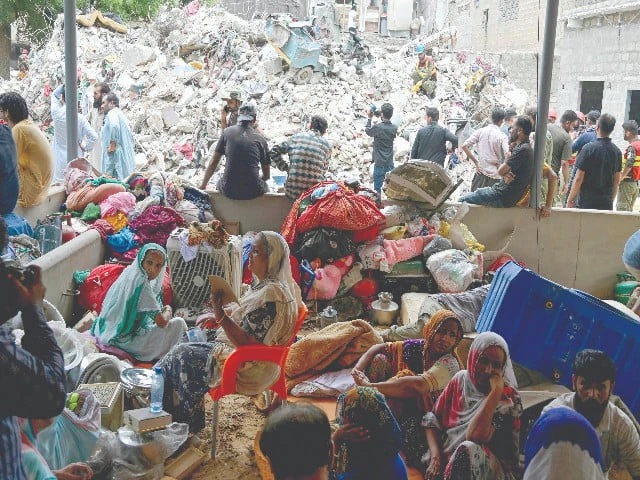
In Pirowal, nomadic families continue to live on the move, spending generations in makeshift huts without permanent shelter, education, or access to basic public services.
For decades, these itinerant communities have moved from one place to another, setting up temporary camps with wooden sticks and plastic sheets and then moving on again. From the time of Pakistan's independence to the present day, their lives have remained rooted in migration, uncertainty, and hardship.
Without permanent homes or long-term planning, many nomadic families live day to day, relying on casual labor and seasonal work for survival.
Their tents, often erected on open land, offer little protection from heat, cold, rain, or disease.
Despite these harsh conditions, children grow up adapting to the same difficult lifestyle as their parents.
They endure extreme weather, limited food, and poor sanitation, often without access to schools, healthcare, or stable income.
Nomad Sultan, a resident of one such camp, said their lives are defined by constant movement and insecurity.
"We are people who spend our entire lives wandering. Our life is a journey without rest," he said, urging the government to take immediate steps to improve living conditions for nomadic families by providing education, healthcare, and basic facilities.
Women in these communities say the cycle of hardship has continued for generations.
Halima Mai, a nomadic woman, said her family had spent generations in temporary shelters, with daughters born and married within the same fragile hut-to-hut existence.
"Our generations have grown up in these huts. Our daughters are born here and leave for another hut after marriage," she said.
Children in these settlements also express a longing for a different life.
Maryam, a young girl from a nomadic family, said she dreams of going to school, reading the Quran, and living like other children.
"We also want to study, play in parks, and go to markets like other children," she said. "Instead of toys, we grow up among dust and sand, in heat and cold."
Nomadic laborer Jabbar said work is uncertain and poverty is constant.
"Some days we find labor, some days we return empty-handed. If children eat one meal, there is no guarantee of the next," he said.
He appealed to the government to allocate land for nomadic families so their children could receive an education and live more stable lives.
Health experts have also raised concerns about the community's vulnerability, warning that nomadic populations often live near settled communities without access to routine medical care, making them especially vulnerable to disease.
Medical professionals say regular health screenings and state-backed healthcare access should be introduced for nomadic groups, both for their welfare and for broader public health protection.
Most nomadic families settle temporarily on municipal land or private property, but are often forced to move again when the land is reclaimed, pushing them back into another cycle of displacement.
The continuing plight of nomadic communities in Pirowal highlights a long-neglected social issue, where generations remain trapped between poverty, displacement, and exclusion from the most basic rights of citizenship.





This material may not be published, broadcast, rewritten, redistributed or derived from. Unless otherwise stated, all content is copyrighted © 2026 The Express Tribune.









COMMENTS
Comments are moderated and generally will be posted if they are on-topic and not abusive.
For more information, please see our Comments FAQ