Court ousts leadership of Turkey's main opposition party
Updated 6 minutes ago

'There has been no exchange of fire between the United States Forces and Iran since April 7,' he says in letters
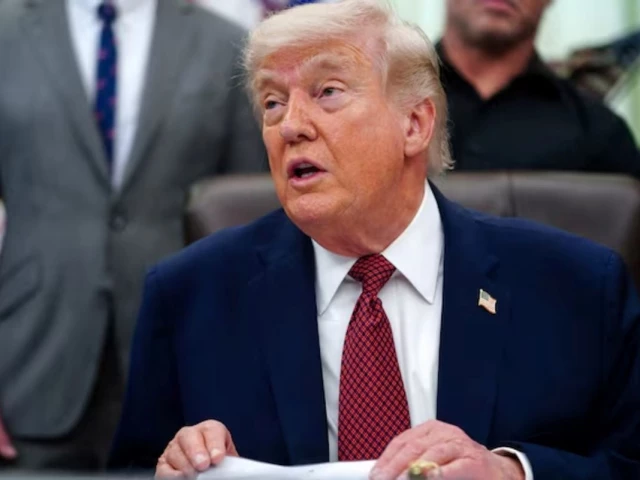
United States President Donald Trump told Congress members on Friday that hostilities with Iran since the attacks on February 28 had "terminated" following the ceasefire between the two enemies, American media outlets reported.
"On April 7, 2026, I ordered a two-week ceasefire. The ceasefire has since been extended. There has been no exchange of fire between United States forces and Iran since April 7, 2026," Trump wrote to Speaker Mike Johnson, Axios reported.
Trump further wrote that "the hostilities that began on February 28, 2026, have terminated."
CBS News added that the letter was also written to Senator Chuck Grassley, the president pro tempore of the US Senate.
Earlier, he said he was "not satisfied" with Iran's latest proposal in negotiations to end the war between the countries.
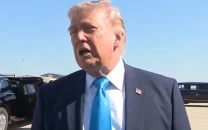
"They want to make a deal, I'm not satisfied with it, so we'll see what happens," Trump told reporters at the White House.
Trump did not elaborate on what he sees as the proposal's shortcomings.
The president said negotiations continued by phone after he called off his envoys' trip to Pakistan last week. He expressed frustration with Iran's leadership, which he described as fractured.
"It's a very disjointed leadership," he said. "They all want to make a deal, but they're all messed up."
.@POTUS: "We just had a conversation with Iran. Let's see what happens, but I would say that I'm not happy... They've got to come up with the right deal. At this moment, I'm not satisfied with what they're offering." https://t.co/5WDUtIk1i5 pic.twitter.com/UoOYeRwIaM
— Rapid Response 47 (@RapidResponse47) May 1, 2026
He further said that he had "great respect" for Pakistan, Islamabad, Prime Minister Shehbaz Sharif and Chief of Defence Forces and Chief of the Army Staff Field Marshal Asim Munir.
Trump added that Pakistan was "continuing to worh with us" in the negotiation process.
Iranian state media reported earlier that Iran submitted its latest proposal for negotiations with the US to mediator Pakistan.
IRNA reported that according to its foreign policy correspondent, the country "delivered the text of its latest negotiation plan to Pakistan on Thursday evening, May 10, as a mediator in negotiations with the US".
#ایران متن تازهترین طرح مذاکراتی را به #میانجی_پاکستانی داد
— خبرگزاری ایرنا (@IRNA_1313) May 1, 2026
ایران متن طرح مذاکراتی خود را شامگاه پنجشنبه ۱۰ اردیبهشت به #پاکستان به عنوان میانجی مذاکره با #ایالات_متحده، تحویل داده است. https://t.co/UaevvjflIy pic.twitter.com/AoeOYVgJFt
The White House said it would not detail private diplomatic conversations when asked about Iran’s new proposal.
“We do not detail private diplomatic conversations. President Trump has been clear that Iran can never possess a nuclear weapon, and negotiations continue to ensure the short- and long-term national security of the United States,” spokeswoman Anna Kelly said.
Earlier, a senior United Arab Emirates official said that Tehran could not be trusted over any unilateral arrangements it makes for the Strait of Hormuz, in a sign of deep mistrust on all sides as efforts to end the US-Israeli war on Iran remained at an impasse.
في النقاش الدائر حول مضيق هرمز، تبرز الإرادة الدولية الجماعية وأحكام القانون الدولي كضامن رئيسي لحرية الملاحة في هذا الممر الحيوي، بما يخدم استقرار المنطقة والاقتصاد العالمي في مرحلة ما بعد الحرب.
— د. أنور قرقاش (@AnwarGargash) May 1, 2026
وبطبيعة الحال، لا يمكن الوثوق بأي ترتيبات إيرانية أحادية أو التعويل عليها بعد…
Two months into the conflict, the vital sea channel is still largely closed because of an Iranian blockade and the US Navy is blocking exports of Iranian crude oil. The blockade has choked off 20% of the world's oil and gas supplies, pushing up global energy prices and increasing concerns that there will be an economic downturn.
A ceasefire has been in place since April 8 but reports that US President Donald Trump was to be briefed on plans for new military strikes to compel Iran to negotiate pushed global oil prices up to a four-year high at one point on Thursday.
Iran has activated air defences and plans a wide response if attacked, having assessed that there will be a short, intensive US strike, possibly followed by an Israeli attack, two senior Iranian sources told Reuters on condition of anonymity.
'Treacherous aggression'
Washington has not said what its next steps are. Trump said on Tuesday he was unhappy with the latest proposal from Iran, and mediator Pakistan has not set a date for new talks on ending a war that has killed thousands, mainly in Iran and Lebanon.
Read: Trump says King Charles does not want Iran to have nuclear weapon
After US and Israeli airstrikes on February 28, Iran fired at US bases, infrastructure and US-linked companies in Gulf states, while the Iran-backed Lebanese group Hezbollah launched missiles at Israel, which responded with strikes on Lebanon.
Underlining the concerns of the Gulf states, UAE presidential adviser Anwar Gargash said the "collective international will and provisions of international law" were the primary guarantors of freedom of navigation through the strait.
"And, of course, no unilateral Iranian arrangements can be trusted or relied upon following its treacherous aggression against all its neighbours," Gargash wrote.
Trump faces a formal US deadline on Friday to end the war or make the case to Congress for extending it under the 1973 War Powers Resolution.
The date looks set to pass without altering the course of the war after a senior administration official said that, for the resolution, hostilities had terminated due to the April ceasefire between Tehran and Washington.
Financial and energy markets remained on edge because of concerns about the impasse over negotiations and worries that there could be a prolonged closure of the Strait of Hormuz.
Global oil benchmark Brent crude futures rose again on Friday, up slightly at over $111 a barrel and poised for a 5.7% gain over the week after hitting $126 a barrel on Thursday, the highest level since March 2022.
Iran says not to expect quick results from talks
Iranian Foreign Ministry spokesman Esmaeil Baghaei cautioned on Thursday against expecting quick results from talks.
A senior official of Iran's Revolutionary Guards said any new US attack on Iran, even if limited, would usher in "long and painful strikes" on US regional positions, while Aerospace Force Commander Majid Mousavi was quoted by Iranian media as saying: "We've seen what happened to your regional bases, we will see the same thing happen to your warships."
Trump repeated on Thursday that Iran would not be allowed to have a nuclear weapon, and said the price of gasoline - an important concern for his Republican Party before midterm elections in November - would "drop like a rock" as soon as the war ended.
Iran says its nuclear programme is solely for civilian purposes.
Trump said on Thursday that Iran's economy was "a disaster", but analysts said that if he expects Iran to blink first in a game of economic chicken, he may be waiting a while.
The conflict has aggravated Iran's dire economic problems, risking calamity after the war, but it looks able to survive a standoff in the Gulf for now, despite the U.S. blockade that has cut off its energy exports.
Axios news site reported that one plan to be shared with Trump during a briefing by top U.S. military leaders that was scheduled for Thursday involved using ground forces to take over part of the strait to reopen it to commercial shipping. Trump is also considering extending the US blockade or declaring a unilateral victory, officials have said.
Washington did not immediately announce any details of its plans.
In a sign that the US was also envisaging a scenario where hostilities cease, a State Department cable due to be delivered orally to partner nations by May 1 invited them to join a new coalition, called the Maritime Freedom Construct, to enable ships to navigate the strait.
France, Britain and others have held talks on contributing to such a coalition but said they would help to open the Strait only when the conflict ends.
US war on Iran ‘definitely not’ self-defence: Iranian foreign ministry
Baghaei took to social media on Friday to rebuke the US for its war of “aggression” and challenge Washington’s own narrative that its attacks on Iran were a case of “self-defence”, according to Al Jazeera.
'Self-defense' against what? Was there any 'armed attack' by Iran to justify 'self defense'?
— Esmaeil Baqaei (@IRIMFA_SPOX) May 1, 2026
Definitely not!
So this was absolutely NOT 'self-defense' — it was an act of AGGRESSION against the nation of Iran. pic.twitter.com/iPemdStD71
In a post on X, Baghaei highlights a US State Department document justifying the war, which stated that: “The United States engaged in this conflict at the request of and in the collective self-defence of its Israeli ally, as well as in the exercise of the United States’ own inherent right of self-defence”.
“Self-defence against what?” Baghaei asks.
“Was there any ‘armed attack’ by Iran to justify ‘self-defence’? Definitely not!”
“So this was absolutely NOT ‘self-defence’ — it was an act of AGGRESSION against the nation of Iran.”
US lying about war cost
Iranian Foreign Minister Abbas Araghchi has said the “Pentagon is lying” about the economic cost of the war, launched by the Trump administration on February 28 alongside Netanyahu, according to Al Jazeera.
The Pentagon is lying. Netanyahu's gamble has directly cost America $100b so far, four times what is claimed.
— Seyed Abbas Araghchi (@araghchi) May 1, 2026
Indirect costs for U.S. taxpayers are FAR higher. Monthly bill for each American household is $500 and rising fast.
Israel First always means America Last. pic.twitter.com/onailLYFdL
“Netanyahu’s gamble has directly cost America $100b so far, four times what is claimed,” Araghchi wrote on X.
“Indirect costs for US taxpayers are FAR higher. Monthly bill for each American household is $500 and rising fast," he said, sharing graphs showing rising debt and Americans' self-reported worsening financial situations.
"Israel First always means America Last.”
France to launch ‘defensive’ mission in Hormuz
The French foreign minister said Friday that a “defensive” international maritime mission in the Strait of Hormuz would begin operations once conditions allow.
“The Hormuz blockade must stop; it must cease. There can be no blackmail, no blockade, nor any toll on a strait,” Jean-Noel Barrot said, stressing that straits are governed by international law and “cannot under any circumstances be obstructed.”
He said the rise in fuel prices, “being strongly felt at the pump,” was linked to developments in the Strait of Hormuz, which he said France had condemned because it violates international law and has major consequences for the global economy.
Barrot noted that France had acted since the start of the crisis to limit its impact, including measures to protect households and businesses from rising energy costs.
He said targeted support had been introduced for sectors most exposed to fuel price increases, including fishing, agriculture, transport and heavy road users, to help them absorb part of the shock.
At the same time, he added, France launched a plan to reduce dependence on hydrocarbons through electrification efforts in transport and heating, aimed at limiting exposure to future crises.
Strictly defensive mission
France has also deployed naval assets in the region since the beginning of the war, Barrot said, “to protect our nationals, facilitate their repatriation, and protect our partners,” some of whom were targeted by Iranian attacks.
He said the international mission, launched by French President Emmanuel Macron, was now at an advanced stage and would be strictly defensive, operating in coordination with countries bordering the Strait of Hormuz.
“This international mission is strictly defensive in nature,” he said, adding that planning had been finalised and the concept had been presented to key regional partners.
Barrot said the objective would be to allow maritime traffic to resume “as quickly as possible” once conditions permit, through escort and mine-clearing operations.
Will not participate in US-led operation
Asked about a US-led coalition, Barrot said France would not participate, noting that the American initiative appeared aimed at linking ongoing military operations with maritime activity.
“We would not take part in it,” he said, adding that France remained fully focused on its own initiative and that it was not in competition with other proposals.
US CENTCOM chief briefs Trump on possible 'final blow' against Iran
The commander of US Central Command (CENTCOM) briefed US President Donald Trump on potential "final blow" strike options against Iran, Fox News reported on Thursday.
Admiral Brad Cooper presented the possible options during a briefing with Trump in the Situation Room, outlining a "short and powerful wave of strikes" should the president decide to resume combat operations.
The assessed targets reportedly include Iran's "remaining military assets, leadership and infrastructure," the broadcaster added.
Read more: Iran's supreme leader strikes a defiant note
The Pentagon is also considering deploying advanced weapons systems, including a new hypersonic missile known as "Dark Eagle," according to Fox News.
The broadcaster said the system is capable of striking targets up to 2,000 miles (3,218 kilometres) away, potentially targeting remaining ballistic missile launchers.
It added that B-1B Lancer bombers, which can be armed with up to 5,000 pounds of hypersonic weapons, have been increasing their presence in the region and can carry "big payloads."
Lebanese premier vows to reclaim ‘every inch’ of occupied land, advance economic recovery
Lebanese Prime Minister Nawaf Salam vowed on Friday to reclaim “every inch” of occupied territory and push forward economic recovery efforts, in a message marking Labour Day.
In a statement posted by the prime minister’s office on US social media company X, Salam addressed workers across Lebanon, acknowledging the hardship many face amid a prolonged economic crisis.
في عيد العمّال، أتوجّه إلى كل عاملةٍ وعاملٍ في لبنان، إلى من ينهضون كل صباح رغم القلق والضيق، ويواصلون العمل في ظلّ ظروفٍ قاسية لم يعرفها وطننا من قبل.
— Nawaf Salam نواف سلام (@nawafsalam) May 1, 2026
أدرك حجم المعاناة التي يعيشها كثيرون منكم، من فقدانٍ للوظائف، وتراجعٍ في القدرة الشرائية، وضغطٍ يوميّ يثقل كاهلكم. ومن موقع… pic.twitter.com/tMzd7c8qbM
“I understand the extent of the suffering many of you are experiencing, from job losses and declining purchasing power to daily pressures weighing heavily on you,” he said.
Salam pledged that the government would continue working to improve living conditions, restore occupied land, and press ahead with reforms.
“We will continue serious work to improve your living conditions, restore every inch of our occupied land, and advance reform efforts and economic recovery,” he said.
Since 2019, Lebanon has been experiencing a financial collapse described by the World Bank as one of the worst in modern history. The Lebanese pound has lost more than 98% of its value, weakening from about 1,500 to around 90,000 to the dollar.
Salam added that the government aims to create new job opportunities, restore stability, and place the country on a path toward “real recovery.”
Lebanon’s economic crisis has deepened recently, compounded by ongoing Israeli attacks and displacement. A Wednesday update from the Food and Agriculture Organisation and the World Food Programme found that about 1.24 million people — nearly one in four assessed — are expected to face acute food insecurity at crisis levels between April and August 2026.
The report said escalating violence and displacement since early March have driven the deterioration in food security conditions.
Iran demands reparations from six Arab states
Iranian ambassador and permanent representative to the United Nations Amir-Saeid Iravani has called for holding to account the states participating in the unjustified US-Israeli aggression against the Islamic Republic, according to Iranian news outlet Press TV.
He made the remarks in a letter addressed to the UN chief and the Security Council president on Thursday in response to "anti-Iran letters" sent by six Arab countries, including, Qatar, Bahrain, the UAE, Saudi Arabia, Kuwait, and Jordan, to the world body, as per Press TV.
“The Islamic Republic of Iran reiterates once again its clear and consistent position that all States whose internationally wrongful acts have played a role in the United States' and the Israeli regime's aggression against its sovereignty and territorial integrity must be held accountable,” he said.
Iravani also said the Persian Gulf littoral states are under an obligation to make full reparation to the Islamic Republic of Iran, including compensation for all material and moral damage caused by their internationally wrongful acts.
Iran seeks reparations from five Arab states for enabling US-Israeli aggressionhttps://t.co/oVErqX8IfY
— Press TV 🔻 (@PressTV) April 14, 2026
He warned of threats to international peace and security amid the continued failure of the UN Security Council to address the unlawful use of force by the US and the Israeli regime, as well as the complicity of states that have either facilitated or directly participated in the military assault.
The envoy rejected the "anti-Iran claims" made by the six Arab countries regarding the premeditated and unprovoked US-Israeli aggression that killed more than 3,375 people and damaged over 125,630 civilian structures across the country, according to Press TV.
“The claims advanced by the State of Qatar, the Kingdom of Bahrain, the Kingdom of Saudi Arabia, the United Arab Emirates, and the Hashemite Kingdom of Jordan that the armed attacks against the Islamic Republic of Iran were not launched from their territories, even if true, quod non, only serve to confirm that Iran has been targeted by aggressors operating from military bases and facilities situated within those States.”
He noted that the failure of the Security Council to uphold Iran’s legitimate right of self-defence does not negate the nation's inherent right of self-defence under general international law.
Iran threatens painful response if US renews attacks
Iran said on Thursday it would respond with "long and painful strikes" on US positions if Washington renewed attacks and restated its claim to the Strait of Hormuz, complicating US plans for a coalition to reopen the waterway.
Two months into the US-Israeli war on Iran, the vital sea channel remains closed, choking off 20% of the world's oil and gas supplies. That has sent global energy prices surging and heightened concerns about the risks of an economic downturn.
Efforts to resolve the conflict have hit an impasse, with a ceasefire in place since April 8, but Iran is still blocking the strait in response to a US naval blockade of Iran's oil exports, Tehran's economic lifeline.
Trump was scheduled to receive a briefing on Thursday on plans for a series of fresh military strikes to compel Iran to negotiate an end to the conflict, a US official told Reuters.
Such options have long been part of US planning but reports of the proposed briefing, first issued by news site Axios late on Wednesday, initially spurred big gains in oil prices, with the benchmark Brent crude contract hitting more than $126 a barrel at one point. It later slipped back to around $114.
Iranian Foreign Ministry spokesman Esmaeil Baghaei said on Thursday evening that it was not reasonable to expect quick results from US talks, according to the official IRNA news agency.
"Expecting to reach a result in a short time, regardless of who the mediator is, in my opinion, is not very realistic," he was quoted as saying.
Air defence activity was heard in some areas of Iran's capital, Tehran, late on Thursday, Iran's semi-official Mehr news agency reported, and the Tasnim news agency said air defences were engaging small drones and unmanned surveillance aerial vehicles.
On Thursday, the United Arab Emirates said it had banned its citizens from travelling to Iran, Lebanon and Iraq, and urged those currently in those countries to leave immediately and return home, citing regional developments.
Trump reiterated to reporters on Thursday that Iran would not be allowed to have a nuclear weapon and that the price of gasoline - a key concern for his Republican Party ahead of the November midterm elections - would "drop like a rock" as soon as the war ended.
While repeating allegations of serious rights violations by Iran, Trump said he was "OK" with it playing in the upcoming soccer World Cup in the United States, after FIFA president Gianni Infantino insisted the country would take part.







This material may not be published, broadcast, rewritten, redistributed or derived from. Unless otherwise stated, all content is copyrighted © 2026 The Express Tribune.






COMMENTS (2)
Comments are moderated and generally will be posted if they are on-topic and not abusive.
For more information, please see our Comments FAQ