TODAY’S PAPER | April 29, 2026 | EPAPER

Trump says King Charles does not want Iran to have nuclear weapon

Trump, unhappy with latest peace proposal, says Iran 'figuring out its leadership'

Reuters April 29, 2026 6 min read
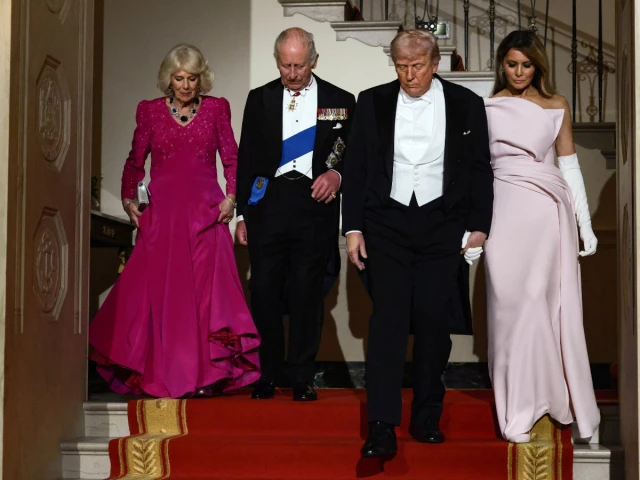
US President Donald Trump, first lady Melania Trump, Britain's King Charles and Queen Camilla walk in front of the Grand Staircase prior to a state dinner at the White House in Washington, DC, US, April 28, 2026. PHOTO: REUTERS

President Donald Trump said on Tuesday Britain's King Charles did not ​want Iran to have a nuclear weapon, introducing the fraught subject of ‌the Middle East conflict into comments at a White House state dinner for the visiting royal.

The event was held on the second day of a four-day visit ​to the United States at a tense time in ties, after ​Trump had repeatedly criticised British Prime Minister Keir Starmer for ⁠what Trump calls a lack of help in prosecuting the Iran war.

"We're doing ​a little Middle East work right now, and we're doing very well," ​Trump said at the dinner.

"We have militarily defeated that particular opponent, and we're never going to let that opponent ever - Charles agrees with me even more than I do - ​we're never going to let that opponent have a nuclear weapon."

In ​his own comments following Trump, Charles did not speak about Iran or the war. The ‌king ⁠is not a spokesman for the British government.

Asked about the state dinner comments, the British Embassy in Washington referred Reuters to Buckingham Palace, which did not immediately respond to a request for comment.

In a speech to Congress ​earlier, Charles made no ​direct mention ⁠of the Iran war, but referred to Trump's criticism of NATO, highlighted the importance of continued US help for ​Ukraine in its war with Russia, and the dangers ​of isolationism.

Both ⁠Britain and the United States have maintained over the years that Tehran should not develop nuclear weapons.

Tehran, which does not have nuclear weapons, denies seeking ⁠them ​but says it has the right to develop ​nuclear technology for peaceful purposes, including enrichment, as a party to the Nuclear Non-Proliferation Treaty.

Iran and Lebanon ceasefires must hold through diplomatic efforts: European Commission president

The ceasefire in Iran and Lebanon must hold through diplomatic efforts, said European Commission President Ursula von der Leyen.

She added that the goal was to see a permanent end to the war and the restoration of full freedom of navigation in the Strait of Hormuz without the imposition of fees.

She said that "any peace deal must address Iran’s nuclear and ballistic missile programme."

Iran 'figuring out its leadership'

Efforts to end the US-Israeli conflict with Iran were at an impasse on Tuesday with US President Donald Trump unhappy with the latest proposal from Tehran, which he said had informed the US it was in a "state of collapse" and was figuring out its leadership situation.

Iran's most recent offer for resolving the two-month war would set aside discussion of its nuclear programme until the conflict was concluded and shipping disputes resolved.

But Trump wants nuclear issues dealt with from the outset, a US official briefed on Trump's Monday meeting with his advisers said.

In a Truth Social post on Tuesday, Trump said: "Iran has just informed us that they are in a 'State of Collapse'. They want us to 'Open the Hormuz Strait,' as soon as possible, as they try to figure out their leadership situation (Which I believe they will be able to do!)."

It was unclear from his post how Iran might have communicated that message, and there was no immediate response from Tehran to Trump's latest comments.

Earlier, an Iranian army spokesperson told state media the Islamic Republic did not consider the war over.

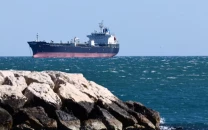
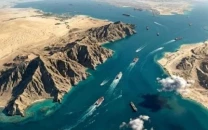
Iran has largely blocked all shipping apart from its own from the Gulf through the Strait of Hormuz, a chokepoint for global energy supplies, since the US-Israeli war on Iran began on February 28. This month, the US began blockading Iranian ships.

The Wall Street Journal reported, citing US officials, that the president had instructed aides to prepare for an extended blockade of Iran's ports.

Iran's guards take greater role

Hopes of reviving peace efforts in a conflict that has killed thousands of civilians in Iran, Lebanon, and across the Gulf, thrown energy markets into turmoil and disrupted global trade routes have receded since Trump last weekend scrapped a visit by his special envoy Steve Witkoff and son-in-law Jared Kushner to mediator Pakistan.

Read: Pakistan still central to Iran-US diplomacy

Iranian Foreign Minister Abbas Araghchi shuttled in and out of Islamabad twice during the weekend.

Since several senior Iranian political and military figures were killed in US-Israeli strikes, Iran no longer has a single, undisputed clerical arbiter at the pinnacle of power, which may be hardening Tehran's negotiating stance.

The killing of Ayatollah Ali Khamenei on the first day of the war, and the elevation of his wounded son, Mojtaba, to replace him as supreme leader, has handed more power to hardline commanders of the Islamic Revolutionary Guard Corps, Iranian officials and analysts say.

Senior Iranian officials, speaking on condition of anonymity, told Reuters the proposal carried by Araghchi to Islamabad over the weekend envisioned talks in stages.

A first step would require ending the war and providing guarantees that the US cannot restart it. Then negotiators would resolve the US Navy's blockade of Iran's trade by sea and the fate of the Strait of Hormuz, which Iran aims to reopen under its control.

Only then would talks look at other issues, including the longstanding dispute over Iran's nuclear programme, with Iran seeking US acknowledgement of its right to enrich uranium.

That would bear echoes of Iran's 2015 nuclear deal with the United States and other powers, which had sharply curtailed Tehran's nuclear programme.

Trump unilaterally withdrew from that accord in his first term. Now he faces domestic pressure to end a war for which he has given the US public shifting rationales.

Trump's approval rating fell to the lowest level of his current term, as Americans increasingly soured on his handling of the cost of living and the unpopular war, according to a Reuters/Ipsos poll. The poll showed 34% of Americans approve of Trump's performance, down from 36% in the prior survey.

In the latest sign of strains between Trump and European allies, he said in a social media post that German Chancellor Friedrich Merz "doesn’t know what he’s talking about" regarding Iran.

Merz said on Monday that Iran's leadership was humiliating the US and that he did not see what exit strategy the Trump administration was pursuing.

But Britain's King Charles told the US Congress on Tuesday that despite uncertainty and conflict in Europe and the Middle East, the UK and the US, "whatever our differences," will always be staunch allies united in defending democracy. He spoke at a time of deep divisions between the two longtime partners over the war with Iran.

Oil prices rise again

With the warring sides still seemingly far apart, oil prices resumed their upward march, with Brent crude rising nearly 3% to around $111 a barrel.

The World Bank forecast energy prices would surge by 24% in 2026 to their highest level since Russia’s full-scale invasion of Ukraine four years ago, if the most acute disruptions caused by the Iran war end in May.

Read more: Oil prices trim gains after UAE exits OPEC, OPEC+

The United Arab Emirates said it was quitting OPEC and OPEC+, exposing discord among Gulf nations over Iran.

At least six tankers loaded with Iranian oil have been forced back to Iran by the US blockade in recent days, ship-tracking data showed, underscoring the war's impact on traffic.

Iranian government spokesperson Fatemeh Mohajerani told state media that Tehran was using northern, eastern and western trade corridors to neutralise the blockade's effects.

Between 125 and 140 ships usually crossed in and out of the Strait of Hormuz daily before the war, but only seven have done so in the past day, according to Kpler ship-tracking data and satellite analysis from SynMax. None of them was carrying oil bound for the global market.

Also on Tuesday, the US said it was imposing sanctions on 35 entities and individuals for their role in Iran's shadow banking system.

The Treasury Department's Office of Foreign Assets Control also warned any firm making "toll" payments to the Iranian government or the Islamic Revolutionary Guard Corps for passage through the Strait of Hormuz would face sanctions.

COMMENTS

Replying to X

Comments are moderated and generally will be posted if they are on-topic and not abusive.

For more information, please see our Comments FAQ