What 'doing development differently' looks like
Updated 1 hour ago

.
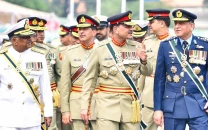
What a great few weeks for Pakistan, emerging as a serious and effective mediator between Iran and the United States. It has been in the headlines for all the right reasons. What a moment of great pride for most Pakistanis.
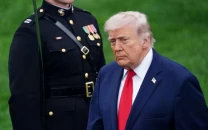
A mature, cohesive and strategically pragmatic foreign policy approach regionally and globally has been on display during this meditation. The skilful diplomacy is accompanied with clear and consistent communication, leaving no room for misinformation or confusion. This is always important – even more so considering the delicacy required when mediating between a volatile President with a whimsical approach to these negotiations and a country subjected to unprovoked aggression in a blatant violation of international law.
The long-term involvement of the powers-that-be in foreign policy matters may have just paid off and on display on the international stage. Though this does raise questions as to how ideal this is for a country attempting parliamentary democracy since 1947. But that is a discussion for another day and for now credit should be given where it's due.
Unlike our foreign policy, important domestic policies on health and education have not been able to create this same comprehensive overarching narrative of vision and purpose, nor on how to achieve substantial and effective results. Health and education policies that are haphazard, piecemeal and ineffective. There is little if any real political will towards what are arguably the most important domestic policy issues for the uplift and development of society.
The failure of a political and bureaucratic vision has resulted in the State failing on their commitment to 26 million children who do not go to school, with dropout rates being the primary factor. We should be ashamed, saddened and angry that we have the second highest number of children out of school in the world.
Pakistan spends around $38 per capita on healthcare. For comparison, India spent $57 per capita. In most health indicators, Pakistan is behind its peers and is not able to make any significant gains despite major health interventions such as Lady Health Worker and Immunisation programmes. The greatest challenges are the almost non-existent focus on preventative health and an inequitable distribution of resources.
I wish not to argue against Pakistan's role in furthering its significance on the international stage as a mediator. But a country's importance on the world stage is hindered by its own social development and economic indicators. If approximately 25 million children between 5 and 16 are out of school and will not eventually contribute to its economy, that country's weight on the world stage is limited and will always remain so. It does not have the voice or the prowess to go beyond a certain point. After all who can take a country seriously if we cannot show we take our own people serious enough to provide basic provisions that secure self-respect and dignity through education and health.
Jeffrey Sachs, a Colombia University economist and public policy analyst, in an online interview, commented that Pakistan's role as a mediator in this current conflict between the US and Iran, was a 'joke' (his words, not mine) – arguing that larger economies such as China or India should be leading on this in order to have an actual impact. While I do not entirely agree with Sachs, I do see the point he tries to make. Pakistan's role is limited because of its own limitations. It is holding its own self back because of a small, unstable and weak economy – which can be strengthened significantly by focusing on and improving key social indictors such as education, health and addressing the huge gender disparity in economic activity.
To truly transform Pakistan's image and to have a more impactful role in world affairs going forward, the country requires a more robust approach domestically to issues that will uplift and empower the average Pakistani – not just the elite.
I don't think I need to say the obvious but will say it anyway: Education has one of the most profound and transformative impacts on a society. It has the ability to impact inter-generational mobility, lift societies out of poverty and has one of the greatest positive impacts on gender equality. Similarly, a focus on an equitable and accessible health system has the potential of ensuring a better quality of life, and a more secure and healthy society able to contribute to economic activity.
Though Pakistan has held close relationships with countries like China, it has not learnt how to impose effective and bold policy interventions to lift communities out of poverty by focusing on social developmental indicators such as education and health. We should not have to fight mullahs and conspiracy theorists. Moral, religious and constitutional imperatives are enough to push for these basic rights: a robust implementation of a compulsory and comprehensive education policy equipped for the 21st century and public health initiatives that ensure universal and effective healthcare.
There are ample examples of countries that push for robust education policies because the evidence is overwhelmingly difficult to ignore. Malaysia and Saudi Arabia's youth literacy rate is around 98 per cent. Iran, a country who has lived under crippling sanctions since 1979, has about a 98 per cent literacy rate: approximately 35 per cent of STEM graduates are women. In engineering, Iran's female enrolment ranks first. In science, it's second globally. At the doctoral level, approximately 58 per cent of students are women. What is our excuse?
Islamabad's seasonal Spring has been captured well in all major international news during these peace talks – blossoms, calm pale blue skies and the majestic Margalla Hills. Politically, too, a new 'spring' for Pakistan is emerging as a mature and serious peacemaker, rightly challenging the dominant impressions of Pakistan being violent, volatile and unstable. Riding on this momentum, we must reflect on things internally: domestic peace and growth is as important as global peace.






This material may not be published, broadcast, rewritten, redistributed or derived from. Unless otherwise stated, all content is copyrighted © 2026 The Express Tribune.

COMMENTS
Comments are moderated and generally will be posted if they are on-topic and not abusive.
For more information, please see our Comments FAQ