PM Shehbaz hopes of peace deal soon as Iran's Pezeshkian expresses appreciation for Pakistan role in negotiations
Updated 1 hour ago

84,000 registered; govt denies fresh outbreaks
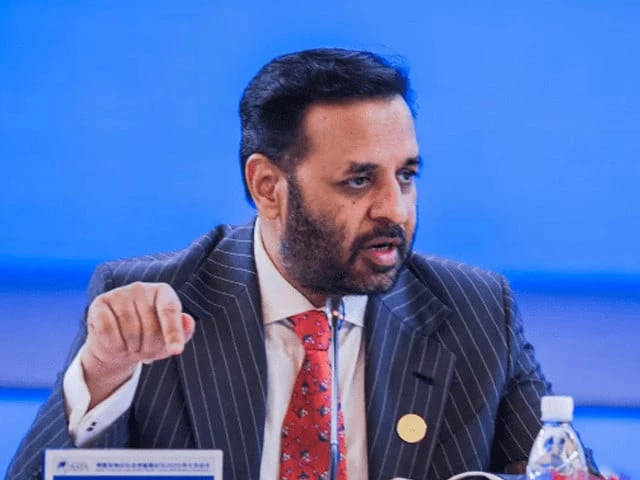
Pakistan is grappling with a widening treatment gap in its HIV response, with 23,000 registered patients currently untraceable and not receiving care, even as authorities insist that overall infection trends remain stable and manageable.
Speaking at a news conference, Health Minister Mustafa Kamal said the country has 84,000 registered HIV/AIDS cases, of which 61,000 patients are under treatment, while the remaining patients could not be traced because they are not seeking treatment.
He stressed that HIV is treatable and not incurable, with medicines available free of cost at government centres, though not in the open market.
"If these missing people are not taking medicine from here, they are not getting it from anywhere," he said, warning that untreated patients could contribute to further transmission.
The minister also raised serious concerns over the utilisation of international funding, revealing that out of a $65 million HIV/AIDS programme, $61.1 million had been disbursed to the United Nations Development Programme and an NGO, Nai Zindagi, while only $3.9 million was allocated to the Ministry of Health between 2024 and 2026.
He alleged that the NGO was not registered locally with the Economic Affairs Division and that authorities were not being provided details of how funds were being used, describing the lack of transparency as troubling.
Providing a broader epidemiological picture, Kamal said that in 2020, 37,944 individuals were screened at 49 centres nationwide, with 6,910 testing positive. By 2025, testing capacity had expanded to 97 centres conducting 374,126 tests and detecting 14,182 positive cases.
Despite the increase in testing, he maintained that the trend remained "stable" with no sudden spike in infections.
Based on population estimates, he said Pakistan should have around 369,000 HIV cases, but the current prevalence stands at 0.1 per cent, significantly below the global average of 0.5 per cent.
Rejecting recent reports of a fresh outbreak, the minister said the situation in Taunsa dated back to 2024 and that no new cases had been reported there or in Islamabad during 2026 so far.
Citing data, he said Islamabad has 618 registered cases, including about 208 local cases, while 408 patients were referred from Rawalpindi, Khyber-Pakhtunkhwa, Gilgit-Baltistan and Azad Kashmir.
Referring to international media reports, including a BBC investigation highlighting alleged malpractice in a government hospital in Taunsa following an outbreak among children, Kamal said corrective actions had already been taken and no recent surge had occurred.
Earlier reports noted that more than 100 children were infected and disciplinary measures, including suspension of hospital officials, were initiated.
The minister stressed that reuse of syringes remained a key driver of HIV transmission, announcing that the government would ban reusable 10cc syringes, ensuring they are strictly single-use.
He emphasised that treatment not only improves patient outcomes but also prevents further spread, urging people not to conceal their condition.
Meanwhile, the National Assembly Standing Committee on National Health Services, Regulations and Coordination has termed the rise in HIV cases, particularly in Taunsa, where 331 cases were reported, as alarming and sought a detailed briefing.




This material may not be published, broadcast, rewritten, redistributed or derived from. Unless otherwise stated, all content is copyrighted © 2026 The Express Tribune.










COMMENTS
Comments are moderated and generally will be posted if they are on-topic and not abusive.
For more information, please see our Comments FAQ