Four invisible barriers to foreign investment
Updated 7 hours ago

Policy tweaks, particularly shift to net billing, impeding further solar adoption
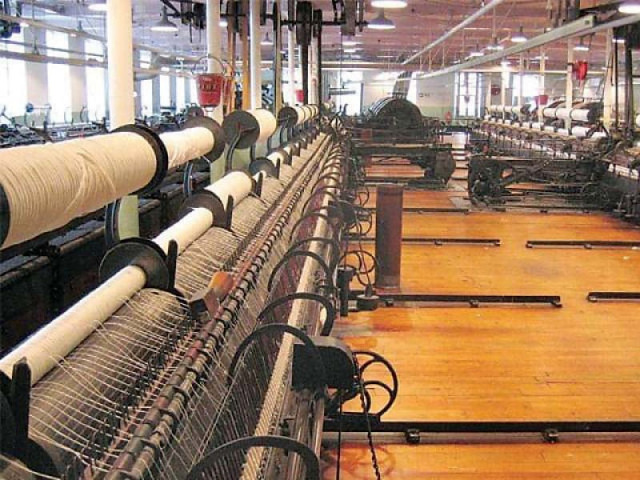
Pakistan's textile sector, the backbone of its export economy, is once again at a crossroads. This time, the challenge is not just about global competition or market access, but about energy, its cost, reliability, and sustainability.
At a recent multi-stakeholder dialogue in Faisalabad, industry leaders, researchers, and policymakers gathered to examine how shifting energy policies, global conflicts, and regulatory changes are reshaping the future of industrial growth in Pakistan. The seminar, titled "The Impact of Prosumer Regulations, Tariff Structure and War Crisis on Energy Security and Sustainable Industrial Growth in Pakistan," brought into sharp focus a critical question: can Pakistan transition to renewable energy, particularly solar, fast enough to remain competitive in a rapidly evolving global market?
As Pakistan's textile industry accounts for a major share of exports and employment, yet it remains highly energy-intensive and vulnerable to fluctuations in power supply and pricing. Rising global fuel prices, exacerbated by regional conflicts such as tensions involving Iran and disruptions in oil supply chains, have further complicated the situation.
According to research shared at the event, these geopolitical developments have already pushed inflation upwards and could reduce export earnings by up to $2 billion. Growth projections, too, are under pressure, with fears that economic expansion may slow significantly if energy costs continue to rise.
Against this backdrop, solar energy has emerged as a viable alternative. Over the past five years, many textile units have invested in rooftop solar systems to reduce electricity bills, ensure uninterrupted supply, and meet international environmental compliance standards.
However, recent regulatory changes, particularly the shift from net metering to net billing under the Prosumer Regulations 2026, have altered the investment landscape. Where industries once benefited from favourable energy exchange mechanisms, they now face reduced financial incentives and increased uncertainty.
Experts argue that this transition is discouraging further solar adoption and forcing industries to consider costly battery energy storage systems (BESS) to maintain reliability. "The policy shift is not necessarily helpful," noted one industry representative. "Instead of encouraging clean energy, it is pushing businesses towards expensive alternatives."
The Optional Time-of-Use (ToU) tariff system, proposed as part of broader reforms, has also drawn mixed reactions. While it aims to reduce per-unit energy costs by encouraging higher load utilisation, industry stakeholders point out that it may not suit all production models, particularly those already operating at fixed or continuous schedules. Increased fixed charges and complex billing structures further complicate the equation.
A growing trust deficit between industry and the government was another recurring theme. Representatives highlighted that inconsistent policies and frequent regulatory changes have made long-term planning difficult.
Ali Ahsan, representing the Pakistan Solar Association, observed that despite these challenges, solar adoption continues to grow. "People no longer trust the government for smooth and affordable power supply," he said, adding that market demand is now driving the transition towards renewable energy. This shift reflects a deeper structural issue: industries are increasingly seeking self-reliance in energy rather than depending on an unreliable grid. However, achieving this at scale requires significant investment, policy support, and technological innovation.
Despite the challenges, there was broad consensus among participants that a green transition is not just desirable but inevitable. Promoting solar energy and other renewable sources can help reduce carbon emissions, lower production costs, and enhance export competitiveness, particularly as global markets tighten environmental compliance requirements. International buyers are increasingly demanding transparency in carbon footprints and sustainable production practices. Without meeting these standards, Pakistani exporters risk losing access to key markets. As one participant noted, "Solarisation, energy efficiency, and supply chain compliance are no longer optional, they are essential for survival."
At the same time, the transition requires more than just installing solar panels. It demands a comprehensive ecosystem, including carbon accounting systems, data transparency, and strong collaboration between industry and academia. Experts emphasised the need for a national carbon registry to track emissions and support compliance with international regulations. One of the key takeaways from the seminar was the urgent need for coherent and consistent policy frameworks. ADS CEO Amjad Nazeer stressed that delayed or fragmented policymaking could deprive Pakistan of critical economic opportunities. "Energy transition is not a choice anymore; it is a necessity," he said, calling for long-term strategies backed by cross-party consensus.
Dr Syed Ali Abbas Kazmi of NUST highlighted structural issues within the energy sector, including high tariffs, rising financing costs, and policy inconsistencies that are increasing risks for investors. Smaller industrial units, in particular, are struggling to cope with these challenges, as their margins shrink and return on investment declines. He also pointed to the need for integrating industrial zones with renewable energy parks, promoting indigenous solutions, and encouraging research and development through stronger industry-academia linkages.
Comparisons with regional competitors such as India, Bangladesh, and Vietnam revealed a stark reality: Pakistan's energy costs remain significantly higher, undermining its competitiveness. These countries have not only invested in renewable energy but have also developed supportive policy ecosystems that encourage industrial growth. He argued that Pakistan must adopt a similar approach, focusing on long-term planning rather than short-term fixes. This includes revisiting agreements with independent power producers (IPPs), improving grid infrastructure, and exploring innovative solutions such as community battery storage and waste-to-energy systems.
There was also a call for greater collaboration with international partners. Textile exporters, it was suggested, need support from global buyers in areas such as technology upgrades, recycling infrastructure, and compliance certification. Shared responsibility across the supply chain could ease the financial burden on local manufacturers while ensuring sustainable practices. The ongoing global energy crisis has underscored the importance of energy security. Reliance on imported fossil fuels exposes Pakistan to external shocks, making domestic renewable energy solutions all the more critical.
In this context, solar energy is not just an environmental solution but a strategic asset. By investing in local, renewable sources, Pakistan can reduce its vulnerability to global market fluctuations and build a more resilient energy system.
The seminar concluded with a clear message: Pakistan must accelerate its transition to renewable energy through supportive policies, regulatory clarity, and investment in technology and research.
For the textile sector, the stakes could not be higher. As global competition intensifies and environmental standards become more stringent, the ability to produce sustainably and cost-effectively will determine the industry's future. The challenge lies in aligning policy, market forces, and technological innovation to create an enabling environment for this transition. Without it, Pakistan risks falling behind its regional competitors and missing out on the economic opportunities that a green transition can offer.
The writer is a freelance journalist













This material may not be published, broadcast, rewritten, redistributed or derived from. Unless otherwise stated, all content is copyrighted © 2026 The Express Tribune.







COMMENTS
Comments are moderated and generally will be posted if they are on-topic and not abusive.
For more information, please see our Comments FAQ