IHC reserves verdict on Bushra Bibi’s plea for family meetings, medical access
Updated 55 minutes ago

LNG shortage stalls 5,500MW capacity
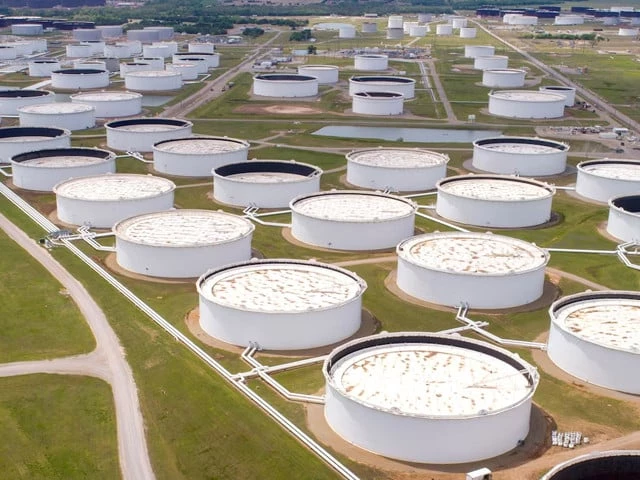
The power generation and supply remained under pressure during peak hours due to lower water demand from provinces and limited fuel availability, forcing utilities to carry out load management despite some improvement in urban supply, officials said on Thursday.
A spokesperson for the Power Division said that during last night's peak hours, hydropower generation reached 4,950 megawatts through water releases from dams, driven by provincial demand.
However, against a total installed hydropower capacity of 11,500MW, production remained nearly 6,000MW below potential, primarily due to lower water demand from provinces.
The spokesperson added that 400MW of electricity continued to be transmitted from the southern region to the central grid, helping maintain system stability.
However, despite this, distribution companies carried out load management ranging from two to two-and-a-half hours during peak demand.
He said economic load management would continue on high-loss feeders in line with policy, clarifying that it is separate from peak-time load management.
The spokesperson noted that improved availability of liquefied natural gas (LNG) would help eliminate peak-time load management, but currently around 5,500MW of generation capacity remains idle due to LNG shortages.
He urged consumers to adopt energy-saving practices during nighttime to better manage rising demand, adding that global conditions and lower water utilisation were contributing to a shortfall during night hours.
Separately, the Lahore Electric Supply Company (LESCO) reported an overall improvement in electricity supply, with a noticeable reduction in load management during night hours.
According to LESCO, electricity demand between 5pm and midnight averaged 3,787MW, while supply stood at 3,053MW, resulting in a shortfall of 682MW.
During this period, uninterrupted power supply was maintained for the independent industry, while commercial and industrial-dominated feeders experienced two hours of load management.









This material may not be published, broadcast, rewritten, redistributed or derived from. Unless otherwise stated, all content is copyrighted © 2026 The Express Tribune.












COMMENTS
Comments are moderated and generally will be posted if they are on-topic and not abusive.
For more information, please see our Comments FAQ