Colbert's curtain call
Updated 15 hours ago

From nostalgic hits to charged visuals, artists blur entertainment and commentary on festival stage
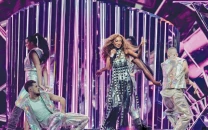
The second weekend of Coachella Valley Music and Arts Festival unfolded as a carefully recalibrated spectacle of pop dominance, surprise cameos and pointed political messaging, with headline acts refining performances while amplifying crowd engagement across multiple stages in Indio.
At the centre of the weekend's narrative stood Justin Bieber, whose revised headline set on April 18 signalled both responsiveness to fan feedback and a deliberate attempt to bridge the various phases of his career in a single, cohesive performance.
Taking the main stage at Saturday night, Bieber delivered a 90-minute set that leaned heavily on material from his recent 'SWAG' and 'SWAG II' projects, opening with 'All I Can Take', 'Speed Demon' and 'First Place'.
The inclusion of 'Lyin', absent from his first weekend performance, underscored a notable shift shaped by sustained audience demand, reflecting how real-time fan response now plays an increasingly decisive role in festival programming decisions at major global events.
As the set progressed, Bieber pivoted towards nostalgia, revisiting defining hits such as 'Baby', 'Sorry' and 'Where Are U Now', while large-scale visuals traced his artistic evolution from teenage pop phenomenon to established global headliner.
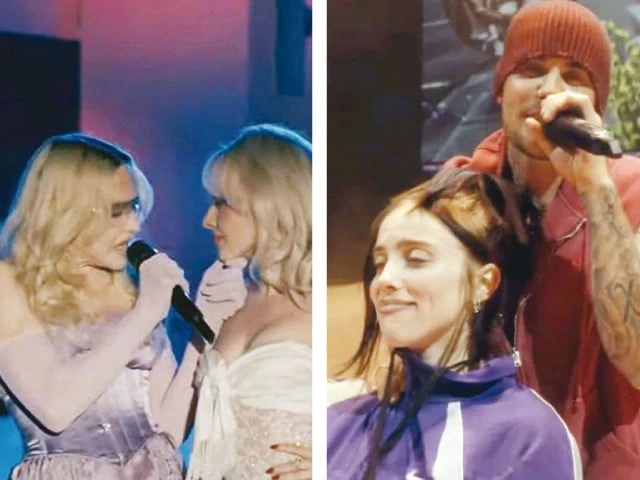
One of the evening's most talked-about moments arrived when Billie Eilish joined Bieber on stage during 'One Less Lonely Girl', recreating a signature segment from his early tours that once involved inviting a fan onstage.
Eilish, visibly overwhelmed, covered her face before embracing Bieber, a moment that resonated widely given her long-documented admiration for the singer and her own trajectory as a generational pop voice shaped partly by his influence.
The performance also featured appearances from SZA, Dijon, Big Sean and Sexxy Red, reinforcing the collaborative ethos that has increasingly defined Coachella's headline sets, where guest moments often carry as much weight as the primary performance itself.
Elsewhere, PinkPantheress transformed her Mojave tent appearance into a celebratory, guest-filled showcase that blurred the lines between concert and curated pop culture event, coinciding with her birthday.
Her expanded set included performances of 'Stateside', 'Romeo', 'Boy's a liar Pt. 2' and 'Illegal', while actor Tyriq Withers returned to the stage, contributing to an evolving narrative thread that spanned both festival weekends.
Among the evening's high-profile collaborations, Zara Larsson joined PinkPantheress to perform material from her album 'Midnight Sun', while hinting at a potential future collaboration tied to an upcoming deluxe release.
Additional appearances from Janelle Monae, Ninajirachi, Chase Infiniti, Manon and Slayyyter added to the density of the set, underscoring the increasingly interdisciplinary nature of festival performances that merge music, persona and spectacle.
The celebratory tone extended to the main stage, where Sabrina Carpenter continued her cinematic, Hollywood-inflected headline set, layered with visual and narrative references to the 1991 film 'Thelma & Louise'.
Madonna surprised fans making a guest appearance during Carpenter's headline set. In a brief but widely discussed cameo, Geena Davis also appeared as an older version of Carpenter, adopting a blonde transformation and delivering a stylised monologue from the driver's seat of a vintage car.
The appearance followed a similar cameo during weekend one by Susan Sarandon, reinforcing the thematic through-line and elevating Carpenter's set into a layered performance that fused nostalgia, cinema and pop performance.
Supporting appearances by Corey Fogelmanis and previously featured figures including Will Ferrell, Sam Elliott and Samuel L Jackson further illustrated the extent to which Coachella has evolved into a broader entertainment platform beyond music alone.
In contrast to the celebratory tone of other performances, The Strokes closed their weekend two set with a stark political statement that shifted the festival's atmosphere towards confrontation and reflection.
Ending with 'Oblivius', the band projected imagery of political figures including Omar Torrijos, Jacobo Arbenz and Jaime Roldos Aguilera, accompanied by references to alleged foreign interventions and contested historical narratives.
The visuals also included Martin Luther King Jr alongside a controversial on-screen claim regarding his death, before culminating in footage depicting missile strikes in Gaza, after which the screen abruptly cut to black.
Frontman Julian Casablancas had already signalled a politically engaged stance during weekend one, addressing issues such as military draft registration in the United States with a mix of irony and unease.
Musically, the band balanced this messaging with a setlist that spanned their catalogue, including 'Last Nite', 'Reptilia', 'Someday', 'You Only Live Once' and newer material such as 'Going Shopping'.
Their performance comes ahead of the release of their forthcoming album 'Reality Awaits' and a 2026 world tour, positioning Coachella as both a promotional platform and a site for ideological expression.
Across both weekends, the festival demonstrated a growing duality: on one hand, a meticulously produced entertainment spectacle driven by audience interaction, nostalgia and viral moments; on the other, a stage increasingly used for commentary on politics, identity and global tensions.
The convergence of these elements reflects a broader shift in live music culture, where festivals are no longer simply about performance, but about narrative construction, cultural signalling and the creation of moments designed to resonate far beyond the desert setting.






This material may not be published, broadcast, rewritten, redistributed or derived from. Unless otherwise stated, all content is copyrighted © 2026 The Express Tribune.





COMMENTS
Comments are moderated and generally will be posted if they are on-topic and not abusive.
For more information, please see our Comments FAQ