'Greetings after 88 days': Iranians reconnect after long internet shutdown
Updated 1 hour ago

Says decision is in line with the ceasefire in Lebanon; Trump says 'thank you' on Truth Social
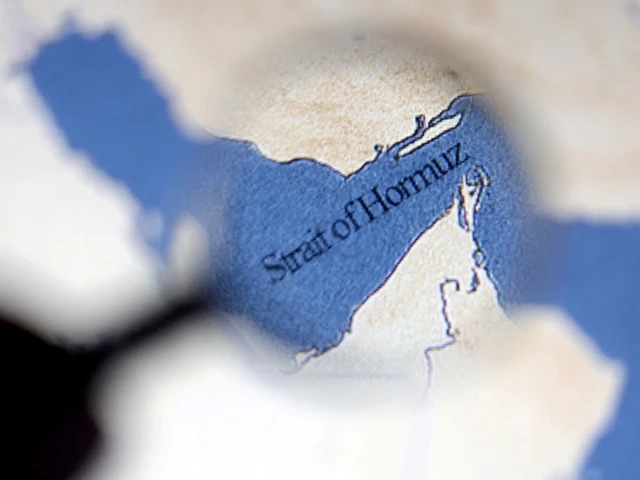
The Iranian foreign minister on Friday announced the opening of the strategic Strait of Hormuz for the passage of all commercial ships for the remainder of the US-brokered 10-day truce between Israeli forces and Hezbollah agreed between Israel and Lebanon.
In a post on X, FM Abbas Araghchi said: "In line with the ceasefire in Lebanon, the passage for all commercial vessels through Strait of Hormuz is declared completely open for the remaining period of ceasefire, on the coordinated route as already announced by Ports and Maritime Organisation of the Islamic Republic of Iran."
In line with the ceasefire in Lebanon, the passage for all commercial vessels through Strait of Hormuz is declared completely open for the remaining period of ceasefire, on the coordinated route as already announced by Ports and Maritime Organisation of the Islamic Rep. of Iran.
— Seyed Abbas Araghchi (@araghchi) April 17, 2026
US President Donald Trump also shared the announcement in a post on Truth Social.
"Iran has just announced that the Strait of Iran is fully open and ready for full passage. Thank you!"
— Rapid Response 47 (@RapidResponse47) April 17, 2026
However, he said in another post that the US Navy's blockade of Hormuz would continue until a deal with Iran was achieved, adding that it should happen soon, as most of the negotiation points were agreed to.
— Rapid Response 47 (@RapidResponse47) April 17, 2026
Later, in another post, Trump said Iran, with US assistance, had removed — or was in the process of removing — sea mines from the Strait of Hormuz.
He said Iran had agreed never to close the Strait of Hormuz again and would no longer use it as a weapon against the world, hailing the developments as “a great and brilliant day for the world”.
He again thanked Prime Minister Shehbaz Sharif and Field Marshal Asim Munir for their efforts in the negotiations, describing them as “two fantastic people”.
The United Nations chief welcomed Iran's move as a "step in the right direction".
He further said: "The UN position remains clear: we need the full restoration of international navigational rights and freedoms in the Strait of Hormuz, respected by everyone. I also hope that, together with the ceasefire, this measure will contribute to creating confidence between the parties and strengthen the ongoing dialogue facilitated by Pakistan."
I welcome Iran’s announcements that the Strait of Hormuz is completely open for all commercial vessels for the remainder of the ceasefire.
— António Guterres (@antonioguterres) April 17, 2026
This a step in the right direction.
The @UN position remains clear: we need the full restoration of international navigational rights &…
Meanwhile, a senior Iranian official told Reuters that all commercial ships planning to sail through the Strait of Hormuz must coordinate their movements with Iran’s Revolutionary Guards.
According to the official, transit would be restricted to lanes Iran deemed safe, adding that military vessels were still prohibited from crossing the strait.
The official said unfreezing Iran's funds was part of the agreement regarding Hormuz.
Despite a two-week US-Iran ceasefire that expires on Tuesday, Iran had so far not lifted its blockade of the waterway. Tehran had said there would be no deal as long as Israel was striking Lebanon.
Oil prices plunged by more than 11%, extending previous losses, after the announcement.
Brent crude futures dropped by $11.12, or 11.2%, to $88.27 a barrel at 1311 GMT. US West Texas Intermediate crude futures fell $11.40, or 12%, to $83.29 a barrel.
"Comments from Iran's foreign minister indicate a de-escalation as long as the ceasefire is in place, now we need to see also if the number of tankers crossing the Strait increases substantially," UBS analyst Giovanni Staunovo said.
Prices were already down earlier in the session as possible further talks between the US and Iran at the weekend in Pakistan and a 10-day ceasefire between Lebanon and Israel raised investors' hopes that the war in the Middle East could be nearing an end.
Power Minister Awais Leghari celebrated the development in a post on X.
"Pakistan has been granted this opportunity, through the tireless efforts of our Prime Minister Shehbaz Sharif and Field Marshal Syed Asim Munir, to become a champion of global peace. A ceasefire has been achieved in Lebanon, and the Strait of Hormuz has opened today for commercial transit. God wiling, due to these efforts, there will soon be a reduction in petrol and diesel prices, and with the availability of LNG, there will be an abundance of electricity."
اللہ تعالی کا شکر کہ پاکستان کو یہ موقع ملا کہ ہمارے وزیراعظم شہباز شریف اور فیلڈ مارشل سید عاصم منیر کی بھر پور کوششوں سے پاکستان عالمی امن کا علمبردار بنا ، لبنان میں جنگ بندی ہو ئی اور آبنائے ہرمز کمرشل آمد ورفت کیلیے آج کھل گئی ہے انشاءاللہ ان کوششوں کی وجہ سے پٹرول اور… pic.twitter.com/4lC3FS7Mwc
— Awais Leghari (@akleghari) April 17, 2026
Backdoor diplomacy progress
A Pakistani source involved in mediating between the US and Iran said on Friday there was progress in backdoor diplomacy and that an upcoming meeting between the two sides could result in the signing of a memorandum of understanding, followed by a comprehensive deal within 60 days.
"Both sides are agreeing in principle. And technical bits come later," the source said on condition of anonymity.
A senior Iranian official told Reuters there had been an agreement on unfreezing billions of dollars in Iranian assets, as part of the accord to reopen the strait, without giving a timeline.
One of the key sticking points has been over Tehran's nuclear ambitions, with the US proposing at last weekend's talks a 20-year suspension of all Iranian nuclear activity. Tehran suggested a halt of three to five years, according to people familiar with the proposals.
Iran has demanded international sanctions on it be lifted and Washington has pressed for any highly enriched uranium to be removed from Iran. Two Iranian sources have said there were signs of a compromise on the HEU stockpile, with Tehran considering shipping part of it out of the country.
Trump repeated his Thursday comment that the US would get all the "nuclear dust", referring to Iran's highly enriched uranium, which he says was obliterated by US bombers last June.
Earlier on Friday, Iran's state media outlet Mizan disputed that, highlighting ongoing differences.
No negotiation regarding the "transfer of Iran's highly enriched uranium to America had ever taken place, and naturally there is no agreement on this matter either", it said, citing sources.
The US and Israel launched a joint offensive on Iran on February 28, killing dozens of top military officials, including then-Supreme Leader Ali Khamenei, before a two-week ceasefire was mediated by Pakistan earlier this week.
Tehran retaliated with drone and missile strikes targeting Israel, as well as Jordan, Iraq, and Gulf countries hosting US military assets, and restricted the movement of ships through the Strait of Hormuz, a key passage for oil and gas shipments.
Fighting later spread to Lebanon after Israel launched an offensive there, widening the conflict, as the United States and Israel continued attacks on Iran.
As the conflict continued to expand and intensify, Pakistan emerged as a mediator alongside other regional powers in the escalating crisis. As the negotiation process began, the United States and Iran exchanged their respective positions, but early discussions yielded no progress. However, following sustained diplomatic efforts by Pakistan, both sides agreed to hold talks in Islamabad last week.
But, Washington and Tehran failed to reach an agreement in Islamabad over the weekend during talks that were part of broader efforts to end the conflict.
Later, Trump announced a naval blockade of the Strait of Hormuz, which took effect at 1400GMT Monday.
Although the talks ended without a breakthrough, they left a measure of hope, with both parties indicating a willingness to continue negotiations. Efforts resumed this week, with Trump expressing optimism about reaching a deal soon.
With another round of dialogue expected as early as this weekend, Iran took a step toward de-escalation by announcing the reopening of the strategic Strait of Hormuz to all commercial shipping.






This material may not be published, broadcast, rewritten, redistributed or derived from. Unless otherwise stated, all content is copyrighted © 2026 The Express Tribune.









COMMENTS
Comments are moderated and generally will be posted if they are on-topic and not abusive.
For more information, please see our Comments FAQ