Hajj climaxes with call for unity
Updated 9 hours ago

Invites Israeli PM and Lebanon’s president to White House, calling it first meaningful talks between two countries
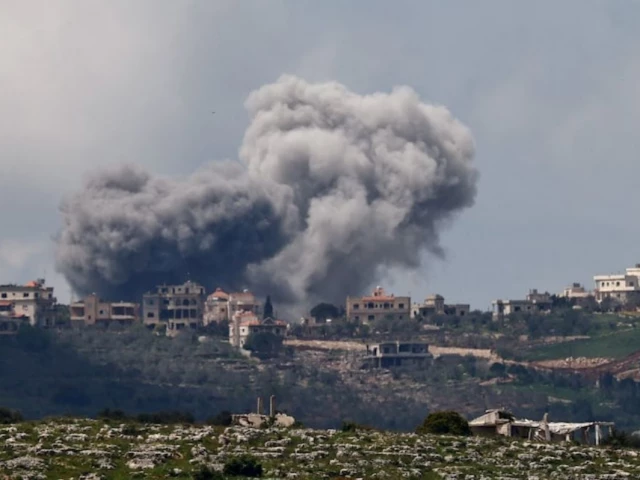
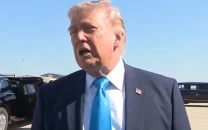
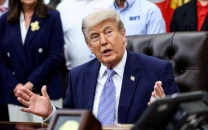
Israel and Lebanon have agreed to a 10-day ceasefire starting on Thursday, United States President Donald Trump said after speaking to Israeli Prime Minister Benjamin Netanyahu and Lebanese counterpart Joseph Aoun.
"These two leaders have agreed that in order to achieve peace between their countries, they will formally begin a 10-day ceasefire at 5pm EST," Trump said on his Truth Social network, without mentioning Lebanon's Hezbollah movement.
“On Tuesday, the two countries met for the first time in 34 years here in Washington, DC, with our great Secretary of State, Marco Rubio. I have directed Vice President JD Vance and Secretary of State Rubio, together with the Chairman of the Joint Chiefs of Staff, Dan Razin' Caine, to work with Israel and Lebanon to achieve a lasting peace.”
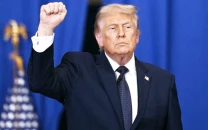
He reiterated his resolve to end conflicts. “It has been my honour to solve nine wars across the world, and this will be my 10th, so let's, get it done!”
In another post, President Trump also invited the Israeli prime minister and Lebanon’s president to the White House for what he described as the first meaningful talks between the two countries, adding that these would be their first since 1983.
“Both sides want to see peace, and I believe that will happen, quickly”, he concluded.
UN chief, EU Commission chief welcome ceasefire
The United Nations welcomed the 10-day ceasefire announcement between Lebanon and Israel, with the Secretary-General Antonio Guterres expressing support for efforts to end the prolonged conflict.
"Turning to Lebanon, we're of course, aware of the announcements made by President (Donald) Trump of a ceasefire between Lebanon and Israel," said UN spokesperson Stephane Dujarric during a news conference on Thursday, adding that Guterres said, "obviously, we welcome steps that would end hostilities and suffering on both sides of the blue line."
Noting that the UN "remains ready to support these efforts," Dujarric also said that the UN continues to urge "the full implementation of Security Council resolution 1701," describing it as the pathway toward "a permanent ceasefire and long-term solution to the conflict."
Read: Pakistan says Iran-US 'agreement is reachable'
He stressed that "there is no military solution to this conflict," as UN Special Coordinator for Lebanon Jeanine Hennis-Plasschaert continues diplomatic outreach with the parties.
Dujarric also flagged the worsening humanitarian situation in Lebanon, warning that "the needs are continuing to deepen" across the country, with "civilians continuing to bear the brunt of the violence."
Meanwhile, European Commission President Ursula von der Leyen also welcomed the announcement of a 10-day ceasefire between Israel and Lebanon, stressing that a "path to permanent peace" is needed.
"I welcome the announced 10-day ceasefire between Israel and Lebanon, mediated by President Trump," von der Leyen said in a post on US social media platform X.
I welcome the announced 10 day ceasefire between Israel and Lebanon, mediated by President Trump.
— Ursula von der Leyen (@vonderleyen) April 16, 2026
This is a relief, as this conflict has already claimed far too many lives.
Now, we need not just a temporary pause, but a path to permanent peace.
Europe will continue to call for…
She described the temporary truce as "a relief," noting that the conflict has already claimed too many lives.
"Now, we need not just a temporary pause, but a path to permanent peace. Europe will continue to call for the full respect of Lebanon’s sovereignty and territorial integrity," she added.
Von der Leyen reaffirmed the European Union's support for Lebanon, saying that the bloc will keep supporting the Lebanese people through substantial humanitarian aid.
Netanyahu briefs Cabinet on Lebanon ceasefire ‘without vote’
Separately, Israeli Prime Minister Benjamin Netanyahu held a phone meeting with members of his security cabinet to update them on a ceasefire in Lebanon, without holding a vote, according to Israeli media reports.
The call lasted minutes and was limited to informing ministers of the decision, the Yedioth Ahronoth newspaper reported, adding that Netanyahu said the ceasefire would take effect at midnight at the request of US President Donald Trump, while Israeli forces would remain in their positions.
Also Read: Over 60 organisations call for suspension of EU-Israel association agreement
The newspaper said ministers were “furious” about not being informed in advance of Trump's announcement.
Israel’s public broadcaster KAN said Netanyahu did not have time to brief the Cabinet on details of the ceasefire.
Israeli opposition leader Yair Lapid criticized the ceasefire. “This is not the first time this government’s promises collapse in reality,” he wrote on X.
לא בפעם הראשונה כל הבטחות הממשלה הזו מתרסקות על קרקע המציאות.
— יאיר לפיד - Yair Lapid (@yairlapid) April 16, 2026
העימות בלבנון יכול להסתיים רק בדרך אחת: הסרת האיום על ישובי הצפון לצמיתות.
בממשלה הזו זה כבר לא יקרה, נעשה את זה בממשלה הבאה.
Opposition figure Avigdor Lieberman, who heads the Yisrael Beiteinu party, wrote on X that “a ceasefire in Lebanon is a betrayal of the residents of northern Israel.”
דוד אזולאי, ראש מועצת מטולה, וחבר מפלגת ישראל ביתנו, בתגובה להפסקת האש בצפון:
— ישראל ביתנו (@Beytenu) April 16, 2026
״אזרחי הצפון מרגישים היום נבגדים פעם נוספת. העובדה שנשיא ארצות הברית הוא זה שמכריז על הפסקת אש רק ממחישה עד כמה ראש ממשלת ישראל מנותק מהעם.
החובה הבסיסית של נתניהו, כראש ממשלת ישראל היא להעניק ביטחון… pic.twitter.com/La7RjiwmlY
Earlier, it was reported that Lebanon’s president would not speak to Israel’s prime minister in the near future, Lebanese officials said on Thursday, dealing a blow to US efforts to expand contacts between the enemy states, while Pakistan said peace in Lebanon was vital to ending the Iran war.
The US-Israeli war with Iran spilt into Lebanon on March 2, when Hezbollah opened fire in support of Tehran, prompting an Israeli offensive in Lebanon just 15 months after the last major conflict.
"Peace in Lebanon is essential for [Iran] peace talks," Foreign Office Spokesperson Tahir Andrabi said.
The Israeli security cabinet convened late on Wednesday to discuss a possible ceasefire in Lebanon.
Trump said on Truth Social he was seeking to create “a little breathing room” between Israel and Lebanon, adding the two leaders had not spoken for some 34 years and "it will happen tomorrow” in a post published late on Wednesday in Washington.
But three Lebanese officials told Reuters on Thursday that President Aoun would not hold a call with Netanyahu in the near future.
Two of the Lebanese officials said the Lebanese embassy in Washington had informed the US administration of the position before a call between Aoun and Secretary of State Marco Rubio on Thursday.
A brief Lebanese presidency statement said Aoun thanked Rubio for the US efforts to achieve a ceasefire in Lebanon.
Lebanon seeks ceasefire before talks
The Lebanese government has been sharply at odds with Hezbollah over its decision to enter the war, having spent the last year seeking to secure the peaceful disarmament of the group founded by Iran's Revolutionary Guards in 1982.
Beirut banned Hezbollah's military activities on March 2.
Israeli and Lebanese ambassadors held rare talks in Washington on Tuesday, but contact between Netanyahu and Aoun would be a major milestone in ties between the two countries, which have remained in a state of war since Israel was established in 1948.
Earlier, Gila Gamliel, a member of Israel's security cabinet, told Israel's Army Radio that Netanyahu would "speak for the first time with the president of Lebanon after so many years of no contact between the two countries".
Aoun had said early in the war he would be open to direct talks, but Lebanon's position is that a ceasefire should precede negotiations.
In a statement on Thursday, he said a ceasefire would be the "natural entry point for direct negotiations" with Israel.
Aoun, who commanded Lebanon's US-backed military before becoming president last year, said Israel's withdrawal would be a "fundamental step to consolidate the ceasefire" so that Lebanese troops could deploy to the south.
Fighting continues in South Lebanon
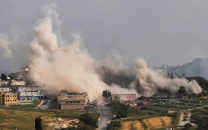
Fighting continued to rage in south Lebanon, notably in the Lebanese border town of Bint Jbeil, a Hezbollah stronghold and strategic prize, which Netanyahu said on Wednesday the Israeli military was about to "overcome".
A senior Lebanese official said Lebanon believed Israel wanted to secure a victory in Bint Jbeil before diplomatic progress could be made.
An Israeli strike destroyed the last bridge over the Litani River into the south, a senior Lebanese security source said, fully severing almost a tenth of Lebanon from the rest of the country after Israel destroyed other crossings during the war.
Hezbollah announced new rocket attacks on Israel. In Israel, sirens rang out warning of incoming rockets, sending residents of several northern Israeli towns running to bomb shelters. There were no immediate reports of injuries.
Israeli attacks have killed more than 2,100 people in Lebanon since March 2 and forced more than 1.2 million to flee, Lebanese authorities say. Hezbollah attacks have killed two Israeli civilians, while 13 Israeli soldiers have died in Lebanon since March 2, Israel says.
Isreal vows ‘no-go’ zone for Hezbollah
The Israeli military's chief of staff said on Wednesday the area south of the Litani would be a "no-go zone for Hezbollah operatives", reflecting Israel's declared aim to keep control of a swathe of Lebanon south of the river that meets the Mediterranean about 30 kilometres north of Israel's border.
Washington expressed optimism on Wednesday about reaching a deal to end the Iran war. The sides agreed to a two-week ceasefire in the Iran war on April 8, following mediation by Pakistan.
Israel and the US have said the campaign against Hezbollah was not part of that ceasefire, though Prime Minister Shehbaz Sharif had said the truce would include Lebanon, as demanded by Iran.
A senior Israeli official and a senior Lebanese official said on Wednesday that Netanyahu's government was under heavy pressure from Washington to reach a ceasefire in Lebanon.
A senior US administration official said on Wednesday the Trump administration had not asked for a ceasefire, but the US president "would welcome the end of hostilities in Lebanon as part of a peace agreement between Israel and Lebanon".
Trump's earlier announcement of direct talks came after Israel’s and Lebanon’s envoys to the US held rare, direct talks in Washington to discuss an end to Israeli attacks on its neighbour, according to Al Jazeera. Israeli PM Benjamin Netanyahu said yesterday that, despite the talks, he had ordered the military to expand the invasion of southern Lebanon, towards the east.
Meanwhile, an Israeli strike has severed the last bridge linking southern Lebanon to the rest of the country, according to a Lebanese security official.
Economic pressure on Iran
Treasury Secretary Scott Bessent predicted that China's purchase of Iranian oil would "pause" given the US blockade on vessels calling at Iranian ports. He said the US could impose secondary sanctions on countries that purchase Iranian crude.
The US Treasury had warned two Chinese banks not to process Iranian money or face sanctions, he said, without naming the banks. China previously bought more than 80% of Iran's shipped oil.
Trump said on Wednesday he had told Chinese President Xi Jinping not to give Iran weapons, which Xi had said he wasn't. Trump also said that China was very happy he was "permanently opening" the Strait of Hormuz.
"I am doing it for them, also - and the world," he wrote on social media, adding: "President Xi will give me a big, fat, hug when I get there in a few weeks."
The war has led Iran to effectively shut the strait, a vital artery for global crude and gas shipments, to ships other than its own, sharply reducing exports from the Gulf and leaving energy importers scrambling for alternative supplies.
Tankers intercepted
During the first 48 hours of the US blockade on ships entering and exiting Iranian ports, no vessels have made it past US forces, the US military said. Additionally, nine vessels complied with the direction from US forces to turn around and return toward an Iranian port or coastal area.
However, Iran's Fars News Agency said an Iranian supertanker subject to US sanctions crossed the strait towards Iran's Imam Khomeini port despite the blockade. Fars did not identify the tanker or give further details of its voyage.
Iran's joint military command warned it would halt trade flows in the Gulf, the Sea of Oman and the Red Sea, which connects to the Suez Canal, if the US blockade continued.
Iran could consider allowing ships to sail freely through the Omani side of the strait without risk of attack as part of proposals it has offered in negotiations with the US, a source briefed by Tehran said, provided a deal is clinched to prevent renewed conflict.
Trump has also threatened to escalate if the war resumes.
"We could take out every one of their bridges in one hour. We could take out every one of their power plants, electric power plants, in one hour. We don't want to do that...so we'll see what happens," he told Fox Business Network.
Talks complicated by nuclear issue
The US's claims of Iran's nuclear ambitions were a key sticking point at last weekend's talks. The US proposed a 20-year suspension of all nuclear activity by Iran, an apparent concession from longstanding demands for a permanent ban, while Tehran suggested a halt of three to five years, according to people familiar with the proposals.
Read more: 'Draft was ready': how US-Iran talks narrowly missed historic deal in Islamabad
Washington has also pressed for any enriched nuclear material to be removed from Iran, while Tehran has demanded that international sanctions against it be lifted.
One source involved in the talks said back-channel discussions had made progress in narrowing gaps, bringing the two sides closer to a deal that could be presented at a new round of talks.








This material may not be published, broadcast, rewritten, redistributed or derived from. Unless otherwise stated, all content is copyrighted © 2026 The Express Tribune.










COMMENTS (1)
Comments are moderated and generally will be posted if they are on-topic and not abusive.
For more information, please see our Comments FAQ