Oil rises, stocks waver as new US strikes dampen peace deal hopes
Updated 6 hours ago

Aurangzeb says govt assessing second, third-round effects of crisis on economic indicators
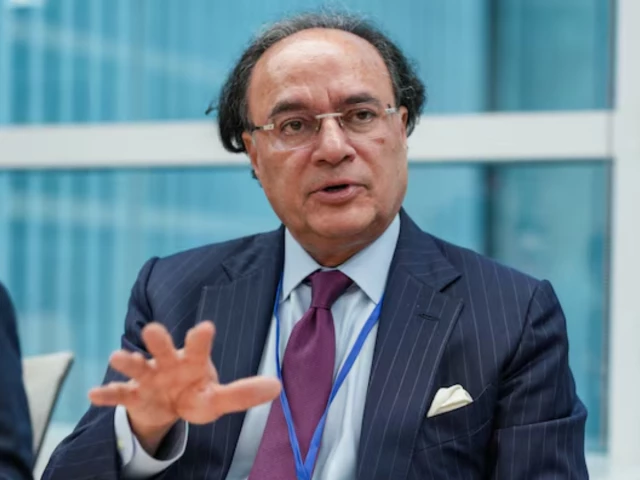
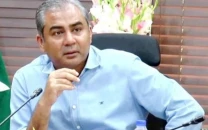
Federal Minister for Finance Muhammad Aurangzeb participated in a meeting convened by the International Monetary Fund (IMF) managing director with finance ministers, central bank governors and heads of regional financial institutions from the Middle East, North Africa, Afghanistan and Pakistan (Menap) region on the sidelines of the World Bank-IMF Spring Meetings 2026.
In his intervention, the finance minister characterised the ongoing crisis in the Middle East as one of the most significant supply shocks in recent history. He outlined the immediate measures undertaken by Pakistan to address the first-round effects, including adjustments in procurement strategies, pricing frameworks and logistics chains. Aurangzeb underscored the government's commitment to transitioning from broad-based subsidies towards well-targeted support mechanisms aimed at protecting the most vulnerable segments of the population. He noted that the government, in close coordination with the State Bank of Pakistan (SBP), was conducting a comprehensive assessment of the second and third-round effects of the crisis across key macroeconomic indicators, including inflation, economic growth, exports, remittances and the current account.
He highlighted that Pakistan had entered the current period of global uncertainty with strengthened policy buffers and had drawn important lessons from past shocks, including the devastating floods in recent years. Reaffirming the commitment to structural reforms, Aurangzeb emphasised that any necessary policy recalibration would be undertaken in a responsible manner, without compromising the hard-won gains in macroeconomic stability. The federal minister also participated in the 15th Ministerial Meeting of the Coalition of Finance Ministers for Climate Action, held under the theme "Climate Action as an Engine of Growth, Jobs and Competitiveness."
During discussions, he underscored Pakistan's evolving climate resilience, noting that during the devastating floods of 2022, the country had to immediately seek international support. In contrast, when a similar disaster struck in 2025, Pakistan was able to mobilise relief through its own resources, which reflected the strengthened fiscal buffers built over the intervening period. Aurangzeb outlined key measures about the green Pakistan financial architecture, including the issuance of Green Taxonomy Guidelines by the State Bank. He informed participants that Pakistan currently had approximately 8,000 megawatts of installed solar capacity and was pursuing an ambitious target of sourcing 90% of energy from renewables within the next decade.
He expressed appreciation to Pakistan's international partners for their continued support for advancing climate finance initiatives, specifically acknowledging the Resilience and Sustainability Facility (RSF) extended by the IMF and the Country Partnership Framework of the World Bank Group.
Separately, the finance minister held a meeting with US Department of Commerce Secretary Howard Lutnick, where both sides discussed avenues for deepening economic partnership, with a focus on enhancing trade, promoting investment and facilitating private-sector engagement. Their discussion also covered cooperation in key sectors including mining, energy and IT, and emphasis was laid on unlocking new opportunities for mutually beneficial economic collaboration.
In his address at the Roshan Digital Account (RDA) and Remittance Roadshow – Pakistan Diaspora Leaders' Evening, held at the Embassy of Pakistan in Washington DC, the minister paid rich tribute to the invaluable contribution from the Pakistani diaspora to the country's economic development, recognising overseas Pakistanis as a cornerstone of Pakistan's external resilience.
He underscored the government's continued commitment to the RDA scheme and emphasised that even at the height of Pakistan's balance-of-payments crisis, when foreign exchange reserves had fallen to historic lows, no restrictions were placed on RDA deposits.






This material may not be published, broadcast, rewritten, redistributed or derived from. Unless otherwise stated, all content is copyrighted © 2026 The Express Tribune.











COMMENTS
Comments are moderated and generally will be posted if they are on-topic and not abusive.
For more information, please see our Comments FAQ