PM Shehbaz meets top Chinese firms to boost CPEC Phase II partnerships
Updated 1 hour ago

US President says it's more likely that we go back there, Iranian officials say negotiating teams could return
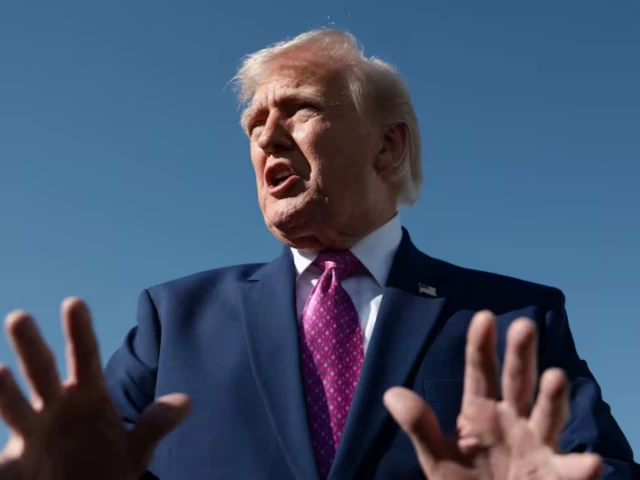
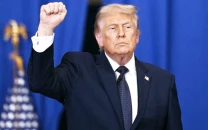
With Pakistan racing to bring Iran and the United States together for further talks to end the Middle East war, President Donald Trump said on Tuesday that a second round "could be happening over the next two days", even as Washington enforced a blockade on Iranian ports.
Gulf, Pakistani and Iranian officials said negotiating teams could return to Pakistan later this week, though one senior Iranian source cautioned that no date had been set. A US official said future talks with Iran are still under discussion.
"You should stay there, really, because something could be happening over the next two days, and we're more inclined to go there," Trump said in an interview with the New York Post, adding that the talks could again be held in Pakistan's capital.
"It's more likely, you know why? Because the Field Marshal is doing a great job. He's fantastic, and therefore it's more likely that we go back there," he said. "Why should we go to some country that has nothing to do with it?"
UN Secretary-General Antonio Guterres said it is "highly probable" the talks restart, adding that it would be "unrealistic" for the issues to be resolved in a first negotiating session. He expressed "enormous admiration" for Pakistan's initiative to bring peace to the Middle East.
"I consider it essential that these negotiations go on," he said after a phone call on Tuesday with Pakistan's Deputy Prime Minister Ishaq Dar. "We need negotiations to go on, and we need a ceasefire to persist as negotiations go on," he added.
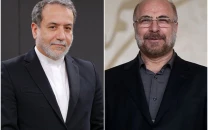
The first round of direct talks between US Vice President JD Vance and Iranian Speaker Baghar Ghalibaf ended without agreement in Islamabad on Sunday morning, and neither side has indicated what will happen after the ceasefire expires on April 22.
Key issues include access to the Strait of Hormuz, Iran's nuclear programme and international sanctions on Tehran. Despite the setback, signs that diplomatic engagement might continue helped calm oil markets, pushing benchmark prices below $100 on Tuesday.Since the United States and Israel began the war on February 28, Iran has effectively shut the Strait of Hormuz to nearly all vessels except its own, saying passage would be permitted only under Iranian control and subject to a fee.
In response, the US military began blocking shipping traffic in and out of Iranian ports on Monday. Tehran has threatened to target naval vessels in the strait and retaliate against ports in neighbouring Gulf states.
US Central Command said the blockade involved more than 10,000 personnel, over a dozen warships and dozens of aircraft. "During the first 24 hours, no ships made it past the US blockade," CENTCOM said in a statement on X.
It added that six merchant vessels complied with direction from US forces to turn around to re-enter an Iranian port on the Gulf of Oman. Shipping data suggested limited immediate disruption in the strait, with at least eight vessels crossing on Tuesday.
The International Monetary Fund cut its global growth outlook, warning the economy could edge towards recession if the conflict worsens and oil remains above $100 per barrel into 2027. The International Energy Agency also lowered forecasts for global oil supply and demand growth.
A source involved in the recent talks said backchannel negotiations since the weekend had produced "good progress" in narrowing differences, bringing both sides closer to a potential deal that could be presented at a new round of talks.
Any agreement would likely require monitoring and verification by the International Atomic Energy Agency, while Iran continues to press for the removal of international sanctions, a step that would require broader global support.
Complicating mediation efforts, Israel has continued strikes against Hezbollah in Lebanon, which it says fall outside the ceasefire. Iranian officials insist the attacks violate the truce. Israeli and Lebanese envoys held talks in Washington on Tuesday.
At home, political pressure is mounting on the Trump administration. A Reuters/Ipsos poll conducted after the ceasefire showed that 35% of Americans approve of US strikes on Iran, down from 37% a week earlier.
Trump paused the US-Israeli bombing campaign last week after warning he would destroy Iran's "whole civilisation" unless it reopened the strait. The ceasefire has largely held despite sharp rhetoric.
An Iranian military spokesperson described US restrictions on shipping as "piracy", while Trump said Iran's navy had been "completely obliterated". "Warning: If any of these ships come anywhere close to our BLOCKADE, they will be immediately ELIMINATED."
In parallel, Washington is tightening economic pressure. The United States will not renew a 30-day waiver on sanctions covering Iranian oil shipments at sea, signalling what one official described as "Treasury is going full force on Economic Fury" on Iran. The waiver, which allowed around 140 million barrels of oil to reach global markets, expires on April 19.
US officials said letters had been sent to China, Hong Kong, the UAE and Oman identifying banks accused of facilitating Iranian financial activity. "My hope is for your swift action to identify and stop any illicit activity linked to Iran to avoid further action from Treasury," Treasury Secretary Scott Bessent wrote.
With military pressure rising, economic measures tightening and diplomacy tentatively resuming, Pakistan is again positioned as a critical venue for talks that could determine whether the fragile ceasefire holds or the conflict deepens further.






This material may not be published, broadcast, rewritten, redistributed or derived from. Unless otherwise stated, all content is copyrighted © 2026 The Express Tribune.














COMMENTS
Comments are moderated and generally will be posted if they are on-topic and not abusive.
For more information, please see our Comments FAQ