Family parks to boost tourism
Updated May 11, 2026

Rapid urban growth, failed green policies, and weak planning fuel a worsening environmental crisis in the city
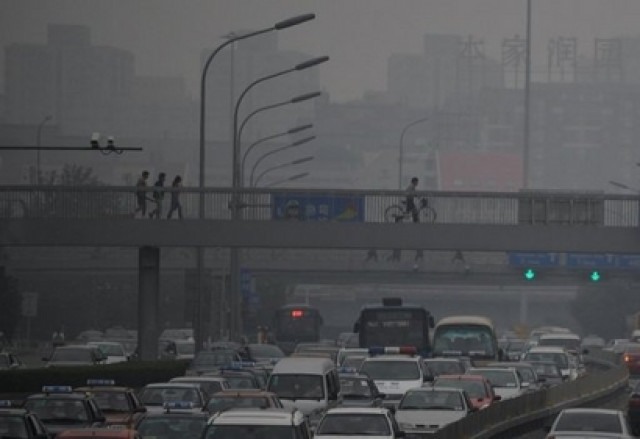
Once known as the "City of Flowers," Peshawar has become a symbol of environmental decline, where clean air is now a rare luxury. Once celebrated for its greenery and mild climate, the city today ranks among Pakistan's most polluted, with residents forced to breathe increasingly toxic air.
According to the 2023 digital census, Khyber-Pakhtunkhwa's population has surpassed 40.8 million, while Peshawar alone is home to over 4.26 million people. As the provincial capital, the city has long attracted migrants from across the province. In recent years, however, waves of displacement from the erstwhile tribal districts due to insecurity have further intensified urban pressure. The result is a rapidly expanding population with insufficient urban planning, placing immense strain on infrastructure, natural resources, and the environment.
Successive governments have promised to restore Peshawar's lost greenery, yet these commitments have largely fallen short. When the Pakistan Tehreek-e-Insaf (PTI) came to power in 2013, it launched the much-publicised "Billion Tree Tsunami" project, heralded as a transformative environmental initiative.
However, the project soon became mired in allegations of financial mismanagement and failed to achieve the scale and sustainability it had promised. More recently, on March 23, 2026, the K-P government announced an ambitious plan to plant one million saplings in a single day under the banner of the "Ehsas Tree Plantation Campaign." Like many initiatives before it, this claim appears to have remained largely on paper.
Officials within the Forest Department have themselves acknowledged the gap between ambition and reality. Deputy Director Agriculture Department Muhammad Ibrahim Khan told The Express Tribune that while the department made efforts to distribute saplings to colleges, universities, and government institutions through official nurseries, the one-day target of planting one million trees was unrealistic.
"Systems such as online tracking, GPS monitoring, and dashboards have been introduced to oversee plantation efforts, reflecting a degree of institutional progress. However, the campaign fell short of its numerical goals. Instead, it succeeded, to some extent, in raising public awareness about environmental protection," said Khan.
Experts argue that awareness alone is not enough. Environmental specialist Ayaz Ali noted that trees contribute roughly 30 per cent to environmental improvement, while the remaining 70 per cent depends on human behaviour and lifestyle choices.
"Without a shift in consumption patterns, waste management practices, and urban habits, tree plantation drives alone cannot reverse environmental degradation," noted Ali, who also highlighted a broader injustice: while developed countries are the largest contributors to carbon emissions, regions like Pakistanparticularly K-Pbear a disproportionate burden of climate change impacts, including extreme weather events and natural disasters.
Another environmental expert, Muhammad Haseeb Khan, pointed to a persistent lack of seriousness among governments, regardless of political affiliation. He cited the Bus Rapid Transit (BRT) project in Peshawar as a case in point, where thousands of trees were cut down during construction, with little evidence of adequate replantation efforts to compensate for the loss. "Such actions undermine the credibility of official environmental campaigns and reveal a troubling disconnect between policy rhetoric and on-the-ground realities," said Khan.
The crisis facing Peshawar is not one that can be resolved through symbolic plantation drives or short-term campaigns. It demands a comprehensive, long-term strategy that integrates urban planning, environmental protection, and public accountability.
Experts stress the need to adopt sustainable practices such as organic living, recycling systems, green building codes, and broader climate mitigation policies. Without a coherent and enforceable framework at both provincial and national levels, Peshawar's environmental decline will likely accelerate.










This material may not be published, broadcast, rewritten, redistributed or derived from. Unless otherwise stated, all content is copyrighted © 2026 The Express Tribune.












COMMENTS
Comments are moderated and generally will be posted if they are on-topic and not abusive.
For more information, please see our Comments FAQ