Oil rises, stocks waver as new US strikes dampen peace deal hopes
Updated 11 hours ago

Pakistan treats AI largely as a software and skills initiative on grounds of energy crisis and lack of HPC centres
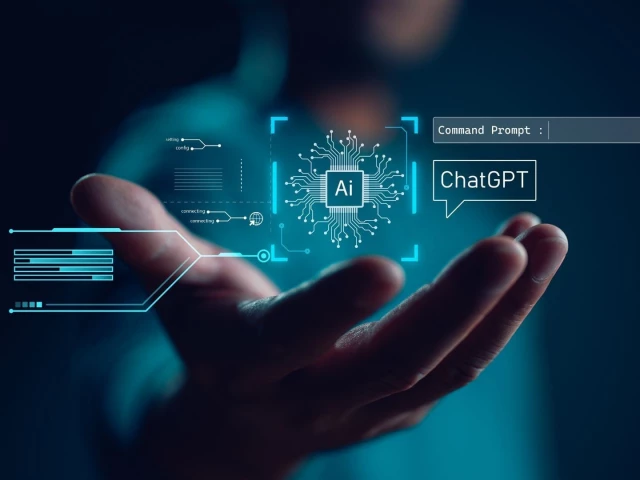
In March 2026, the White House published a new policy framework for Artificial Intelligence (AI), comprising a set of legislative recommendations for the US Congress. It reflects the current administration's philosophy that AI regulation should not impede competitiveness, and aims to strike a balance between innovation, economic growth and safety.
Meanwhile, in March 2026, Punjab approved its first Artificial Intelligence (AI) Roadmap after the federal government gave the green light to the National AI Policy 2025 last year. Drawing parallels, both nations recognise AI as a critical driver of future economic and technological growth, but their approaches reflect vastly different stages of infrastructural and regulatory maturity.
Holistic approach to AI infrastructure planning
For example, the White House explicitly recognises that AI is bound by physical infrastructure and takes a holistic approach to planning data centres. It stresses that residential ratepayers should not pay increased electricity bills because of new AI data centres, and that permits should be issued to build on-site and behind-the-meter (BTM) power generation for AI workloads. BTM solutions allow companies to bring power online faster than waiting for regional grid upgrades or new high-voltage transmission lines for securing 24/7, stable 'baseload' power.
In contrast, Pakistan treats AI largely as a software and skills initiative, on grounds of the reality of the country's energy crisis and its lack of high-performance computing (HPC) centres. However, a crucial lesson to learn here is the need for integrated infrastructure policies. Instead of us relying solely on the strained national grid, Pakistan could incentivise private AI developers or telecom operators to invest in localised, renewable energy solutions (like solar-powered microgrids with batteries) for data centres, thus mirroring the US push for on-site power generation.
Similarly, the US framework pushes for regulatory sandboxes and federal datasets in AI-ready formats to accelerate adoption. Punjab's new initiative, on similar lines, aims to transform the Chief Minister's Office into the 'AI Office of the CM', making it Pakistan's first fully AI-driven executive office. This is a bolder, more direct form of the same instinct: use the state itself as a demonstration case.
AI governance belongs to existing sectoral regulators
Another key feature of the US framework is the explicit directive not to create a new federal rulemaking body to regulate AI, and it aims to support AI through existing bodies with subject matter expertise. In contrast, Pakistan's strategy relies heavily on establishing new, centralised bureaucratic entities, such as the National AI Council and various National Centres of Excellence.
Similarly, Punjab should clarify whether its newly established AI Technical Advisory Board is a policy body or a regulatory one, and ensure it coordinates with the Securities and Exchange Commission of Pakistan (SECP), the Punjab Healthcare Commission, and the Board of Revenue rather than bypassing them. In fact, Pakistan could benefit immensely from the US's decentralised regulatory approach.
Instead of waiting for a central AI Council to dictate all terms, Pakistan could empower existing sectoral bodies like the State Bank of Pakistan for regulating AI in fintech, or the Drug Regulatory Authority of Pakistan for regulating AI in pharmaceuticals or healthcare.
The need for Data Commons Act and Digital Copyright Laws
The US framework builds upon an existing legal foundation, focusing on specific vulnerabilities. It recommends protecting individuals from the unauthorised commercial use of AI-generated digital replicas (voice and likeness) while maintaining First Amendment exceptions. It heavily emphasises empowering parents to control their children's digital environment and strictly prevents the government from coercing tech providers to censor or alter content based on ideological agendas.
The US framework debates seriously, if inconclusively, with the copyright question as it acknowledges the legal uncertainty around training data while recommending collective licensing frameworks and digital replica protections.
Pakistan has no equivalent conversation happening at either federal or provincial level. As Punjab moves to train models on local data (agriculture, health, education), questions of whose data is being used and who benefits from it will become unavoidable.
Pakistan's AI policy pushes for massive data integration (like centralised E-khidmat centres for public services) without a foundational Personal Data Protection Act fully in place. Before pushing for mass public-sector AI deployment, Pakistan desperately needs a comprehensive Data Commons Act, as otherwise it increases the risk of unethical use of citizens' information.
In a nutshell, we see that the US framework signals a federal preference for light-touch regulation and industry standards over rigid compliance mandates in clear contrast to the EU AI Act. Pakistan may need to take a middle ground between the two, but it can definitely take a page or two out of the White House's new AI policy playbook.
THE WRITER IS A CAMBRIDGE GRADUATE AND WORKS AS A STRATEGY CONSULTANT








This material may not be published, broadcast, rewritten, redistributed or derived from. Unless otherwise stated, all content is copyrighted © 2026 The Express Tribune.














COMMENTS
Comments are moderated and generally will be posted if they are on-topic and not abusive.
For more information, please see our Comments FAQ