Oil rises, stocks waver as new US strikes dampen peace deal hopes
Updated 6 hours ago

Officials say Iran willing to extend gas sale agreement for another decade
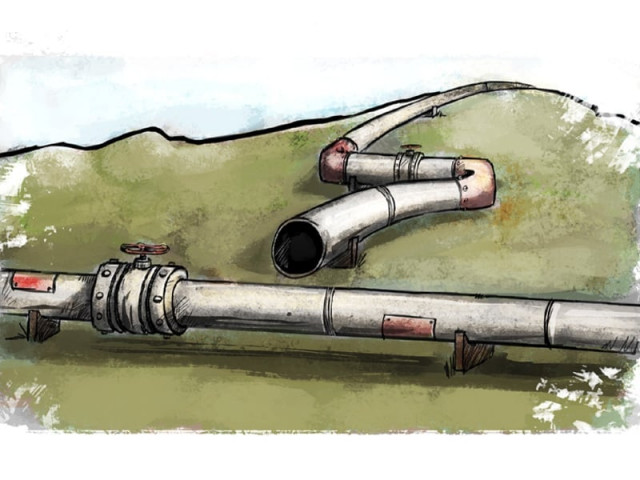
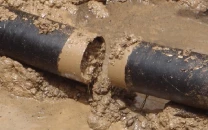
Hopes are running high that Pakistan and Iran may revive their gas and oil pipeline projects following peace talks between Iran and the United States.
Pakistan and Iran had signed a commercial agreement during the tenure of Pakistan Peoples Party (PPP) in 2009 and later then Iranian president Mahmoud Ahmadinejad and Pakistan's former president Asif Ali Zardari inaugurated the gas pipeline project in 2013.
During the PPP's government, the two countries also planned to lay an oil pipeline. Furthermore, Iran showed interest in building the largest oil refinery in Gwadar with a production capacity of 400,000 barrels. However, these projects were stalled due to the sanctions imposed by Washington on Tehran and the pressure on Islamabad not to press ahead with the planned schemes.
Amid the oil and gas politics, Saudi Arabia came up with plans to invest $10 billion in building a refinery in Gwadar but that project too could not see the light of day.
"Now, the US and Iran are negotiating a peace deal in Islamabad and hopes have arisen that Washington may lift sanctions on Tehran, with signals already coming from US President Donald Trump," an expert said, adding that the removal of restrictions would provide an opportunity to resume work on the long-stalled Iran-Pakistan (IP) gas pipeline project.
During the recent Middle East war, the world has come to know that Iran can choke off oil and gas supplies to the entire world. Even energy flows to Pakistan came to a halt. In such a scenario, the gas and oil pipeline projects can become a lifeline for Pakistan, which will bypass the Strait of Hormuz and ensure uninterrupted supplies even if the four world chokepoints are blocked due to any war-like situation.
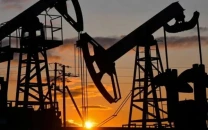
Pakistan meets around 85% of its oil needs through imports but it has significant gas production. Still, liquefied natural gas (LNG) imports from Qatar are required to bridge the shortfall. Supplies from Qatar have been stopped as LNG facilities came under attack during the war. Even oil installations in the UAE, Kuwait and Saudi Arabia have been hit.
Pakistan had also planned to set up an LNG pipeline in Gwadar, an alternative to the IP pipeline, following removal of US curbs. But this project was shelved too.
Pakistan tried to reach an out-of-court settlement with Iran to abandon the IP pipeline. However, Iran agreed to extend the gas sale agreement by another 10 years in an effort to put the project back on track. Both sides have long been engaged in backdoor diplomacy and the issue was also raised with high-profile dignitaries during visits to Islamabad, especially by the former Iranian president.
Pakistan had previously sought a waiver from the United States for executing the IP project, which Washington declined to grant. Matthew Miller, a spokesperson for the State Department during the previous administration, warned that Washington would continue enforcing sanctions against Iran.
Iran has completed its portion of the pipeline, while Pakistan has yet to kick off construction on its side. Officials say Iran is willing to extend the gas sale agreement for another decade, but Pakistan wants to shelve the project due to the sanctions and weak domestic demand.
Over the years, Pakistan has explored a few alternative options. Under a plan, it proposed the laying of an LNG pipeline to Gwadar with an 80km extension to the Iranian border. A Chinese company expressed interest in building the pipeline, but sanctions remained a hurdle.
Currently, Pakistan relies on LNG imports from Qatar. "This gas is meant to meet the requirement of consumers in the power sector," an official remarked. However, the power producers did not lift the full volume of imports, which led to a market glut.
To cope with the surplus, the government has recently announced two initiatives to boost LNG consumption. Incentives have been introduced under an incremental electricity supply programme, aimed at providing low-cost electricity to agricultural and industrial consumers over a three-year period, enabling increased LNG utilisation in power plants.
The government has also lifted a decade-long ban on new gas connections for domestic and commercial consumers. New consumers will receive gas at prices equivalent to LNG rates to "enhance LNG utilisation and deal with the surplus gas".






This material may not be published, broadcast, rewritten, redistributed or derived from. Unless otherwise stated, all content is copyrighted © 2026 The Express Tribune.











COMMENTS
Comments are moderated and generally will be posted if they are on-topic and not abusive.
For more information, please see our Comments FAQ