Textile, mining ties pitched to Chinese firms
Updated 3 hours ago

SPI enters double digits at 12.15% YoY on war-driven high energy, food prices
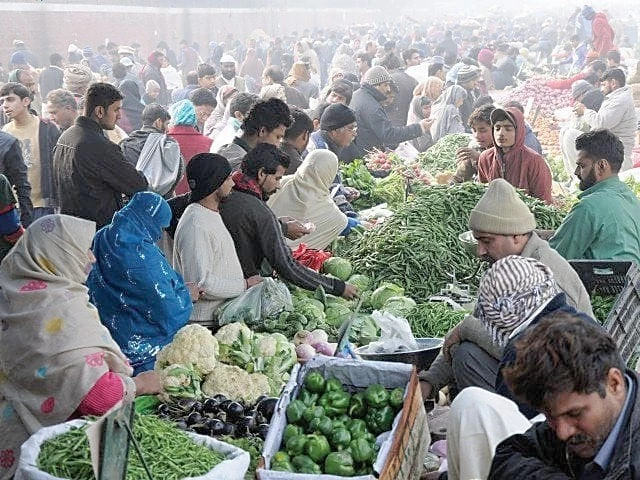
The Israel-US war on Iran has taken its toll on Pakistan as inflation has re-entered the double-digit territory and reached a 74-week high, driven by energy prices, which, through a ripple effect, have sent staple food prices skyrocketing.
The Sensitive Price Indicator (SPI) has jumped by 12.15% on a year-on-year (YoY) basis. Latest data shows that the YoY inflation touched a 74-week peak, highlighting a steep increase in the cost of living compared to the same period of last year.
"To note, this YoY increase marks a 74-week high," said analysts at Topline Securities, emphasising the intensity of the recent price shock.
The inflation had remained relatively contained through much of late 2025, with SPI-based reading hovering in a low range and even touching 2.4% in early January 2026, mainly owing to a low base effect. However, the trend has reversed sharply since then.
The current reading represents a substantial jump from the 4-5% levels recorded in February 2026, pointing to a rapid build-up of price pressure within a short span.
This abrupt spike is primarily due to volatility in global energy markets following the escalating geopolitical tensions in the Middle East. As international oil prices surged, the impact transmitted quickly into Pakistan's domestic economy, where fuel costs play a central role in determining the overall inflation.
Higher petrol, diesel and LPG prices have increased transportation and logistics costs, which in turn have pushed up prices of essential commodities across the board.
The inflation surge is being led overwhelmingly by energy prices, with diesel prices soaring 101.02% YoY, petrol rising 48.70% and LPG increasing 65.86%, reflecting the transmission of global oil market shocks into Pakistan's domestic pricing structure. The escalation follows geopolitical tensions in the Middle East, which have dented supply expectations and driven international crude prices higher.
This energy shock has had a pronounced second-round effect on food inflation. Key staples have recorded sharp increases, with onion prices up 37.80%, wheat flour 30.10% and tomatoes 23.07% on a yearly basis. Protein sources have also become more expensive, with mutton and beef prices rising nearly 15% and 14%, respectively, further squeezing household budgets.
On a weekly basis, the situation appears even more acute, as fuel prices surged dramatically, with diesel up 54.71% and petrol 17.86%, triggering an immediate increase in transportation and logistics costs. This has translated into rising prices of perishable food items such as tomatoes (9.35%), potatoes (4.13%) and onions (3.84%) within a week.
The data also highlights the disproportionate burden on higher consumption groups, where SPI inflation reached 12.25%, although lower-income segments also faced significant pressure with a 9.33% increase, indicating broad-based inflation impact across income classes.















This material may not be published, broadcast, rewritten, redistributed or derived from. Unless otherwise stated, all content is copyrighted © 2026 The Express Tribune.








COMMENTS
Comments are moderated and generally will be posted if they are on-topic and not abusive.
For more information, please see our Comments FAQ