Plan to tackle monsoon, cloudburst risks on cards
Updated May 19, 2026

Commuters in twin cities struggle with uneven and costly travel options
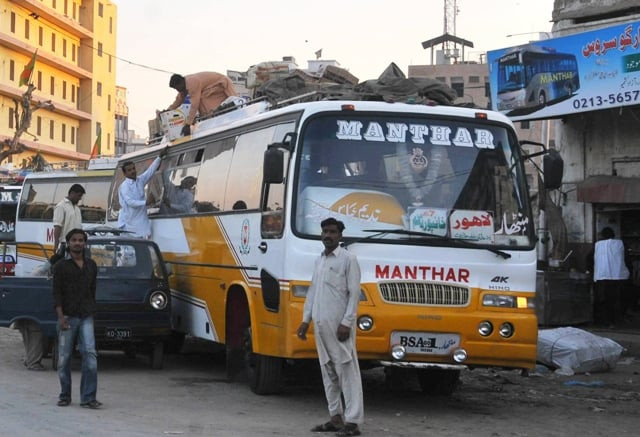
Following a massive increase in petroleum prices and Prime Minister Shehbaz Sharif's decision to make Metro Bus and electric bus travel free for one month, the transport system in Rawalpindi and Islamabad has become uneven.
Metro and electric bus travel is completely free, while private public transport standing alongside is charging Rs60 to Rs70 per stop.
No free scheme has been provided for public or goods transport, due to which public transport fares have been increased significantly. After the increase in petrol and diesel prices, the Regional Transport Authority approved a 10 per cent increase for petrol vehicles and 25 per cent for diesel vehicles, but transporters rejected this as insufficient and instead announced a 50 per cent increase in passenger fares and 65 per cent in goods transport fares.
This has led to rising concerns among citizens, passengers and traders, while pick-and-drop fares for students and working women have increased by 30 per cent.
The authority appears unable to enforce the officially approved increase.
Goods transport from Karachi to Rawalpindi, which was previously Rs260,000, has now reached Rs800,000.
Metro operates on a separate route, while there are seven routes between Rawalpindi and Islamabad, causing difficulties for commuters. A total of 14 electric buses are currently operating in Rawalpindi.
Due to free travel, Metro and electric buses are crowded with youths using them for leisure trips, travelling from Raja Bazaar and Saddar on different routes and returning via other vehicles. Genuine passengers, including women and students, have demanded more buses due to overcrowding.
Working woman Faiza Riaz said there is an overwhelming presence of youths in Metro and electric buses and demanded that separate buses be allocated for women, students and families where unaccompanied men should not be allowed, while women accompanied by men may travel in these buses.
Citizens Shahbaz Qalandar and Hameed Khan said that just as petrol prices were reduced by Rs80 per litre, diesel prices should also be reduced by Rs100 so that transport and goods fares can decrease.
Bike riders Shahid Ali and Mehboob Khan said the Bykea motorcycle service package should be simplified, as the existing SOPs are difficult to implement.
Fresh price storm
On the other hand, the continued increase in diesel prices in the open market, instead of any reduction, has unleashed a fresh wave of inflation. Wholesale markets dealing in all commodities have cancelled supply orders placed over the past 10 days and returned payments to traders, announcing new prices with an increase of 50 to 60 per cent. Transportation fares have further increased, while 60 price control magistrates in Rawalpindi district appear completely ineffective and helpless.
Prices of milk, yoghurt and meat have also increased in the open market. Chicken meat is being sold at Rs650 per kg, milk at Rs230 per litre, yoghurt at Rs250, mutton at Rs2,700 per kg, and beef at Rs1,500 per kg. Yeast bread is priced at Rs30, naan at Rs35, paratha and roghni naan at Rs60, and a cup of tea at Rs100.
Among pulses and staples, mash dal is Rs600 per kg, rice Rs360, gram flour Rs360, white chickpeas Rs430, red beans Rs550 per kg, chana dal Rs355 per kg, potatoes Rs3040 per kg, onions Rs6070 per kg, tomatoes Rs110 per kg, peas Rs110 per kg, garlic Rs300, ginger Rs409, lemons Rs200, capsicum Rs150, okra Rs300 per kg, coriander Rs50 per bunch, cucumber Rs60 per kg, and carrots Rs70 per kg.
Radish is available at Rs50 per kg, apples at Rs300400 per kg, bananas at Rs250 per dozen, oranges at Rs350400 per dozen, pomegranate at Rs750, grapes at Rs600700 per kg, melon at Rs200, watermelon at Rs90 per kg, chikoo at Rs250 per kg, strawberries at Rs350 per kg, pears at Rs550 per kg, and coconut at Rs550 per piece.
All bakery items have also seen an increase of Rs30 in price.








This material may not be published, broadcast, rewritten, redistributed or derived from. Unless otherwise stated, all content is copyrighted © 2026 The Express Tribune.




COMMENTS
Comments are moderated and generally will be posted if they are on-topic and not abusive.
For more information, please see our Comments FAQ