Woman dies after alleging sexual assault by husband
Updated 18 hours ago

Historic buildings vanish as plazas rise amid alleged official apathy
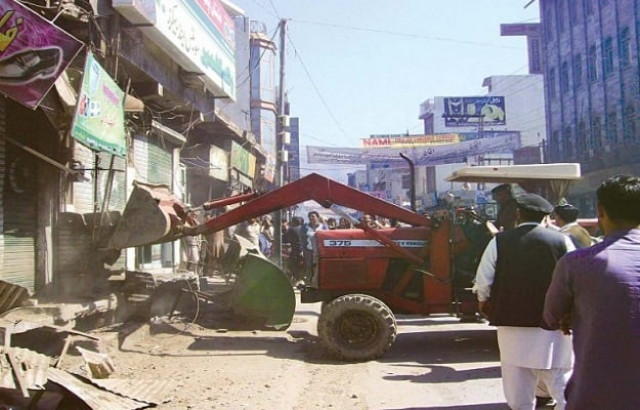
Dozens of historical buildings have disappeared from the city's landscape, allegedly due to official apathy and unchecked activities of land mafia, with several sites now replaced by commercial plazas.
According to Mian Ajaz Bashir, a veteran journalist and chairman of an art gallery, many of these structures held significant historical and cultural value, including links to the independence movement and visits by national leaders.
He said the Sanatan Dharam community had constructed the Arya Samaj temple in 1906 at Street 6, Jhang Bazaar, adjacent to the Lasoori Shah shrine.
The temple attracted Hindu devotees from across the subcontinent. After Partition, the site came under the control of the provincial Auqaf department.
However, over time, private individuals allegedly demolished the structure, and a commercial plaza now stands at the location.
Bashir further claimed that a British-era rest house outside Karkhana Bazaar, built for farmers and visitors from distant areas, was also demolished.
The site was later converted into shops reportedly handed over to oil depot owners, raising safety concerns for the surrounding area.
He added that a nearby municipal corporation building of historical importance was also razed without due consideration and the land is currently being used as a parking facility.
Highlighting another case, Bashir said the Sanatan Dharam Library, located in Montgomery Bazaar before Partition and later converted into Muslim League House after independence, was also demolished and replaced with a commercial plaza.
He alleged that the historic Central Cooperative Bank building in Katchery Bazaar, established in 1921, met a similar fate.
According to him, a private individual, in alleged collusion with officials, managed to obtain fake ownership documents and constructed a plaza on the site.
Bashir also recalled that Quaid-e-Azam Muhammad Ali Jinnah, along with a Muslim League delegation, had stayed at the residence of Colonel Muhammad Hayat in 1946 during the independence movement.
Due to alleged negligence by the archaeology department, the building was not preserved and was later sold by its owners.
A fast-food outlet was established at the site in 2007, followed by the office of a private bank.
Expressing concern, Bashir questioned why authorities had failed to implement the Punjab Special Premises (Preservation) Act, 1982, which mandates the protection of historical buildings.
He urged the divisional commissioner and deputy commissioner to obtain records of evacuee properties from the Auqaf Department and the Evacuee Trust Property Board of Pakistan to assess the situation and take action against encroachment.







This material may not be published, broadcast, rewritten, redistributed or derived from. Unless otherwise stated, all content is copyrighted © 2026 The Express Tribune.












COMMENTS
Comments are moderated and generally will be posted if they are on-topic and not abusive.
For more information, please see our Comments FAQ