What did Russell discover about their father? 'Tracker' season 3 finale leaves fans stunned
Updated 8 hours ago

Greig Fraser breaks down the tunnel sun effect in Project Hail Mary and the challenges behind the visuals
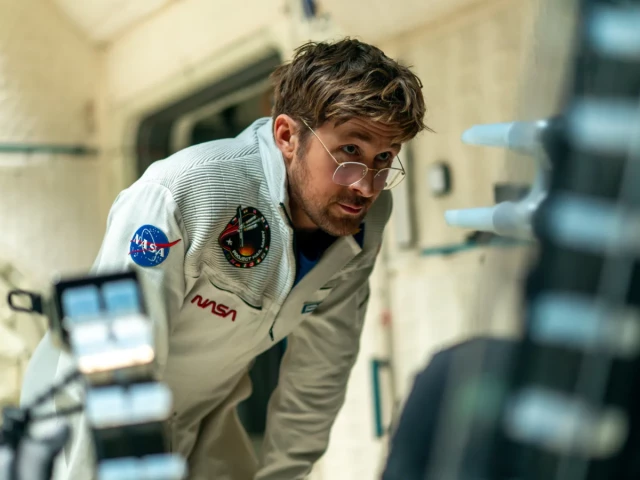
Greig Fraser, known for his work on The Batman and Dune, has opened up about the technical and creative challenges behind his latest film, Project Hail Mary.
Describing it as the most demanding project of his career, Fraser detailed how he crafted the film’s unique visual identity—particularly the striking tunnel sequence.
Directed by Phil Lord and Christopher Miller, and starring Ryan Gosling, the film follows a science teacher sent on a high-stakes interstellar mission to save Earth. One of its standout moments features Gosling’s character entering a mysterious tunnel to meet an alien named Rocky.
Fraser revealed that lighting the 70-foot tunnel posed a major challenge. Instead of relying on modern LED setups, his team used numerous tungsten lights to simulate sunlight passing through the fictional material “xenonite.” By pixel-mapping the lights, they were able to create a dynamic sun effect that could shift and rotate throughout the scene.
To enhance the visual style, Fraser incorporated a rainbow lens filter to produce multi-colored flares, which became a recurring motif in the film. He also experimented with lens techniques, shooting on the Alexa 65 camera and adjusting the image vertically to create distinctive flare patterns.
Drawing inspiration from classics like 2001: A Space Odyssey and Alien, Fraser aimed for a warmer, analog aesthetic rather than the typical cold tones associated with space films.
Despite multiple technical hurdles, including lighting a non-human character with no facial features, Fraser emphasized that the layered challenges ultimately pushed the film’s visual storytelling to new heights.










This material may not be published, broadcast, rewritten, redistributed or derived from. Unless otherwise stated, all content is copyrighted © 2026 The Express Tribune.












COMMENTS (1)
Comments are moderated and generally will be posted if they are on-topic and not abusive.
For more information, please see our Comments FAQ