Oil rises, stocks waver as new US strikes dampen peace deal hopes
Updated 6 hours ago

Chamber says global prices have doubled; calls for carpooling, limiting non-essential travel

The Karachi Chamber of Commerce and Industry (KCCI) has called on citizens to adopt responsible fuel consumption habits as petroleum prices continue to rise in line with global market trends.
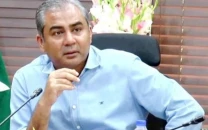
Sharing his views with The Express Tribune, KCCI President Rehan Hanif emphasised that the latest surge in petrol prices is not an isolated domestic decision but a consequence of increasing international oil rates. With prices in the global market reportedly doubling from around $60 to $120 per barrel, the government has been left with little choice but to pass on the impact to consumers, given the country's limited economic capacity to absorb such a massive burden.
The chamber noted that ongoing geopolitical tensions and war-like conditions have disrupted global supply chains, affecting not just the countries directly involved but economies worldwide. "These are not normal times; the entire world is facing the ripple effects of the conflict," he said, adding that inflationary pressures and rising fuel costs are inevitable under such circumstances.
The position of the KCCI reinforces the government's rationale behind the latest fuel price adjustment, presenting it as a necessary response to extraordinary global circumstances rather than a discretionary policy move. The sharp increase, petrol rising to Rs458.40 per litre and high-speed diesel (HSD) to Rs520.35 per litre effective April 3, 2026, underscores the intensity of pressure stemming from international oil markets, particularly in the wake of the escalating US-Iran conflict.
"The increase in petrol prices is happening globally; the government had to increase them according to international prices. Our economy doesn't have the capacity for the government to absorb this cost. So, this was bound to increase. Since there is a war, the effects of war aren't limited only to the two countries fighting; they spread to the region, in fact, the whole world is being affected by this war," Hanif remarked.
He further highlighted that the government aims to curb fuel consumption to reduce imports and ease pressure on the balance of trade. With global oil prices rising from around $60 to $120, the import bill would otherwise double, so lowering demand can help keep expenditures relatively contained, he added.
Additionally, one way to manage this is by being more mindful of fuel use to avoid unnecessary travel and drive less. Even if you continue spending around Rs10,000 on petrol, you will receive less fuel at higher prices, so reducing usage can help control overall consumption and expenses. By curbing unnecessary usage, the country can prevent a sharp spike in fuel imports despite higher prices.
Urging the public to play an active role, Hanif advised citizens to adopt practical measures such as limiting non-essential travel, using vehicles only when absolutely necessary, and embracing carpooling to reduce overall fuel consumption. He emphasised that even modest individual efforts, when combined, can help cushion the broader economic impact, even if they cannot fully offset inflationary pressures.
KCCI stressed that the current circumstances should be treated as an emergency condition, requiring both government action and public cooperation. It noted that rising fuel prices and inflation are unavoidable in such a global crisis, but mindful and responsible behaviour, particularly avoiding unnecessary fuel use, can help households better manage escalating expenses and contribute to easing national economic strain.
KCCI urged the public to consider it a wartime condition and adopt responsible behaviour, including minimising non-essential travel, reducing fuel usage and practising carpooling. It noted that while such measures may not eliminate inflation, they can help households manage rising expenses.
To a question, Hanif said, "It's not about solidarity with the government. What can the government even do at this point? When an item's price jumps unprecedented in the international market, what options does the government have left? So, we also need to be a bit mindful; we should reduce our usage and avoid unnecessary consumption."
KCCI concluded that the public must recognise these challenges as largely beyond the government's control and play its part by avoiding wasteful consumption during this period of economic strain.






This material may not be published, broadcast, rewritten, redistributed or derived from. Unless otherwise stated, all content is copyrighted © 2026 The Express Tribune.









COMMENTS
Comments are moderated and generally will be posted if they are on-topic and not abusive.
For more information, please see our Comments FAQ