Avatar leak sparks frenzy ahead of streaming debut
Updated 11 hours ago

Mahira Khan urges baseline protections for artists, as Aina Asif recounts disruptive on-set experience
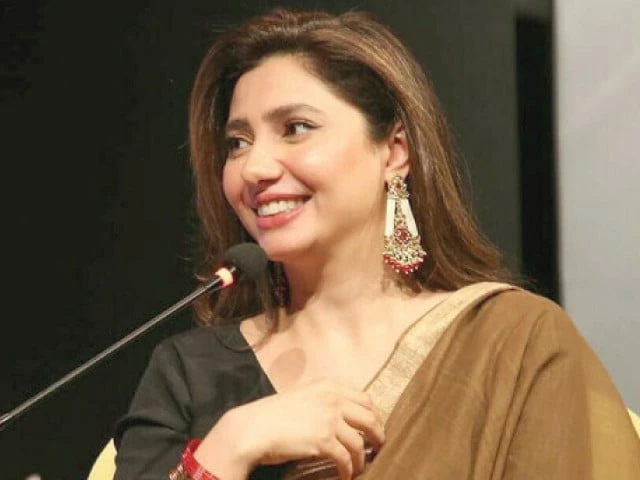
While the glitz and glamour of Pakistan's entertainment industry dominated screens during Eid festivities, a far less visible reality continued to unfold behind the scenes, where financial insecurity and uneven workplace dynamics shape everyday experiences.
For every celebrated star fronting a successful drama or film release, many junior actors, supporting artists, and crew members continue to navigate an industry that offers limited structural protection and inconsistent professional standards.
Recent remarks by leading actress Mahira Khan and emerging performer Aina Asif have brought renewed attention to these long-standing concerns, highlighting both economic disparities and troubling on-set behaviour within the entertainment sector.
Appearing on an Eid Day One show, Mahira Khan revisited a persistent issue within Pakistan's film and television landscape: the absence of a structured and transparent salary system for artists.
Speaking alongside her 'Aag Lagey Basti Main' co-star Fahad Mustafa, she pointed to a clear imbalance in how earnings and opportunities are distributed, particularly affecting newcomers attempting to establish themselves.
Mahira observed that while established actors are able to sustain themselves more comfortably, many junior performers continue working under financial strain, often just managing to "survive" within the system.
Responding to a resurfaced post advocating for artist royalties, she emphasised that internationally, structured systems ensure performers receive a share of earnings beyond initial payments, offering some degree of financial continuity.
"I think world over there is a certain amount that goes to artists as royalties," she said. "I'm not saying we should exactly follow Hollywood, but it is a system that ensures artists don't go hungry."
She acknowledged that Pakistan's entertainment industry lacks a comparable framework and stressed the need for at least a baseline system that protects artists from extreme financial vulnerability over time.
At the same time, Mahira noted that financial hardship among some artists is also linked to an inability to save during their careers, pointing to a combination of structural gaps and individual financial management challenges.
Her criticism extended to television broadcasters, which she said benefit from multiple revenue streams that are not always transparently shared with the actors whose performances drive viewership.
"I feel if channels earn so much money and from multiple revenue streams, some of which even we are not aware of, artists like us still survive," she remarked, gesturing towards Mustafa during the discussion.
She added that while leading actors may continue to find stability, junior artists, supporting performers, technicians, and crew members often do not receive comparable opportunities or financial security.
The issue of financial vulnerability was previously highlighted by veteran actor Naila Jaffery, who publicly spoke about bearing her own medical expenses during her battle with cancer, drawing attention to the absence of institutional support.
Alongside questions of income and security, concerns about workplace culture have also surfaced, particularly from younger actors entering the industry without established influence or protection.
Actress Aina Asif, who rose to prominence with performances in 'Mayi Ri' and 'Judwaa', recently shared her experiences during a Chand Raat special, where she spoke candidly about her time on set.
The young actor, whose remarks went viral on social media, described feeling uncomfortable around some senior colleagues, saying their reactions often made her feel uneasy despite her own confidence in what she was saying.
She explained that during conversations on set, senior actors would look at her "very weirdly," creating situations that she believed were intended to make her uncomfortable.
Asif also detailed difficulties while performing emotionally demanding scenes, saying that interruptions and distractions from fellow actors made it harder for her to deliver her lines effectively.
"When I have to film serious crying or screaming scenes, the senior actors would be very disruptive, interrupting me throughout my lines," she said while recounting her experience. The actress further noted that some colleagues would mimic her actions or deliberately forget their lines when she was about to speak, behaviour she initially found frustrating but has since learned to ignore.
"Previously, I used to get angry but now I say let it go," she said, adding that she has grown accustomed to such situations over time.
Taken together, the perspectives offered by Mahira Khan and Aina Asif reflect different stages of the same industry, one grappling with both financial inequities and inconsistencies in professional conduct.
While Mahira spoke from the vantage point of an established star advocating structural reform, Aina's account underscored the everyday challenges faced by younger artists working to find their footing.
As Mahira acknowledged, despite benefiting from her own success, the broader goal remains ensuring that all individuals within the industry receive fair compensation, respect, and a degree of long-term security.
For now, however, the experiences shared by both actors suggest that meaningful reform remains a work in progress, requiring sustained attention from industry stakeholders and a willingness to confront uncomfortable realities.












This material may not be published, broadcast, rewritten, redistributed or derived from. Unless otherwise stated, all content is copyrighted © 2026 The Express Tribune.




COMMENTS
Comments are moderated and generally will be posted if they are on-topic and not abusive.
For more information, please see our Comments FAQ