$3b Saudi support fuels bullish rally as KSE-100 index surges over 2,500 points
Updated 5 hours ago

Will erode revaluation surpluses; SBP injects Rs293b; gold inches up
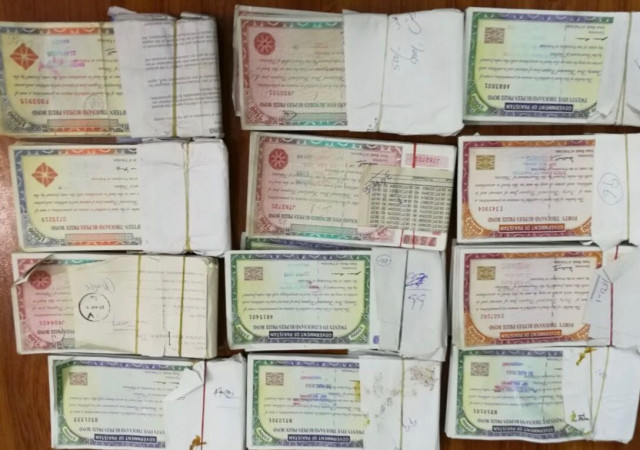
Rising bond yields are expected to erode banks' securities revaluation surpluses in the coming months, potentially putting pressure on capital ratios across Pakistan's banking sector.
Optimus Capital Management noted that yields on government securities had risen sharply in recent weeks, with the spread on 10-year Pakistan Investment Bond (PIB) floaters widening to around 96 basis points from 47 basis points recorded on January 7, signalling a shift in market pricing. As yields rise, bond prices typically fall, reducing the mark-to-market value of banks' large investment portfolios in government securities.
Analysts said that the revaluation surplus on banks' securities portfolios, accumulated during periods of falling yields, was likely to compress and could even turn negative for some institutions in the upcoming reporting periods.
Under the capital adequacy framework implemented by the State Bank of Pakistan (SBP) and aligned with Basel III, a positive revaluation surplus is added to the Tier-2 capital, while a negative surplus is deducted from the Common Equity Tier-1 (CET-1) capital. This means banks that have retained unrealised capital gains on their balance sheets may see some pressure on capital buffers if bond prices continue to decline.
However, the impact will vary across institutions depending on the duration of their securities portfolios and the share of revaluation surplus relative to equity. Banks that have already realised a significant portion of capital gains are expected to face relatively limited impact. Data cited in the report shows that several major banks have accumulated sizable revaluation surpluses over the past year. United Bank Limited reported the largest surplus at Rs134.6 billion by December 2025, followed by National Bank of Pakistan at Rs76.7 billion and Habib Bank Limited at Rs47.5 billion.
Meanwhile, the central bank continued to manage short-term liquidity conditions in the financial system through open market operations (OMOs). The SBP injected over Rs293 billion into the banking system on Tuesday through conventional and Shariah-compliant OMOs to ease liquidity pressures. According to the central bank, it conducted a 10-day reverse repo purchase (injection), accepting bids worth Rs290.576 billion at a cut-off rate of 10.51%. In addition, a Shariah-compliant Mudarabah-based OMO injection of Rs2.5 billion was carried out for a 10-day tenor at a rate of return of 10.57%.
Gold prices in Pakistan rose following international gains. The per-tola rate reached Rs523,762, up Rs1,000, while 10-gram bullion hit Rs449,041.














This material may not be published, broadcast, rewritten, redistributed or derived from. Unless otherwise stated, all content is copyrighted © 2026 The Express Tribune.






COMMENTS
Comments are moderated and generally will be posted if they are on-topic and not abusive.
For more information, please see our Comments FAQ